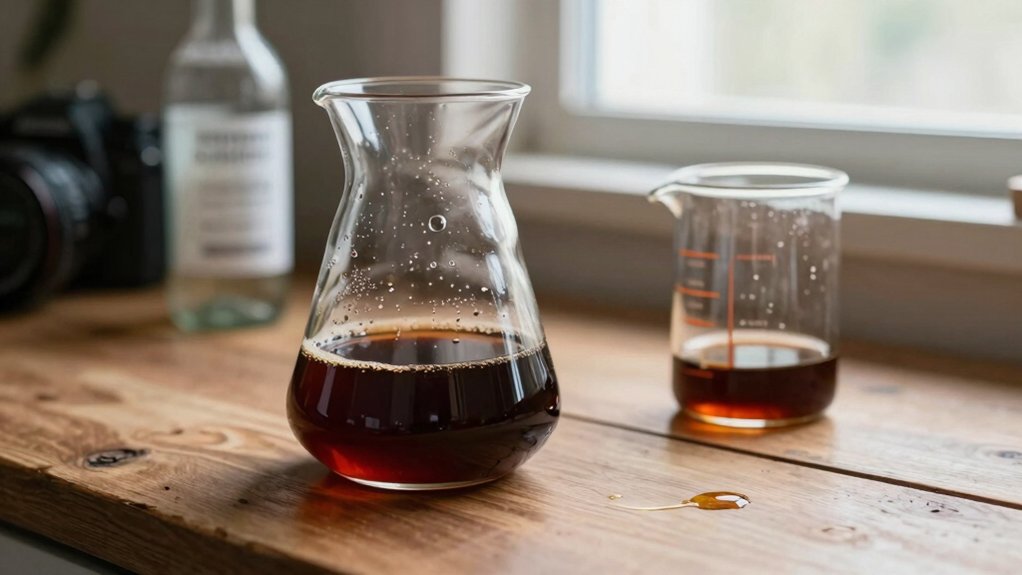
Cold‑brew concentrate stays fresh for up to three months if it’s still sealed and refrigerated, but once you pop the cap it’s best used within about two weeks. Homemade batches lose their peak flavor faster, usually lasting only five to seven days in the fridge. Keep it in an airtight, light‑blocking container and chill it right after brewing to maximize shelf life. Want deeper details on storage tricks, spoilage signs, and dilution tips? Keep going.
What Is Cold Brew Concentrate and How Does It Differ From Regular Cold Brew?
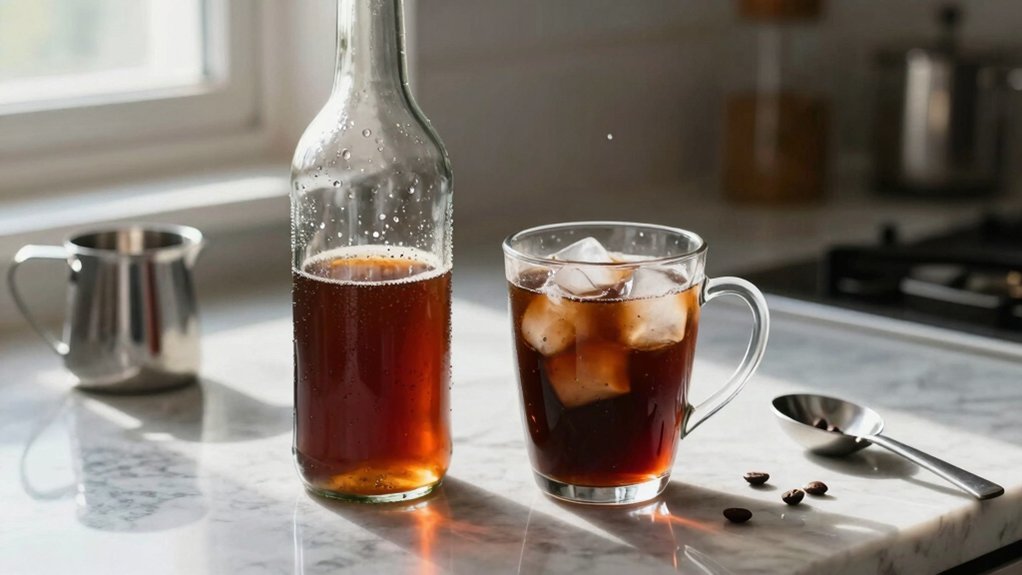
Ever wondered what sets cold brew concentrate apart from regular cold brew? You steep coarsely ground beans in cold water for 12–24 hours, then filter out the grounds, leaving a thick, smooth extract.
Steep coarsely ground beans in cold water 12–24 hours, then filter for a thick, smooth extract.
Unlike regular cold brew, which you usually dilute before sipping, cold brew concentrate is meant to be mixed with water, milk, or even heated to reach your preferred strength.
This process packs more caffeine per ounce and highlights the beans’ natural sweetness while keeping acidity low.
Because it’s a denser solution, it stays stable longer—up to about 14 days in the refrigerator when sealed in an airtight container.
Keep an eye on off smells or cloudiness; those signs mean it’s time to discard it.
Unopened Bottled Concentrate: How Long Does It Last?
How long can you keep an unopened bottle of cold‑brew concentrate in the fridge? You can store it for up to three months, and the longer it stays unopened, the better the flavor remains thanks to refrigeration. Cold temperatures slow oxidation and keep air out, preserving the brew’s bright notes. Some brands even add special preservatives that push the shelf life beyond the typical range. Just remember, the unopened status protects the concentrate from accidental exposure, so you’ll enjoy a fresher cup when you finally open it. IP67 Waterproof and other durability features in related refractometer guides illustrate attention to maintaining quality and consistency across equipment, which parallels the importance of proper storage conditions for concentrates.
Why Opened Cold Brew Usually Stays Good for About Two Weeks?
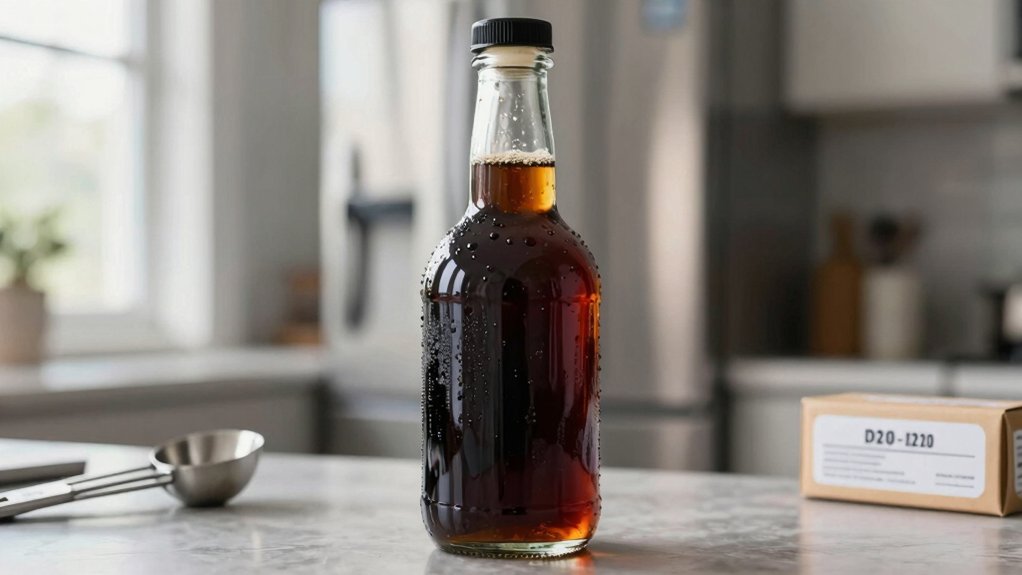
Why does opened cold‑brew concentrate stay pleasant for roughly two weeks? Because you keep it chilled, slowing oxidation and preserving flavor. When you pour the cold brew into a sealed bottle and refrigerate, the low temperature retards microbial growth and keeps the coffee acids stable. In addition, using a controlled, compact design like a coffee scale with timer can help you measure servings precisely, ensuring consistent freshness as you monitor portions flow rate.
Homemade vs. Store‑Bought Concentrate: Real Shelf‑Life Differences
You’ll notice store‑bought concentrate can sit unopened for weeks or even months, thanks to commercial packaging and stabilizers. Your homemade batch, by contrast, usually stays fresh only about a week, with the best flavor in the first couple of days. The difference boils down to how each product is sealed and processed, which directly impacts its shelf life. Metal wall art durability and pre-attached hardware considerations can influence how long decorative signs stay looking their best in humid kitchen environments material durability.
Store‑Bought Longevity
Ever wondered why a store‑bought cold brew concentrate keeps its punch far longer than your kitchen‑crafted batch? Commercial bottles are sealed, pasteurized, and often packaged in light‑blocking containers, which drastically slows oxidation and microbial growth. Unopened, you can expect weeks to months of freshness in the fridge—some brands even guarantee up to six months from the brew date. Once you pop the cap, the clock ticks faster, but the product still holds up for about two to four weeks before flavor wanes. This extended shelf life comes from controlled processing and reduced air exposure, giving you a reliably strong brew concentrate when you need it, without the rapid decay you see in homemade versions. 100-gallon life indicators in some pitchers reflect how long a filtered batch can stay within optimal quality before flavor degradation may occur.
Homemade Shelf Life
Store‑bought bottles stay fresh for months, but your own cold‑brew concentrate doesn’t enjoy that luxury. You’ll notice the flavor peak within the first one to two days, and after five to seven days in the fridge the taste starts to fade. Keep it airtight, shield it from light, and avoid temperature swings to stretch its shelf life as much as possible.
- Store it in a sealed glass jar or stainless‑steel bottle.
- Refrigerate immediately after brewing; don’t leave it at room temperature.
- Use a clean spoon each time to prevent contamination.
- Smell and taste before each use; discard if it turns sour or off‑flavored.
By using airtight, light‑blocked storage and consistent refrigeration, you can maximize stability and reduce flavor degradation over time shelf life awareness.
Packaging Effects on Freshness
Why does the same coffee taste fresher when it’s homemade than when it’s store‑bought? You notice the difference because packaging controls oxidation and microbial growth. Store‑bought cold brew concentrate arrives in sealed, often nitrogen‑flushed bottles that keep flavor stable for weeks or even months unopened. Once you crack that seal, the product stays safe for about two weeks, but potency fades as air infiltrates. Your homemade concentrate lacks commercial preservatives, so even in an airtight jar it only stays at peak freshness for 1–2 days and lasts 5–7 days total. The key is airtight, sealed containers—whether a glass bottle or a plastic jug. Proper packaging minimizes exposure, extending shelf life for both homemade and store‑bought brews.
Freezing Cold Brew Concentrate – Does It Keep It Fresh Longer?
You can freeze cold brew concentrate to stretch its shelf life by roughly three months beyond the fridge. Raising the temperature stability of the storage environment can help maintain flavor during freezing outlets and design. When you thaw it, give it a good shake to re‑emulsify any separation, but expect a slight mute in flavor. Freezing in small batches or ice‑cube trays lets you use only what you need without losing freshness.
Flavor Preservation Benefits
Ever wonder if freezing your cold‑brew concentrate really locks in flavor? You’ll find that freezing offers strong flavor preservation, keeping the coffee’s brightness and aroma intact far longer than a fridge. By storing the cold brew concentrate in small, airtight portions, you protect its potency and avoid the muted taste that can appear after a full‑batch thaw. Remember not to pre‑mix with water or milk; keep the concentrate pure until you’re ready to sip. Additionally, using a temperature‑controlled approach similar to precise kettle controls can help maintain consistent flavor when diluting later presets for consistency.
- Freeze in ice‑cube trays or single‑serve bags for easy portioning.
- Seal each package tightly to prevent freezer burn.
- Thaw only the amount you need and shake well before mixing.
- Expect a slight change in texture, but the flavor stays robust.
Freezing Shelf‑Life Extension
Yes—if you freeze it, you can add roughly three extra months to its shelf life beyond the usual refrigerated window. Environmental impact considerations also favor freezing as a way to preserve flavor when you’re not consuming it quickly.
Spotting Spoilage: Smell, Taste, and Visual Signs It’s Time to Toss
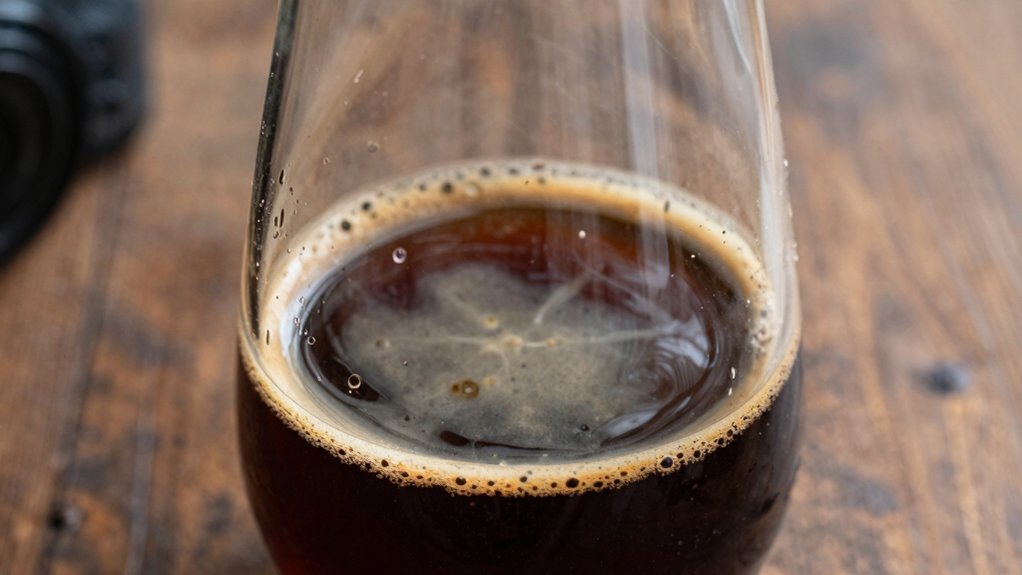
- Sour or musty odor
- Bitter, lingering taste
- Mold, white spots, fuzzy growth
- Murky or clumpy appearance
Top Containers and Storage Tips for Keeping Cold Brew Fresh
Where do you keep your cold brew? Choosing the right container and storage routine is key to preserving flavor and safety. Use airtight containers—glass jars or BPA‑free bottles work best—to limit oxidation. Seal the brew right after you finish brewing and refrigerate it immediately. Label each container with the brew date; discard any that turn sour, cloudy, or develop mold. Keep the concentrate separate from water or milk, and only mix per serving to maintain freshness.
| Container Type | Capacity | Why It Works |
|---|---|---|
| Glass jar | 16 oz | Non‑reactive, airtight |
| Stainless steel bottle | 12 oz | Durable, seals tightly |
| BPA‑free plastic pitcher | 1 L | Light, easy to pour |
| Vacuum‑sealed mason jar | 32 oz | Removes air completely |
| Ceramic crock | 2 L | Keeps temperature stable |
Dilution Strategies: How Much Water or Milk Keeps Flavor Fresh Longer?
How much water or milk should you add to keep your cold‑brew flavor fresh? You’ll find that a simple dilution strategy preserves taste while extending the shelf‑stable life of your concentrate. Aim for a 1:1 to 1:3 ratio, adjusting as the concentrate ages to avoid rapid flavor loss. Water lightens caffeine and acidity; milk adds creaminess and softens roasted notes. Pre‑diluting for iced drinks ensures a consistent strength when ice melts.
- Use a 1:1 ratio for a bold, café‑like sip.
- Switch to 1:2 for a balanced, everyday drink.
- Choose 1:3 when you want a light, refreshing brew.
- Adjust upward as the concentrate approaches its 14‑day fridge limit.
Answering the Top “How Long” Questions About Cold Brew Concentrate
Ever wondered exactly how long your cold‑brew concentrate stays fresh? You’ll find the timeline varies by brand, opening status, and storage method. Unopened bottles can survive up to three months in the fridge, but once you pop the cap, aim to finish it within two weeks—flavor peaks in the first week. Homemade batches only last about five to seven days, with the best taste in the first one or two. Keep an airtight, opaque container and limit air exposure to slow oxidation. If you detect sour smells, cloudiness, or mold, toss it immediately.
| Situation | Shelf Life |
|---|---|
| Unopened commercial | 3 months (refrigerated) |
| Opened commercial | 2 weeks (refrigerated) |
| Homemade brew | 5‑7 days (refrigerated) |
Frequently Asked Questions
Is Coffee Concentrate Still Good After the Expiration Date?
You can still use coffee concentrate after its expiration date if it looks, smells, and tastes normal, but you should check for any off odors, mold, or sourness before drinking it.
What Is the 15-15-15 Rule for Coffee?
You follow the 15‑15‑15 rule by brewing coffee for fifteen minutes, letting it steep another fifteen, then cooling it for fifteen more minutes, balancing extraction, temperature, and bitterness.
How to Tell if Coffee Concentrate Is Bad?
You can tell coffee concentrate’s bad by sniffing for sour or musty odors, spotting cloudiness, mold, or fuzzy growth, and tasting for bitterness or off‑flavors; if any appear, discard it.
Can You Use 2 Year Old Coffee?
You shouldn’t use two‑year‑old coffee for concentrate; its flavor’s gone, and it may be unsafe. Fresh beans give better taste and caffeine, so discard the old beans and start with a new roast.
In Summary
So, whether you’re buying a bottled concentrate or whipping up your own, remember that unopened bottles can sit for months, opened ones stay tasty for about two weeks, and freezing stretches that even further. Keep it sealed, chill it promptly, and trust your senses—if it smells off or looks cloudy, toss it. With proper storage and the right dilution, you’ll enjoy fresh‑tasting cold brew whenever you crave it.


