

You should give your French press a quick, gentle stir right after the bloom. That light mix spreads the coffee particles, flattens the bed, and prevents channeling, which leads to a more uniform extraction and a clearer, balanced cup. A brief stir also reduces turbidity and keeps sediment from ending up in the final brew. Over‑stirring, however, can break up fine grounds and make the coffee gritty. If you keep going, you’ll discover how timing and technique fine‑tune consistency.
Stir‑Timing Guidelines for Consistent French‑Press Extraction
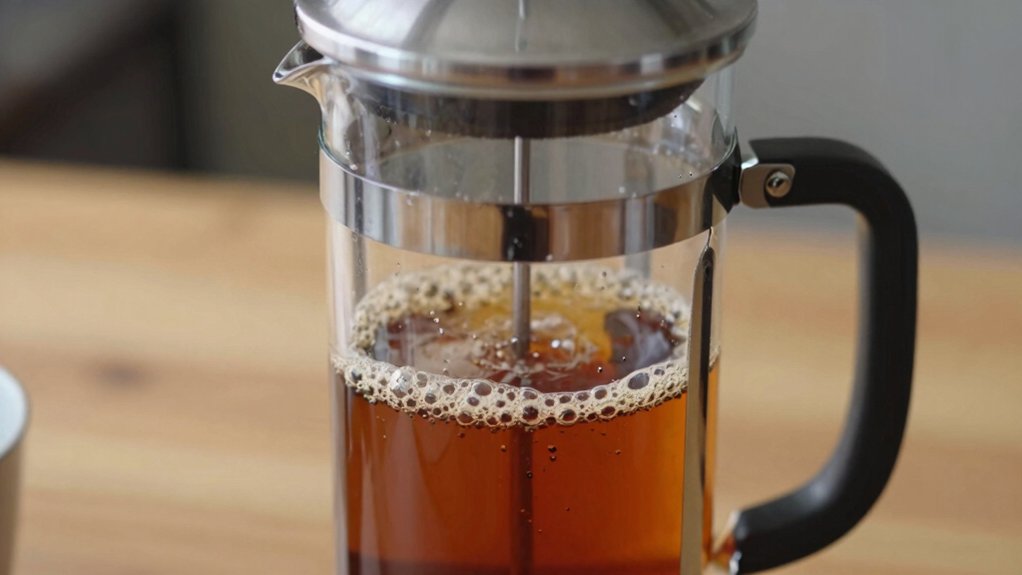
Ever why why a quick stir right after adding water makes such a difference? You pour hot water over ground coffee in a French press, then give it a brief, gentle swirl. This early stir timing breaks the crust, submerges all particles, and prevents bed stratification. By homogenizing the slurry before the five‑minute steep, you set up a uniform extraction that yields richer body and complexity. If you wait too long or stir too hard, you risk over‑extraction and a muddy cup. Consistency comes from repeating this moderate, initial stir each brew; measurements show it reduces variability in extraction and keeps flavor profiles stable. Stick to the quick, early mix, then let the coffee steep undisturbed until you plunge. Filter Design Importance Proper filtration helps prevent sediment and ensures extraction quality across brews, reinforcing the value of a well-designed filter system.
Quick‑Stir Benefits: How a Light Mix Improves Flavor and Body
A quick, light stir right after you pour water over the grounds does more than just break the crust—it instantly spreads the coffee particles, creating a uniform slurry that extracts evenly.
That quick stir during the bloom flattens the bed, preventing channeling and letting water reach every grain. You’ll notice a richer body because the brief agitation distributes dry pockets, so saturation happens uniformly without pulling excess bitterness.
The gentle stirring also lowers turbidity, giving a clearer cup while the even extraction balances acidity and sweetness across sips.
Keep the mixing short and controlled; a momentary motion during steeping is enough to boost flavor and body without risking over‑extraction.
Enhanced extraction visibility supports identifying channels and optimizing dose and grind during the process.
Why Too Much Stirring Makes Your Coffee Muddy
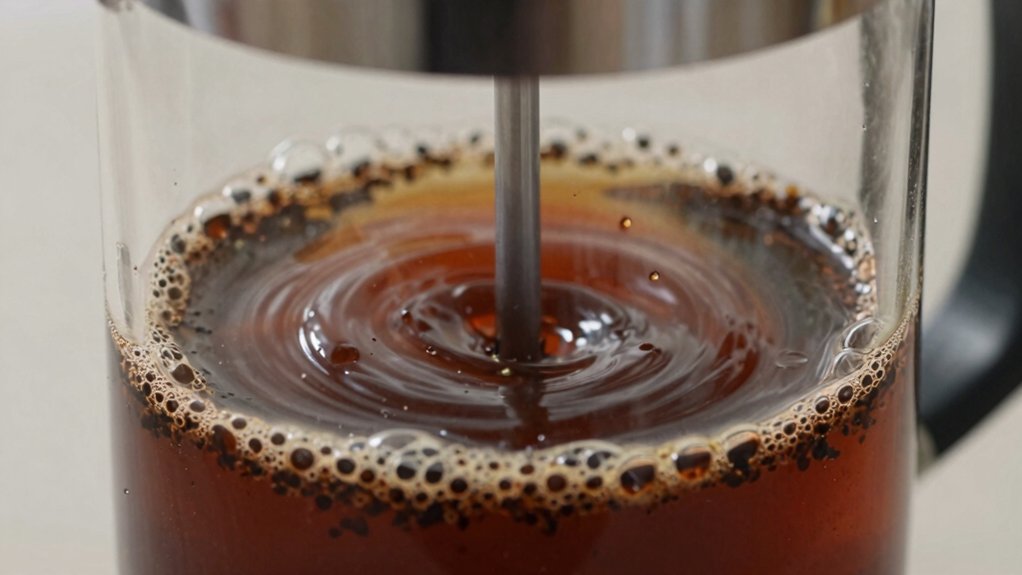
Why does over‑stirring turn a clean brew into a muddy mess? When you stir too hard, you break up the fine particles that should stay settled, and they slip through the filter. The result is a cloudy cup with gritty texture and uneven flavor. The practice can also influence extraction balance, potentially leading to over‑extraction of some grounds and under‑extraction of others long-handled design. Keep stirring brief and gentle, targeting even extraction without constantly agitating the brew. This preserves clarity, reduces sediment, and prevents the dreaded muddiness.
French‑Press Stirring Experiments for Better Consistency
Stirring too much makes coffee muddy, but a brief, controlled stir in a French press can actually sharpen consistency. You add water, wait five minutes, then give the grounds a gentle swirl to break the crust. That early stirring spreads particles, reduces turbidity, and creates a more even extraction. The data show a standard deviation of about 0.01 when you stir before plunging, versus 0.13 for a no‑stir method, so your brew time stays around ten minutes with far less variability. Keep the stir short—just enough to disrupt the crust—then let the coffee settle before you press. This approach boosts repeatability and flavor balance, delivering a consistent, well‑extracted cup every time. Bean Adapt Technology and automated grind/dose profiles from smart brewers further support consistent extractions by optimizing particle size distribution and brew parameters.
Frequently Asked Questions
Should I Stir While Steeping?
Yes, give it a quick stir early on—just one gentle swirl during the bloom. That’ll even out extraction, avoid over‑mixing, and keep your coffee balanced without turning it muddy.
What Are the Common French Press Mistakes?
You often use too fine a grind, skip pre‑heating, stir too much, pour water too fast or at wrong temperature, press before grounds settle, and mis‑time the steep, all causing sediment, bitterness, and weak flavor.
What Is the 15-15-15 Rule for Coffee?
You follow the 15‑15‑15 rule by agitating the grounds for fifteen seconds, pausing fifteen seconds, then repeating two more fifteen‑second stir cycles, aiming for balanced extraction before letting the coffee steep.
Should You Stir a French Press Before Pressing?
Yes, you should stir the French press before pressing; it breaks the crust, fully submerges grounds, and promotes even extraction, giving you richer body and flavor while keeping bitterness under control.
In Summary
You’ve learned that a quick, gentle stir right after adding the grounds sets a uniform extraction, giving your brew a richer body and clearer flavor. Over‑stirring, however, creates fine particles that slip through the filter, turning your cup cloudy and bitter. By timing your stir—just a brief mix at the start—you’ll consistently pull the best from your French press, enjoying a smooth, well‑balanced cup every time.


