
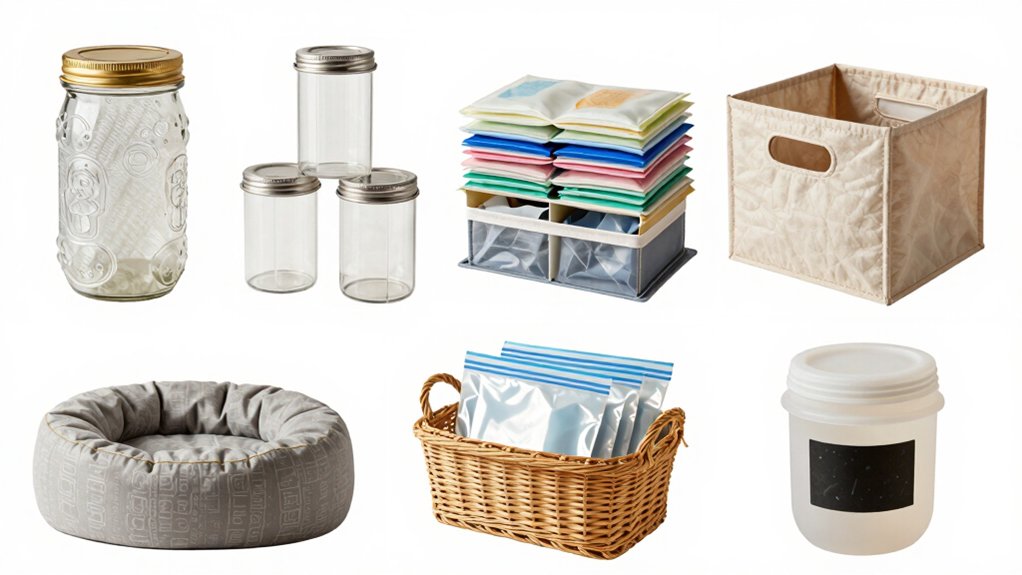
Pick an airtight, resealable bag or a sturdy, opaque container to block oxygen and light. Transfer beans from the original pouch if needed, then store them in a cool, dark pantry away from heat and strong odors. Use Mylar bags with oxygen absorbers or glass jars with condensation checks for extra protection. Freeze bulk portions in vacuum‑sealed bags, and add a one‑way valve to DIY containers. Label each bag with the roast date and rotate stock so the oldest beans are used first—more details await if you keep going.
Choose an Airtight Bag for Coffee Beans
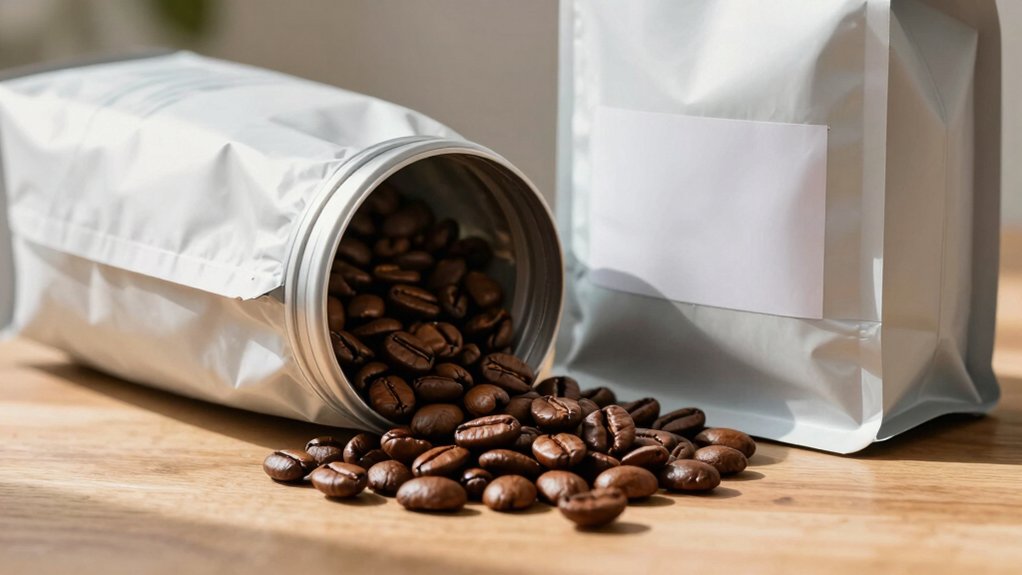
A handful of airtight bags can keep your opened coffee beans fresher longer. You should pick a bag that seals tightly, preventing oxygen from slipping in and spoiling the flavor. When you transfer beans from the original pouch to an airtight container, you cut down on moisture exchange and keep the beans dry. Choose a dark storage solution—opaque jars or specially designed bags that block light—because light accelerates oxidation and dulls aroma. If the original bag has a one‑way valve, you can keep it, but most bags benefit from a sturdier container that locks out air. Using containers that maintain a stable, cool environment helps preserve color, taste, and the coffee’s full character for weeks. Oxygen exposure is minimized by proper sealing and light-proof storage.
Store Beans in a Cool, Dark Pantry
You’ll keep your beans fresher by placing them in a cool, dark pantry, away from sunlight and heat. Add an airtight container or keep the original bag sealed so oxygen can’t get in, and consider labeling with purchase dates for optimal freshness. Zero sugar/sugar-free options
Cool Dark Location
Why store opened bean bags in a cool, dark pantry? A cool dark location shields roasted coffee beans from light and heat that speed oxidation. You keep the original bag sealed, limiting oxygen exposure and preserving flavor. Choose a pantry away from the stove, windows, and strong odors, maintaining a stable, room‑like temperature. Proper storage helps maintain texture and aroma over time, reducing the risk of flavor notes fading storing beans.
Airtight Container Use
Keeping beans in an airtight container is the simplest way to lock out oxygen, moisture, and pests while you store them in a cool, dark pantry. When you open a bag, transfer the beans to a glass canning jar or a sturdy plastic container with a tight‑sealing lid. Make sure the container is truly airtight; any tiny gap lets humidity creep in and spoils flavor. Dark, opaque jars also block light, which can degrade nutrients. If you prefer to leave beans in their original packaging, seal the opened bags tightly with a clip or zip‑lock before tucking them into a pantry shelf. This method keeps the beans fresh longer and prevents infestation, making airtight containers a reliable storage method for opened bags. Date tracker on lid
Stable Temperature Maintenance
Even with an airtight container, beans still suffer if the temperature swings. You’ll want to keep them in a cool, dark pantry where the temperature stays steady, ideally between 55°F and 70°F. Avoid placing the bag near ovens, radiators, or windows where heat or light can creep in. A stable temperature slows oxidation, preserving flavor and texture, while darkness blocks light that can degrade pigments and nutrients. If your bag isn’t sealed, transfer the beans to a resealable bag with oxygen‑absorbing packets or an airtight container to keep oxygen out. Check the pantry regularly for moisture or pests, and close the bag promptly after each use to lock in freshness and safety. Moreover, when possible, store on a sturdy shelf with a slight edge to prevent accidental tipping anti-tip stability.
Use Opaque Containers or Mylar Bags With Oxygen Absorbers for Coffee Beans
Ever considered how a simple container can keep your coffee beans fresh longer? You can lock out light, moisture, and oxygen by choosing opaque containers or Mylar bags paired with oxygen absorbers. Opaque jars block UV rays, while Mylar bags create a moisture‑proof barrier. Add oxygen absorbers to scrub residual air, slowing oil rancidity and preserving flavor. Keep the sealed vessel in a cool, dry, dark spot—never the fridge, which adds humidity. If you reuse jars, scrub away any lingering coffee oils or odors; otherwise, airtight containers will do the trick. Proper storage aligns with material durability and design considerations discussed for long-lasting percolator use, particularly the emphasis on durable, easy-to-clean options to maintain coffee quality over time. Induction compatibility and other safety features in kitchen appliances echo the importance of choosing robust storage solutions that minimize exposure to heat or magnetic fields, ensuring longevity of stored beans.
Freeze Bulk Beans in Vacuum‑Sealed Portions
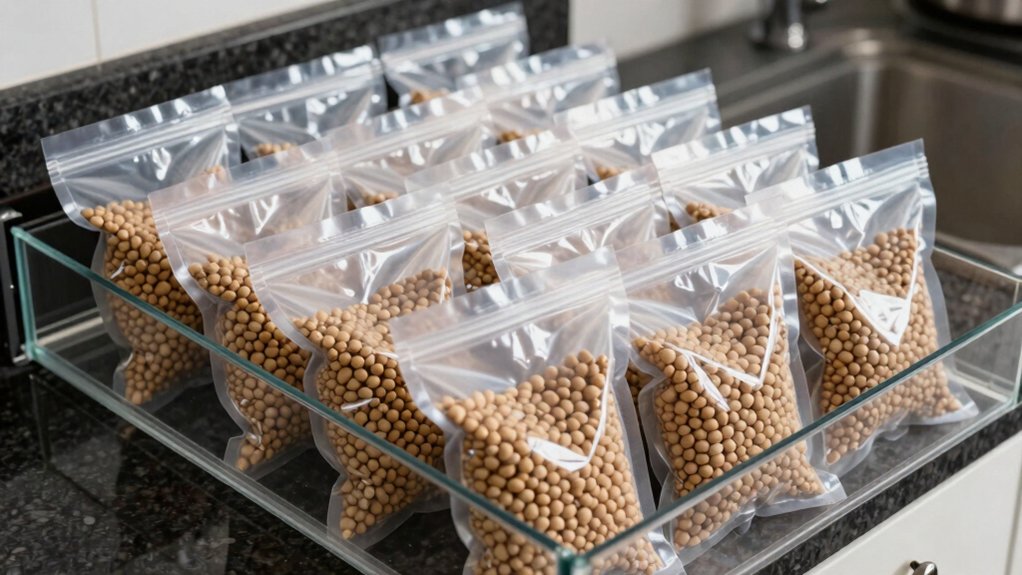
If you have a large bag of beans, cut it into two‑week portions, vacuum‑seal each one, and stash them in the freezer. This simple portioning lets you grab a ready‑to‑use batch without exposing the rest of the bulk beans to air. Vacuum‑sealed packs lock out moisture and oxygen, preserving oils, aroma, and deterring weevils. When you need beans, transfer a sealed pouch to the counter, let it thaw at room temperature, and use it right away—avoid refreezing to keep flavor intact. ATC-equipped refractometer-grade guidance can help ensure you’re measuring extraction consistency as you evaluate different roasts.
Use Glass Canning Jars With Condensation‑Pest Monitoring
After vacuum‑sealing bulk beans, you can switch to glass canning jars for everyday access and pest monitoring. Fill each jar with a portion of beans, keep the original sealed bag inside for an extra barrier, then tighten the lid. Store the jars in a dark, cool, dry pantry; the transparent glass lets you spot condensation or any tiny pests at a glance. If you notice moisture, wipe the interior dry before resealing to prevent mold. The clear walls also make pest monitoring simple—any weevils or moths appear immediately, so you can discard the affected jar before the infestation spreads. Avoid mixing beans from different batches in one jar, and always use clean, dry jars to keep your pantry safe. Round 0.8 size
Add a One‑Way Valve to DIY Coffee Containers
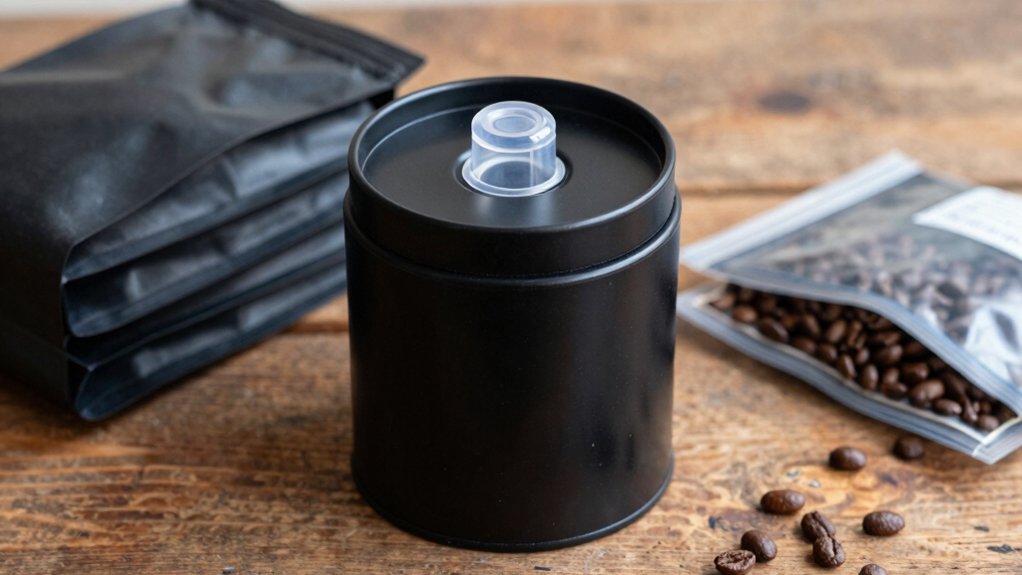
How can you keep your beans fresh without buying pricey specialty bags? Attach a one‑way valve to a DIY coffee container and turn a regular airtight container into a smart storage system. The valve lets CO₂ escape as beans de‑gas while blocking oxygen, dramatically slowing oxidation. You’ll hear the subtle hiss of fresh beans breathing, and you won’t need expensive pre‑valved bags.
- Snap a silicone valve onto the lid of a mason jar, sealing the edge with food‑grade silicone.
- Drill a tiny vent hole in the lid, insert the valve, and test for a snug, leak‑free fit.
- Store the jar in a cool, dark pantry; the valve maintains pressure equilibrium, keeping beans crisp.
This simple tweak gives you specialty‑grade freshness at home.
Rotate Stock and Label Beans With Roast Date
You should write the roast date on each bag using a clear, consistent format so you can spot freshness at a glance. Then, arrange your beans so the oldest‑dated bags are at the front and the newest at the back, pulling the earliest dates first. This simple rotation keeps flavor at its peak and prevents waste.
Date Format Date-Label
What’s the simplest way to keep track of your coffee’s freshness? Use a clear date‑label on every opened bag and store it in a dark, airtight storage container. Write the roast date in a consistent format—YYYY‑MM‑DD—so you can glance at the label and know exactly how long the beans have been aging. Keep the original packaging whenever you can, and if you need to transfer beans, choose an opaque container that blocks light and air.
- A handwritten label on the bag’s zip tie, showing “2024‑03‑15”.
- A printed sticker on the lid of a stainless‑steel container, matching the same format.
- A small card tucked into the bag’s fold, bearing the date in bold font.
Rotate stock by using the oldest beans first, ensuring each batch stays within its optimal window.
Label With Roast Date
Ever wondered why some beans lose flavor faster than others? You can stop that by labeling each opened bag with the roast date right after you break the seal. Grab a marker and write the date on the bag or on a small sticker that you stick to the top. This simple labeling step tells you exactly how long the beans have been exposed to air, so you can prioritize the oldest ones. Keep the bag sealed and stored in a dark, stable‑temperature pantry; the date helps you avoid using stale beans accidentally. If you notice pests, you can freeze the beans for three days, then return them to the same labeled container. This practice keeps flavor fresh and reduces waste.
Rotate Stock Regularly
How often do you glance at your coffee stash and wonder which beans are freshest? You can keep your opened bag in its original packaging, reseal tightly, and rotate stock so the oldest beans sit front and center. Label each bag with a roast date, then move newer bags behind older ones. This simple habit prevents stale coffee from lingering and makes your morning brew consistently bright.
- A clear, handwritten date on each bag, reminding you which beans to use first.
- A tidy shelf where the oldest opened bag is always at eye level, ready to grab.
- A quick visual scan that shows you’ve resealed everything and nothing’s forgotten.
Frequently Asked Questions
What Are the 4 Enemies of Coffee?
You’ve got four enemies: oxygen, light, heat, and moisture. Each one speeds oxidation and flavor loss, so keep your beans airtight, dark, cool, and dry to preserve taste.
How to Keep Beans Fresh After Opening?
Keep beans fresh by sealing the bag tightly, storing it in a dark, cool pantry, and freezing it three days after opening to kill pests. Use airtight jars only if you need visual checks.
What Is the 15-15-15 Coffee Rule?
You follow the 15‑15‑15 rule by using coffee within 15 minutes of grinding for aroma, brewing it for 15 minutes for optimal extraction, and pouring it over a 15‑second flow to preserve flavor.
How to Store Beanbags?
Keep the bag sealed, then place it in an airtight container or its original packaging. Store it in a cool, dark, dry pantry. If pests threaten, freeze the bag three days before returning it to the pantry.
In Summary
By following these tips, you’ll keep your beans fresh longer and enjoy richer flavor every brew. Use airtight or vacuum‑sealed containers, protect them from light and heat, and consider freezing bulk batches. Add a one‑way valve or oxygen absorbers for extra protection, and always label and rotate stock by roast date. With these simple habits, your coffee will stay aromatic and delicious from the first cup to the last.


