
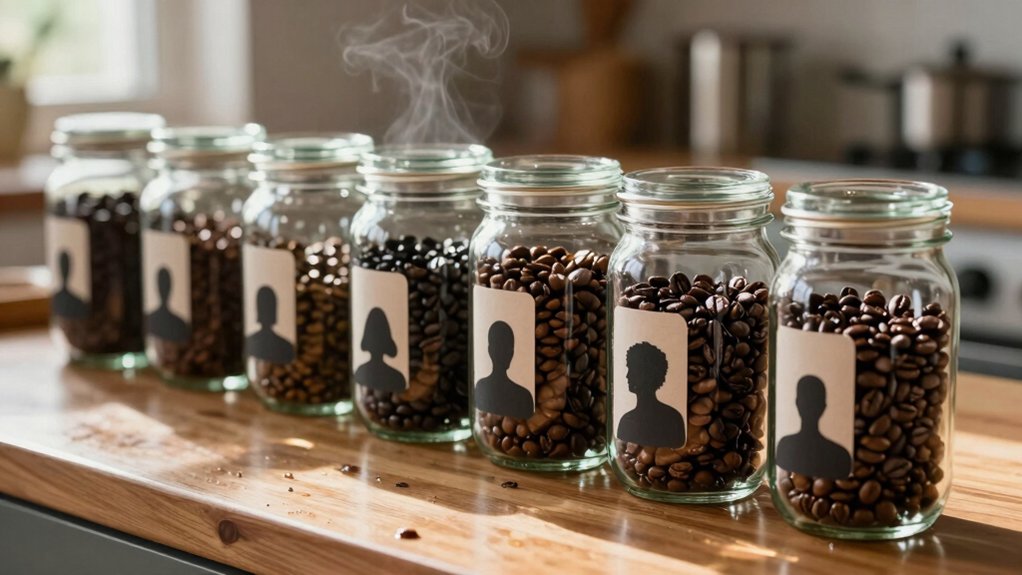
Keep your beans fresh by sealing them in an airtight, opaque container right after you open the bag, store it in a cool, dark spot around 65‑70 °F, and grind only what you’ll brew each day. Avoid heat, light, moisture, and excess air—these enemies speed oxidation and oil breakdown. Use a non‑reactive glass or ceramic jar with a tight lid and a de‑gas valve if possible. If you follow these habits, you’ll discover even more tricks to lock in flavor.
Why Freshness Matters: The Chemistry of Flavor Loss
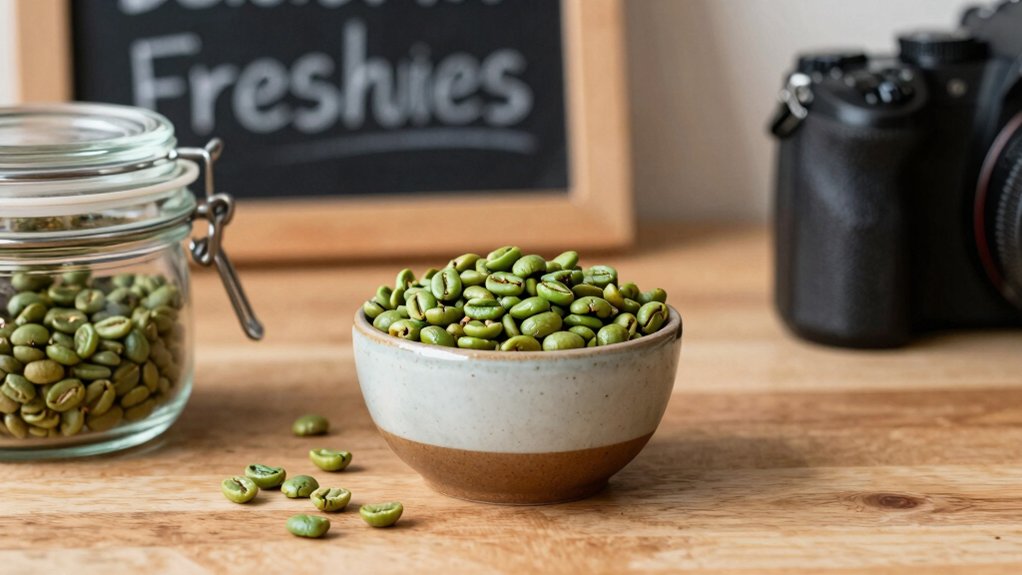
Because flavor begins to fade the moment beans leave the roaster, understanding the chemistry behind that loss is essential. When you expose freshly roasted beans to air, oxygen triggers oxidation, breaking down delicate oils and aromatic compounds. The longer the exposure, the faster the degradation, so maintaining freshness hinges on limiting that contact. Store your beans in an airtight container, away from moisture and heat, to slow the oxidative process. Check the roast date and aim to use beans within two weeks; after that, the flavor profile will have shifted noticeably. Proper storage preserves the complex chemistry that gives coffee its richness, letting you enjoy the intended taste with every brew. Oxygen exposure can accelerate flavor loss, so minimizing air contact is a key step in keeping beans vibrant.
Beat the Four Enemies of Coffee Storage Freshness
After learning how oxidation robs flavor, you can tackle the four primary enemies that speed up that process: air, moisture, heat, and light. Keep beans away from oxygen by sealing them in an airtight container, and store them in a cool, dark pantry to block light. Moisture must stay out; any humidity invites mold and dulls aroma. Heat accelerates oil loss, so avoid the stove, dishwasher, or sunny windowsill. By controlling each factor, you preserve the bright notes you love. An airtight container with a reliable sealed lid helps minimize air exposure over time.
Choose the Ideal Airtight Container for Your Beans
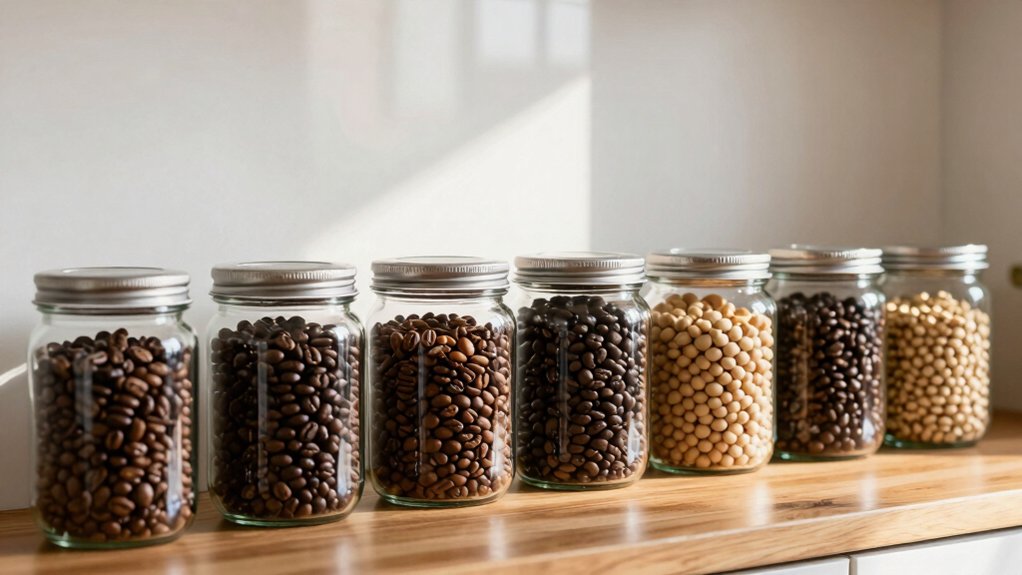
Choosing the right airtight container is key to keeping your coffee beans fresh. You’ll want a vessel made of non‑reactive materials—glass, ceramic, or high‑grade plastic—so oxygen exposure stays minimal and flavor stays pure. Look for a light‑proof design that blocks every ray, and if you buy small bags of freshly roasted beans, pick one with a de‑gas valve; it lets CO₂ escape while keeping oxygen out. Make sure the lid seals tightly yet opens easily for quick measuring. Transfer beans from their original pack to the container as soon as possible, then stash it in a cool dark place away from heat and sunlight. This simple setup preserves aroma and extends shelf life. Non-porous borosilicate glass provides purity of flavor and helps maintain consistent brewing results.
Use Opaque Containers to Block Light and Preserve Flavor
You’ll find that light accelerates oxidation, so storing beans in opaque containers keeps their aroma intact.
Choose ceramic, glass, or opaque plastic jars with tight seals to block light and limit oxygen.
An airtight, non‑reactive container will preserve flavor far longer than a clear jar.
Grain-size consistency in the grinder can also impact how well you preserve aroma during storage and use, ensuring you maintain optimal freshness from bag to cup.
Light Blocks Oxidation
Ever wondered why coffee beans lose their punch after a few weeks on the countertop? Light exposure accelerates oxidation, breaking down delicate oils and dulling flavor. By moving beans into opaque containers right away, you block that harmful light and slow the chemical decay. Choose glass, ceramic, or non‑reactive metal jars with airtight seals; they keep oxygen out while keeping photons out. Store the sealed jars in dark storage—like a pantry or cabinet—so even stray daylight never reaches the beans. This simple swap preserves aromas, maintains richness, and extends freshness. Remember, the moment you transfer beans from a transparent bag, seal them in an opaque container to lock in the coffee’s true character. Storage and Organization
Opaque Jars Preserve Aroma
After keeping light out, the next step is to trap the beans in an opaque, airtight jar. Opaque jars give you light protection that stops coffee oils from breaking down, so aroma preservation stays intact. Choose a container made of non‑reactive materials—ceramic, glass, or opaque plastic—to avoid unwanted flavor interactions. An airtight container seals out oxygen, delivering oxygen reduction that slows oxidation and extends peak freshness. For optimal freshness, consider a jar with an anti-static interior and a wide mouth for easy transfer hobbyist-friendly and faster cleaning. Store the jar away from heat and direct light, and you’ll keep each brew tasting bright and lively for weeks.
Set the Right Temperature Zone for Your Beans
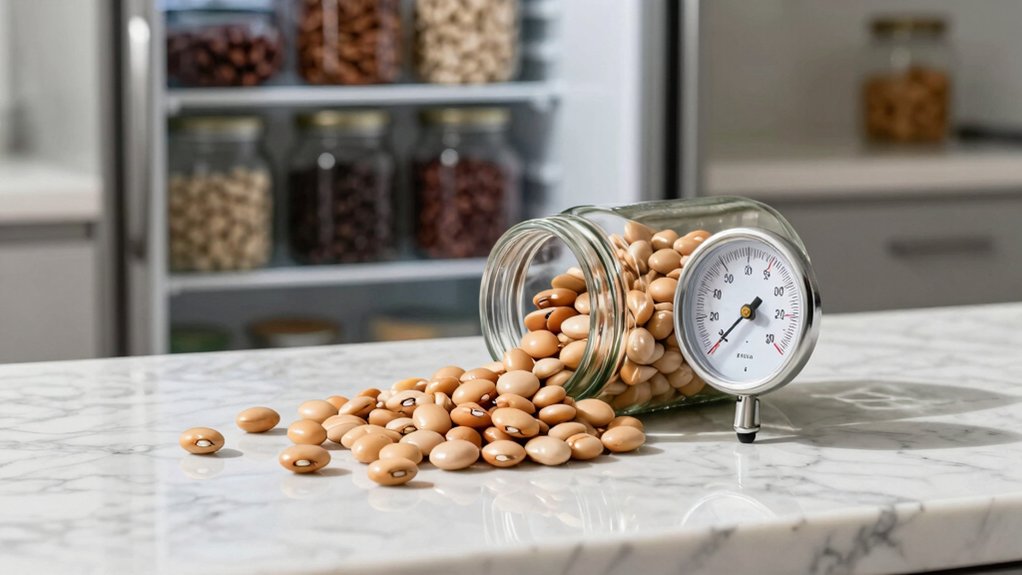
You’ll want to keep your beans in a cool, dark spot to slow oxidation and preserve flavor. Avoid placing them near windows, ovens, or any heat source, as even mild warmth accelerates oil loss. A low‑temperature, airtight container away from light will give your beans the best stability. Use a dedicated storage drawer or cabinet that maintains a stable, cool environment to further protect freshness temperature control and reduce exposure to ambient fluctuations.
Cool Dark Storage
How can you keep your coffee beans at their peak flavor? Choose a cool, dark storage spot that stays around 65‑70 °F and stays steady. Use an airtight container—glass, ceramic, or opaque plastic—to block oxygen and light. This slows oxidation, preserving the oils that give you aroma and flavor. Keep beans away from stoves, radiators, and sunny windows; the cooler zone keeps freshness intact longer. When you buy, note the roasting date and aim to use beans within two weeks. Smaller batches help you rotate stock, ensuring each cup starts with beans that haven’t aged past their prime. Storage science confirms that protecting beans from light and air is crucial for maintaining peak flavor over time.
Avoid Light Exposure
A cool, dark spot does the heavy lifting, but keeping light out is equally essential for flavor. When you store coffee, choose a cool, dark place and seal it in an airtight container that blocks light. An opaque glass, ceramic, or plastic canister shields beans from light exposure and preserves the delicate oils. Avoid direct sunlight, which accelerates oxidation and dulls aroma. Keep the container away from ovens, stoves, and heating vents; a stable room temperature is ideal. By using a non‑reactive, airtight vessel, you prevent moisture and odor absorption while maintaining peak freshness. Follow these steps, and you’ll keep beans fresh for weeks, enjoying every nuanced sip.
How Long Do Whole Beans Stay Fresh in Coffee Storage?
Ever wondered how long your whole beans stay fresh after roasting? The roast date is your best gauge—expect peak flavor for about two weeks. After that, oxidation slowly dulls aroma, even if the beans don’t spoil. Store them in an airtight container that blocks light exposure; a dark, cool pantry or a freezer works well. If you choose cooling/freezing, use a sealed bag and move beans quickly to avoid moisture and freezer burn. Keeping the beans whole preserves the oils that carry flavor, so you’ll notice a steadier whole beans freshness compared to ground coffee. Buy small batches, 8‑10 oz, and only grind when you’re ready to brew for the best taste.
Time Grinding for CO₂ Degassing and Peak Extraction
When should you grind your beans to capture their brightest flavor? You’ll get the most vivid cup when you let coffee beans finish CO₂ off‑gassing before grinding. For drum‑roasted beans, wait several days; for fluid‑bed roasts, 24 hours often suffices. This grinding timing lets aromatics emerge, preventing trapped CO₂ from muting or distorting taste. Grind only a portion each day rather than the whole bag to preserve storage freshness and keep peak extraction consistent. Taste test after each rest period; adjust based on roast level and personal preference. By syncing grinding timing with degassing, you maximize flavor intensity, ensure balanced acidity, and enjoy the full spectrum of your roast’s character.
Grind in Small Batches vs. Whole‑Bag Grinding: Pros & Cons
Even if you’re keen to brew a perfect cup, grinding the whole bag at once usually backfires; instead, pull a small portion, brew it, and store the rest whole. Grinding in small batches lets you capture the roast date’s peak freshness while limiting oxidation. A burr grinder delivers uniform particles, so each batch extracts evenly and retains aroma for a few days. Whole‑bag grinding may seem convenient, but the ground coffee loses flavor quickly, and the larger exposed surface accelerates oxidation. Balance your schedule: grind only what you’ll use within two‑three days, keep the remaining beans whole, and enjoy consistent taste.
| Method | Pros | Cons |
|---|---|---|
| Grind in small batches | Preserves freshness, reduces oxidation, better control | Requires frequent grinding |
| Whole‑bag grinding | Convenience, less prep time | Faster flavor loss, uneven extraction |
| Burr grinder use | Consistent particle size, optimal extraction | Higher upfront cost |
Freezing Coffee Beans: Best Practices & Pitfalls
How can you keep beans bright and aromatic for months? Freezing is your best ally for long‑term storage, but you must control moisture and odor. Follow these steps to lock in flavor and avoid aroma loss:
Freezing beans preserves bright aroma for months—use airtight containers, seal promptly, and avoid condensation.
- Pack beans in airtight containers or vacuum‑sealed bags before they hit the freezer.
- Reserve freezer storage only for bulk purchases; keep daily portions at room temperature.
- When you need beans, take out only the amount you’ll use, then let the package sit unopened until it reaches room temperature to prevent condensation.
- Transfer the opened portion to a fresh airtight container and return the rest to the freezer promptly.
Why Refrigeration Isn’t a Good Coffee Storage Method
Typically, refrigerating coffee beans does more harm than good. The fridge’s humidity injects moisture into the beans, breaking down delicate oils and accelerating staling. Even if you seal them in an airtight container, the cold environment still lets surrounding odors seep in, contaminating flavor. Moisture and odor absorption happen faster than any temperature‑stabilizing benefit, so freshness preservation suffers. For short‑term use, keep beans at room temperature in a cool, dark spot; this avoids the moisture‑odors trap. If you must use refrigeration, double‑seal an airtight container and store it far from strong‑smelling foods, but treat it as a temporary fix, not a long‑term storage solution.
Daily Storage Routine: Habits to Keep Beans Lively
Ever wonder how a simple daily routine can keep your coffee beans lively? Store coffee beans in a cool dark place, and you’ll lock in freshness. Here’s a quick habit list to follow each morning:
- Check the roast date – note it on the container; aim to finish within two weeks.
- Seal the airtight container – glass or ceramic with a tight lid, or an opaque plastic jar with a de‑gas valve for recent roasts.
- Keep it out of sunlight – place the jar on a pantry shelf, away from direct light and heat.
- Transfer leftovers – when you top up, move beans to a fresh airtight container to avoid stale air exposure.
Buy Smart: Portion Size, Roast Date, and Local Roasters for Maximum Freshness
Wondering how to keep coffee at its peak flavor? You’ll want to buy in modest portion size—8 to 10 oz bags—so you finish each batch before it ages. Scan the roast date; beans roasted within the last two weeks deliver the brightest notes. Prioritize local roasters who label their dates clearly; they ship fresh, reducing the lag between roast and purchase.
Stick to whole beans and grind before brew to lock in aroma. Plan your schedule so the next bag arrives just as the current one empties, preventing stale stock. By aligning portion size, roast date, and local sourcing, you preserve freshness and enjoy consistently vibrant coffee.
Frequently Asked Questions
Can I Store Coffee Beans in a Ceramic Mug?
Yes, you can store coffee beans in a ceramic mug, but keep it sealed with an airtight lid. The mug protects beans from light and moisture, preserving flavor longer than an open container.
Do Metal Containers Affect Bean Flavor?
Yes, metal containers can alter bean flavor; they may impart metallic notes or react with oils, especially if the metal isn’t food‑grade. Stick to airtight, non‑reactive vessels for best taste.
What Humidity Level Is Ideal for Coffee Storage?
You should keep coffee at roughly 50‑60 % relative humidity; that range prevents beans from drying out or absorbing excess moisture, preserving flavor and aroma while avoiding mold or staleness.
Is It Safe to Store Beans in a Pantry With Spices?
Yes, you can store beans in a spice‑filled pantry, but keep them in an airtight container to block moisture and odors. Avoid direct sunlight, and check for any flavor transfer before brewing.
Should I Label Frozen Coffee Portions With Dates?
Yes, you should label frozen coffee portions with dates. It helps you track freshness, avoid waste, and assure you use the oldest coffee first, keeping flavor and quality intact.
In Summary
By mastering the chemistry of flavor loss, you’ll keep every cup vibrant. Guard your beans against air, light, moisture, and heat with airtight, opaque containers stored at the right temperature. Freeze only when you need long‑term preservation, and avoid the fridge’s humidity. Portion wisely, note roast dates, and support local roasters. Stick to these habits, and your coffee will stay lively, aromatic, and endlessly enjoyable.


