

Grab whole beans from a local roaster and grind them with a burr grinder right before you brew, using only the amount you’ll need in the next few days. Store the rest in an airtight container with a one‑way valve or vacuum‑seal, keeping it cool and dark so excess CO₂ can escape while the oils stay protected. Brew at 195‑205 °F, weighing 15 g coffee to 240 g water (≈1:16) and give it a 30‑second bloom before the steady pour. Keep these steps in mind and you’ll discover even more tricks.
Pick Fresh Beans and Get the Grind Just Right
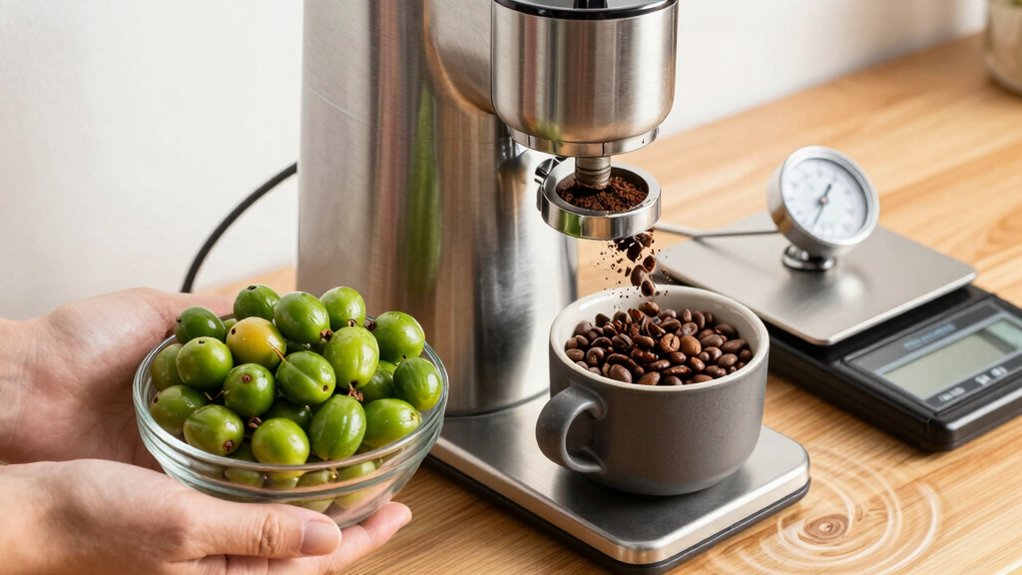
A fresh‑roasted bean is the foundation of a great cup, so start by buying whole beans from a local roaster and grind them just before you brew. Choose fresh-roasted beans that have rested the appropriate time—traditional drum roasts need a few days, fluid‑bed roasts can be used after about 24 hours—to let excess CO2 escape. Use a burr grinder, not a blade, to achieve a uniform grind; this ensures consistent extraction and prevents under‑extraction caused by lingering CO2. Grind only the amount you’ll use within a few days, then store the remaining beans in a cool, airtight container away from light. By timing your grind and keeping the beans fresh, you preserve aromatics and extract the best flavor. Regularly maintain your grinder and machine to maintain optimal flavor consistency grinder maintenance.
Store Fresh Beans in Airtight, Cool Containers (Long‑Term Options)
Where do you keep your beans?
You should move fresh beans from the original bag into airtight containers that feature a one‑way valve or a vacuum‑sealed lid. This airtight seal blocks moisture while letting CO₂ escape, preserving flavor during long‑term storage. Store the jars in a cool, dark pantry for short‑term use; if you need months of freshness, move a portion to the refrigerator, keeping the container sealed to avoid condensation. Label each jar with the date and rotate stock so you grind only what you’ll use soon. In addition, consider choosing containers rated for moisture and odor resistance as highlighted in the refractometer and storage guidance to maintain bean quality during extended storage temperature control.
| Container type | Cool storage location | Key benefit |
|---|---|---|
| Airtight jar with one‑way valve | Pantry (15‑20 °C) | Degassing while protecting oils |
| Vacuum‑sealed canister | Refrigerator (4 °C) | Moisture protection, extended freshness |
| Heavy‑wall freezer bag (sealed) | Freezer (‑18 °C) | Long‑term storage, but avoid frequent thawing |
Brew Fresh Beans With Precise Temperature, Ratio, and Bloom
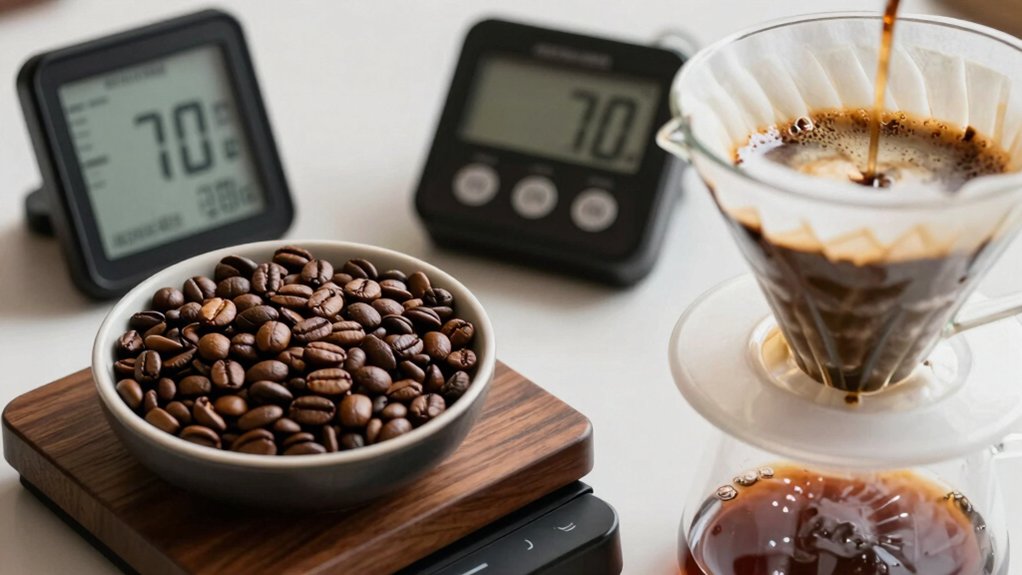
Ever wondered how a few simple tweaks can turn fresh beans into a cup that sings? You start by setting the temperature between 195–205°F (91–96°C) for optimal extraction. We a digital scale, weigh 15 g of fresh coffee and 240 g of water to hit a 16:1 ratio. Grind the beans just before brewing with a burr grinder; a uniform ground size preserves aroma and prevents rapid loss. Begin the bloom: pour a splash of water to wet the ground, stir, then wait 30 seconds while CO₂ escapes. After the bloom, continue pouring the remaining water steadily, maintaining the calculated ratio. This precise temperature, ratio, and bloom sequence unlocks balanced flavor, bright acidity, and a smooth finish in every cup.
Frequently Asked Questions
How Many Grams of Beans Should I Grind per Cup?
You should grind roughly 18–20 grams of beans for a standard 8‑oz cup; adjust to 16 grams for a lighter brew or 22 grams for a stronger one, depending on your taste.
What Grinder Burr Type Yields the Most Consistent Particle Size?
You’ll get the most consistent particle size with a flat‑burr grinder; its precise, uniform plates produce even grounds, minimizing channeling and delivering repeatable extraction for every cup.
How Long Can Freshly Ground Coffee Sit Before Flavor Degrades?
You should use the grounds within 30 minutes for peak flavor; after an hour they start losing brightness, and by three to four hours the aroma and acidity noticeably degrade.
Is a Pulse‑Grind Technique Better for Preserving Aromatics?
Yes, a pulse‑grind preserves aromatics better—by short bursts you limit heat and friction, keeping volatile oils intact. You’ll notice brighter flavor and less bitterness compared to continuous grinding.
What Is the Ideal Bloom Time for Different Roast Levels?
You should bloom light roasts 30‑45 seconds, medium roasts 45‑60 seconds, and dark roasts 60‑75 seconds; longer for darker beans because they release oils slower, and shorter for lighter beans to preserve delicate aromatics.
In Summary
By now you’ve learned that fresh beans, the right grind, proper storage, and precise brewing parameters are the keys to a stellar cup. Keep beans airtight and cool, grind them just before brewing, and nail the temperature, ratio, and bloom. Follow these steps each time, and you’ll consistently enjoy coffee that’s aromatic, balanced, and truly fresh.


