
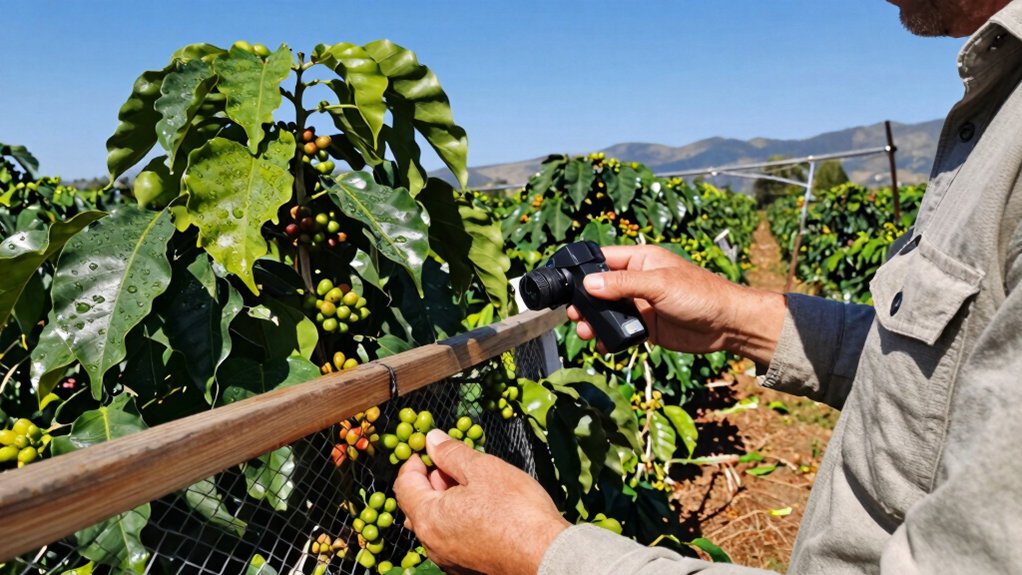
You’ll know a coffee farm is truly pesticide‑free when it’s certified organic, nurtures healthy, microbe‑rich soil, and relies on natural pest‑control instead of synthetics. Shade‑grown canopies and diverse intercropping bring predators and pollinators that keep pests in check, while rigorous residue testing guarantees no hidden chemicals on the beans. Stick around and you’ll discover how each of these practices works together to protect workers, the planet, and the flavor of your cup.
Why Pesticide‑Free Coffee Matters
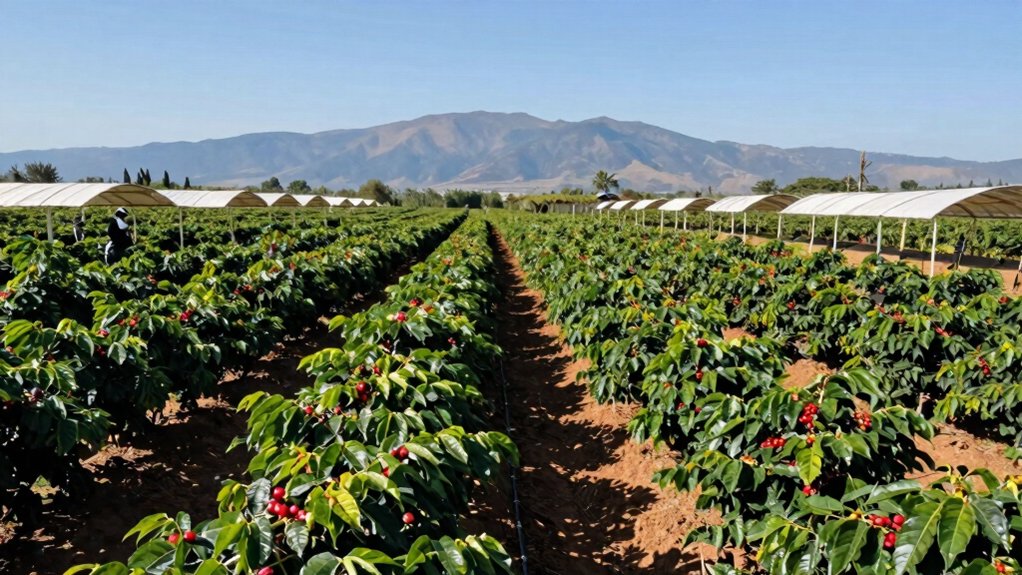
Why does pesticide‑free coffee matter? You care because synthetic pesticides like organophosphates, abamectin, and cypermethrin can linger on beans and threaten farmer health. Organic certification and other certification programs set strict monitoring and compliance standards that go beyond basic regulations, ensuring pesticide‑free coffee. By choosing organic farming, you support safer farming practices that cut environmental impact, protect soil microbes, and reduce runoff that harms waterways. Certified farms must track residues, so you avoid hidden chemicals that roasting mightn’t fully eliminate. The result is a cup that respects the planet, safeguards workers, and delivers a cleaner flavor profile—all thanks to rigorous certification and the commitment to pesticide‑free coffee. organic certification standards
How Soil Health Guarantees a Pesticide‑Free Coffee Bean
Ever wondered how thriving soil can keep your coffee beans pesticide-free? You’ll find that organic farming hinges on soil health, turning your farm into a living ecosystem. When you practice composting and soil stewardship, you feed the soil with organic matter, creating nutrient-rich soil that fuels robust coffee plants. Natural pest management then emerges—beneficial microbes and insects keep threats at bay without chemicals. This holistic approach satisfies organic certification standards, proving your coffee production is truly pesticide-free. By nurturing the ground, you reduce reliance on external inputs, protect biodiversity, and deliver a cleaner cup. In short, healthy soil is the foundation that guarantees a pesticide‑free coffee bean. 3–5 hours of pre-freezing
How Synthetic‑Free Pest Management Keeps Coffee Pesticide‑Free
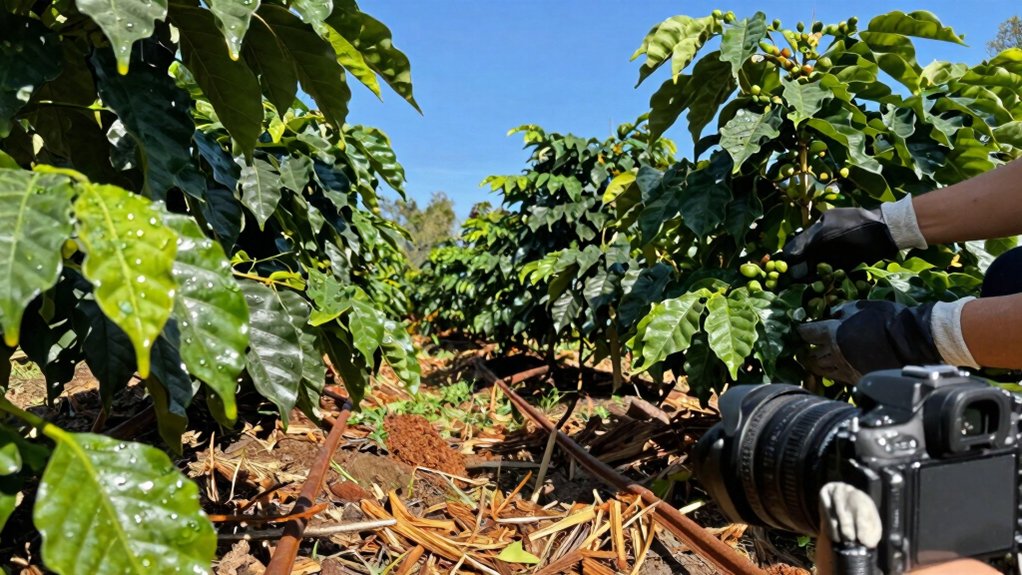
Healthy soil sets the stage, but keeping pests at bay without chemicals is what truly secures a pesticide‑free cup. You’ll rely on organic methods and synthetic‑free pest management that blend natural predators, trap crops, and careful timing. Integrated pest management lets you monitor pest pressure and intervene only when thresholds are crossed, using non‑synthetic pesticides if needed. Organic certification—whether Bird Friendly, Demeter, or Rainforest Alliance—verifies that no illegal chemicals slip onto your beans. Shade‑grown canopies host birds and insects that devour larvae, reducing the need for any spray. By embedding these coffee farming practices into daily routines, you protect the crop at source, ensuring the final brew remains truly pesticide‑free. Integrated pest management supports targeted interventions that minimize environmental impact while maintaining yield and quality.
How Biodiversity and Shade‑Growing Deliver Pesticide‑Free Coffee
Ever wondered how a canopy of trees can turn your coffee into a truly pesticide‑free brew? You’ll find that biodiversity and shade‑growing create a living shield that replaces chemicals with balance. Shade trees host natural predators, while intercropping invites pollinators that keep pests in check. This ecosystem approach underpins organic certification and guarantees a pesticide‑free cup. Shade‑grown canopy moderates temperature, deters disease. Intercropping layers diversify habitats, break pest cycles. Natural predators—birds and insects—consume larvae, reducing need for sprays. Pollinators boost fruit set and support overall pest management. Intercropping benefits further enhance resilience by supporting diverse species and aiding in natural pest suppression.
Frequently Asked Questions
Which Coffee Brand Has the Least Pesticides?
You’ll find the least pesticides in certified organic, Bird‑Friendly brands like Counter Culture’s “Organic Decaf” and Stumptown’s “Hair Bender,” because they strictly monitor and avoid synthetic chemicals.
Which Coffee Is Pure Without Cockroaches?
You’ll want certified organic or Bird‑Friendly beans; they’re grown without synthetic pesticides and rigorously inspected, ensuring the coffee you brew is pure and free from cockroach contamination.
What Coffee Does Not Contain Bugs?
You’ll want certified organic or Bird‑Friendly coffee, as those farms prohibit insects and use natural pest control. Look for USDA‑Organic, Rainforest Alliance, or Demeter labels to ensure bug‑free beans.
What Is the Least Toxic Coffee Brand?
You’ll find the least toxic coffee in the Least Toxic line—its beans are shade‑grown, organic, bird‑friendly, and certified, so you avoid synthetic pesticides and enjoy cleaner, greener brews.
In Summary
You’ve seen how healthy soil, natural pest control, and diverse, shade‑grown ecosystems work together to keep coffee truly pesticide‑free. By choosing beans that follow these practices, you’re supporting sustainable farms, protecting the environment, and enjoying a cleaner, richer cup. Every sip becomes a vote for agriculture that respects both the planet and your palate.


