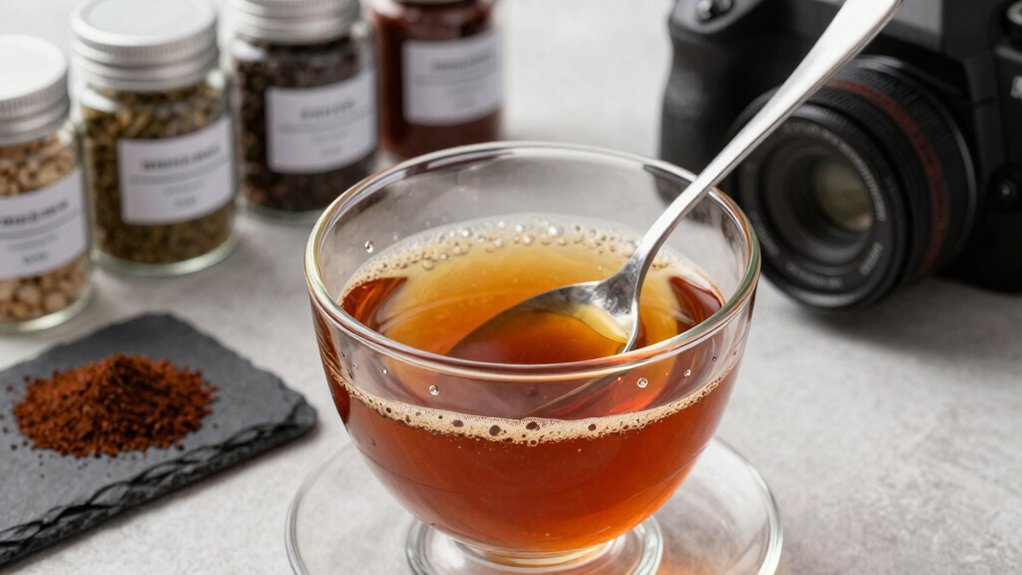
Start by inhaling the coffee’s aroma and hunt for sugar‑like notes—caramel, vanilla, ripe fruit, or honey—before the first sip. Note these cues on your cupping sheet, then take a quick sip to see if the palate confirms the perceived sweetness. Track how the sweetness changes with each slurp, watching for the interplay of acidity, fruit, and bitterness. If you keep going, you’ll discover more detailed techniques and scoring tips.
Detect Coffee Sweetness: Aroma Cues Before the First Sip
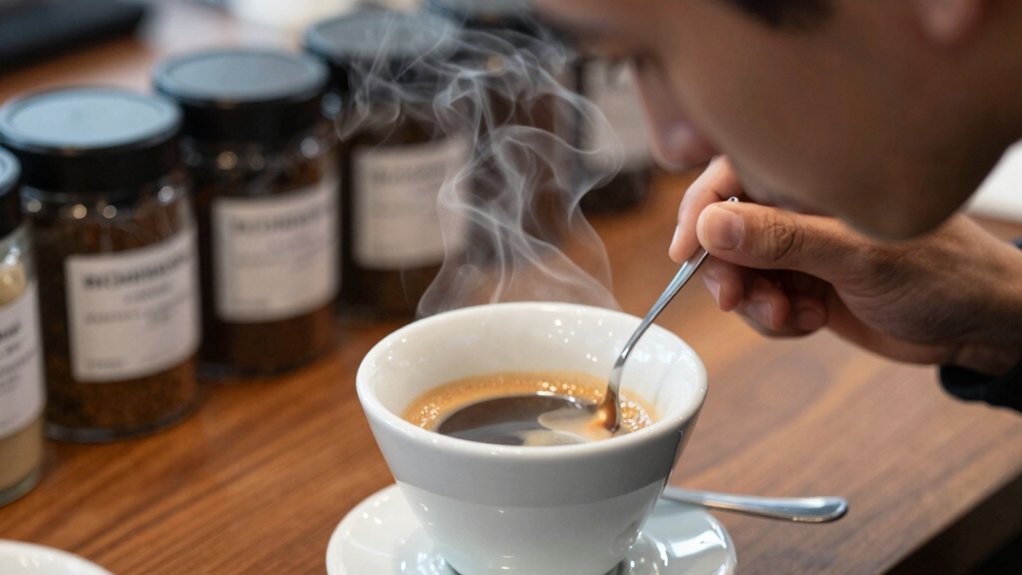
How can you tell a coffee will be sweet before it even touches your tongue? You start by inhaling the coffee aroma and noting aroma cues that hint at sugar‑like notes. During cupping, a quick sensory evaluation of the nose lets you gauge sweetness perception before any palate before sip. Nose‑clips reveal that removing aroma drops perceived sweetness from 6 to 3.6 points, yet the ranking of the sweetest beans stays stable, showing nonvolatile compounds also matter. Record your observations on the cupping sheet, noting the aroma‑taste interaction and how the scent predicts the later taste. This two‑step approach—first sniff, then sip—helps you capture early sweetness cues and verify them with actual flavor. The 3‑in‑1 AeroPress brewing approach can influence perceived sweetness by offering a smooth, fuller body with less bitterness, aligning aroma cues with the tasting experience aeroPress filters and supporting a cleaner extraction that highlights sweeter notes.
Track Coffee Sweetness Evolution Across Slurps
Ever wondered how a coffee’s sweetness changes from the first slurp to the last? You’ll notice that sweetness perception shifts as you move through cupping slurps, driven by aroma interaction and palate evolution. Early sips highlight fruity/floral notes and non‑sugar compounds that boost perceived sweetness.
Midway, bitter/papery flavors emerge, tempering the sweet feel. By the final slurp, the palate has adapted, and the lingering vanilla‑like finish may either sustain or diminish sweetness.
- Record perceived sweetness on each slurp.
- Note aroma intensity and its interaction with flavor.
- Track the rise of bitter/papery flavors over time.
- Use flavoromics to map non‑sugar compounds contributing to the evolving sweet profile.
Contrast Coffee Sweetness With Acidity, Fruit, and Bitterness
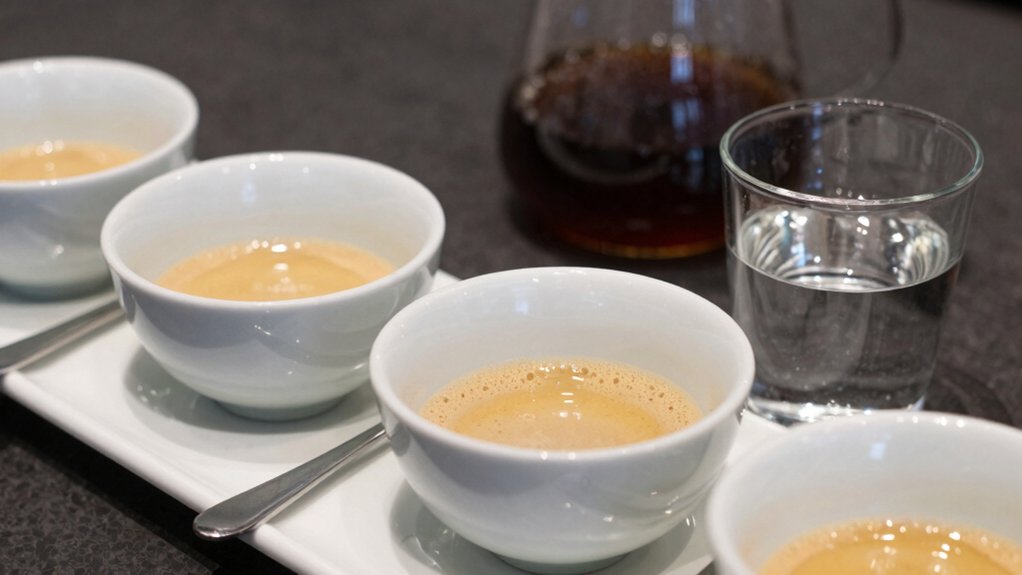
Why does a coffee’s sweetness seem to dance with its acidity, fruit notes, and bitterness? In coffee cupping you’ll notice that sweetness rises when bright acidity and fruity notes coexist, yet it drops as bitterness dominates. Aroma amplifies this contrast; a nose‑clip test shows that without volatile aroma, the perceived sweetness gap shrinks dramatically. Non‑sugar compounds, not the sugars themselves, drive the sweet sensation, especially when vanilla notes linger. Flavor interactions reveal that fruity/fermented aromas and subtle vanilla boost sweetness, while papery or overly bitter flavors suppress it. During contrast tasting, focus on how acidity lifts the sweetness, how fruit adds a layered sweetness, and how bitterness pulls it down, letting you map the delicate balance across each sip. Sweetness factors influence how you perceive aroma and flavor in a cup, guiding adjustments in grind size, brew time, and roast level for a balanced cup.
Score and Interpret Sweetness on the 15‑Point Scale
Ever wondered how to translate a cupping’s sweetness into a concrete number? On the 15‑point scale, you’ll notice a six‑point spread across coffees, but the nose‑clip test shows aroma can shrink that range to 3.6 points, confirming that aroma heavily influences sweetness perception. Remember, sugars are below detection thresholds, so non‑sugar compounds and flavor associations drive the scores. Higher fruity notes and subtle vanilla lift flavor intensity, while bitterness and papery tones pull it down.
- Rate the overall sweetness from 0 (none) to 15 (max).
- Note aroma cues that amplify or mute sweetness.
- Correlate fruity or vanilla notes with higher scores.
- Adjust for bitterness or papery flavors that suppress perceived sweetness. World Coffee Recipe Cards provide cultural context that can help explain how sweetness perception varies across origins and methods.
Frequently Asked Questions
What Is the 15-15-15 Rule for Coffee?
You apply the 15‑15‑15 rule by tasting the cup at hot, warm, and cold stages, rating aroma, fragrance, and flavor on a 15‑point scale each time to track how sweetness evolves.
How Do You Describe Sweetness in Coffee?
You describe coffee’s sweetness by noting its honey‑like, caramel, or fruit‑derived notes, the smooth mouthfeel, and how it balances bitterness; you reference the 15‑point scale and aroma’s contribution.
How to Find Coffee Cupping Score?
You calculate the cupping score by rating each attribute—aroma, flavor, aftertaste, acidity, body, balance, and overall impression—on a 0‑10 scale, then sum the numbers and divide by the attributes assessed.
How Do I Tell if My Coffee Has Sugar?
You can’t reliably tell if your coffee has sugar just by tasting; the sweetness you perceive usually comes from aroma and flavor compounds, not actual sugar. Use a lab test if you need certainty.
In Summary
You’ve learned how aroma clues the palate before you even sip, how sweetness evolves with each slurp, and how it balances against acidity, fruit, and bitterness. By scoring on the 15‑point scale, you can consistently gauge and compare coffee’s sweet character. Apply these steps in every cupping, and you’ll reliably identify and articulate the subtle sweetness that defines great coffee.


