
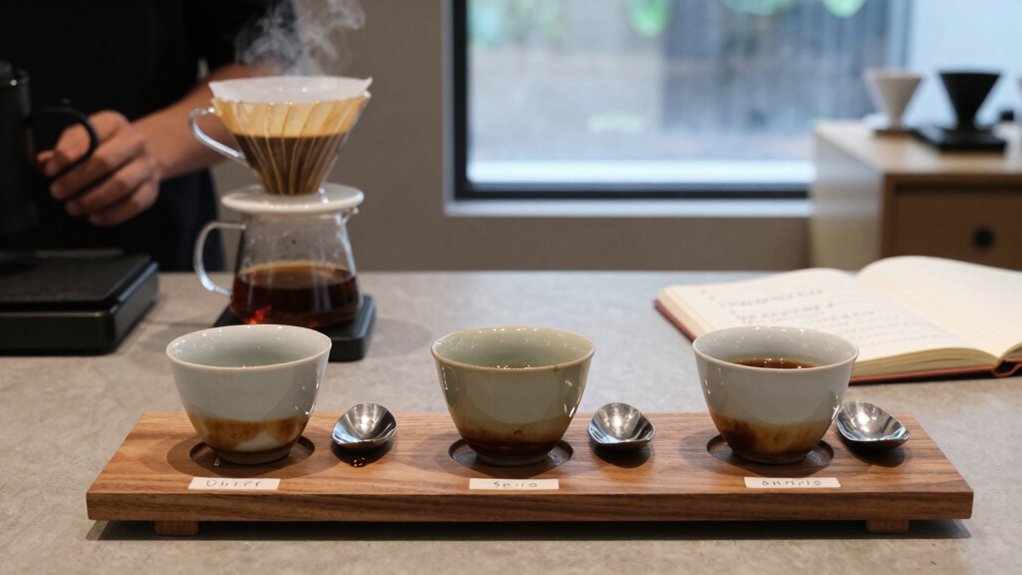
You’ll find that single‑origin coffee comes from one specific farm, region, or microlot, so its flavor reflects the local altitude, soil and climate. Pick a bag that matches the taste you crave—bright citrus from Ethiopian highlands or smooth chocolate from Brazilian valleys—and brew it consistently to compare. Look for clear labels that note origin, processing method, and roast level, and use a 1:15‑1:16 water‑to‑coffee ratio for cupping. If you follow these steps, you’ll discover how terroir, micro‑climate, and brewing method shape each cup.
What Is Single‑Origin Coffee?
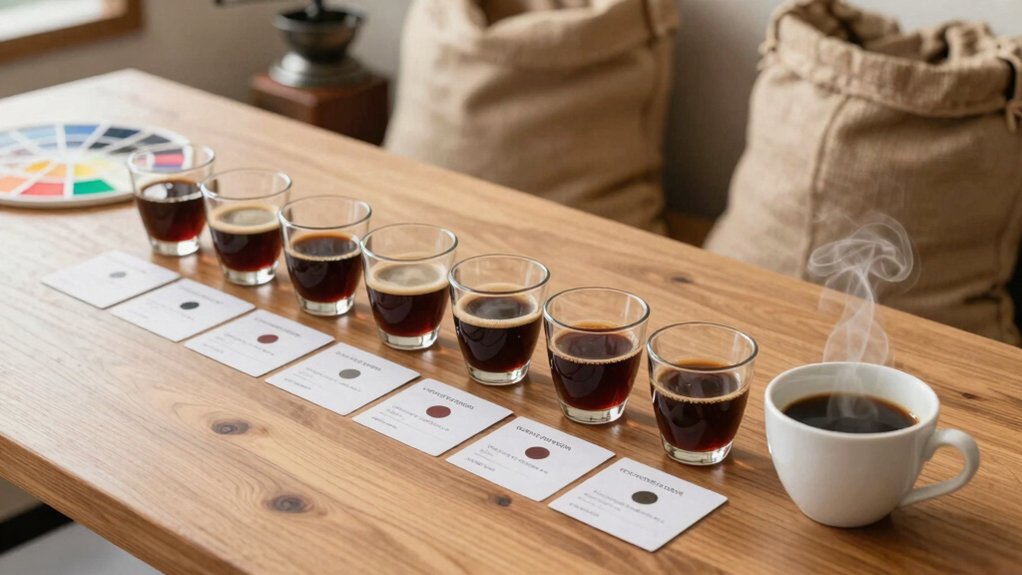
What exactly is single‑origin coffee? You’re drinking beans that come from one specific origin—whether that’s a country, a region, a farm, or even a microlot—without any blend from other places. This single‑origin label promises traceability, letting you see the terroir that shaped each cup: altitude, climate, soil, and farming practices all leave a mark. Those terroir factors create distinct flavor profiles, so you can taste bright citrus from an Ethiopian highland or deep chocolate notes from a Guatemalan valley. The microlot distinction narrows the focus even further, highlighting a tiny plot’s unique character. Remember, single‑origin isn’t automatically superior; it simply showcases the particular nuances of its origin. Organic certification can also indicate how coconuts (in related products) are grown without synthetic pesticides or fertilizers, underscoring purity and traceability in coffee as well.
How to Pick Your First Single‑Origin Coffee?
You’ll want to match the coffee’s flavor profile to what you already enjoy—whether it’s bright citrus, smooth chocolate, or fruity berry notes.
Think about the region’s typical roast style, since Ethiopian beans often shine light‑roasted while Colombian ones tolerate a medium roast.
Start with a single bag, brew it consistently, and compare the taste to your preferences.
Consider how the cube of flavors in the tasting notes can help you build a profile for future purchases regional flavor profiles and how that might guide future selections.
Flavor Profile Match
Curious where to start? You’ll find your sweet spot by matching flavor notes to your palate. Begin with Brazil Cerrado: smooth, chocolatey, velvety coffee beans that ease you into single‑origin complexity without overwhelming you. Next, try Colombia Anserma for balanced caramel sweetness and subtle fruit hints, offering approachable acidity. Mexico Chiapas brings comforting cocoa, gentle citrus, and a strong aroma—perfect for tasting nuance. Ethiopia Yirgacheffe dazzles with bright floral profiles, citrus, and stone fruit, ideal for drip or pour‑over that highlights origin profiles. Use this tasting guide to rotate among origins within the same regional terroir, mapping how each flavor note shifts your preferences and building confidence in your single‑origin journey. Flavor profiles guide your comparisons across origin notes and help you identify your preferred coffee map.
Regional Roast Preference
How do you choose a region that eases you into single‑origin complexity? Start with a balanced area like Colombia Anserma or Mexico Chiapas, where regional flavors are approachable yet distinct. Aim for a light to medium roast level to let terroir shine without heavy roast masking. Check the origin processing—washed beans highlight clean acidity, while natural beans add fruitiness—so you can taste the intended character. Use a 1:16 tasting ratio as your baseline, brewing with drip, pour‑over, or immersion to observe how grind size and method amplify the terroir. Compare this to a Brazil Cerrado for chocolatey comfort or an Ethiopia Yirgacheffe for bright, floral notes, and you’ll quickly gauge which regional roast preference fits your palate. The selection can be guided by the versatility and durability discussed in curated coffee‑station setups, which emphasize consistency and organization alongside flavor exploration coffee‑bar versatility.
Why Terroir Matters for Coffee?
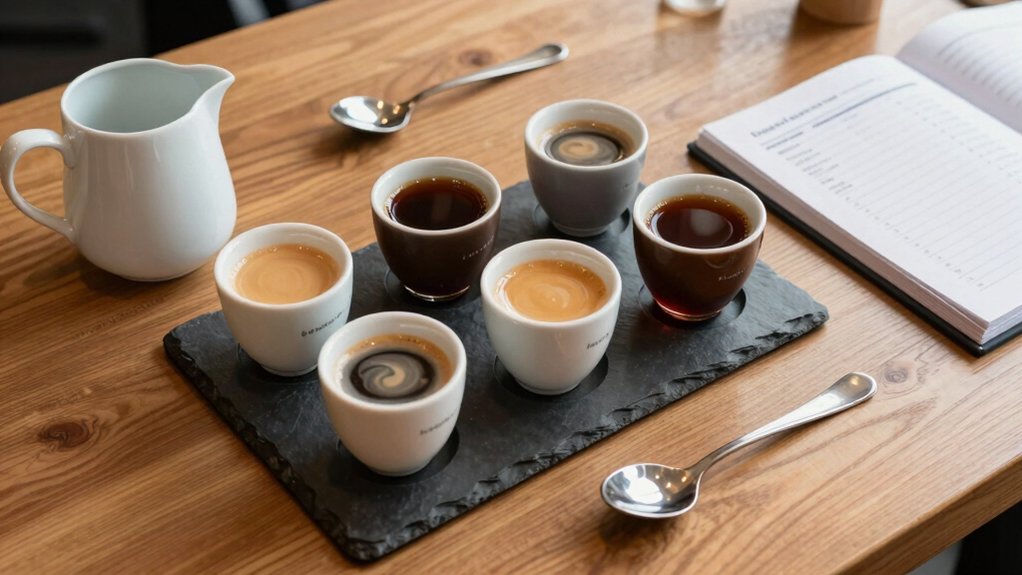
You’ll notice that terroir directly shapes a coffee’s flavor profile, from bright acidity to rich body. The storage and freshness practices described, such as one-way CO2 valves and date trackers, help preserve those delicate aromas from origin to cup freshness preservation.
Terroir Shapes Flavor Profile
Why does terroir matter? You’ll notice that terroir—altitude, soil, climate—directly sculpts a coffee’s flavor profile. At higher elevations, beans densify, delivering bright acidity and intricate notes that set a single‑origin coffee apart. Lower, warmer sites produce sweeter, fruitier, fuller‑bodied cups. Mineral‑rich volcanic soils inject clean, metallic finishes, while local soil composition can add subtle earthiness. These terroir‑driven nuances let you pinpoint an origin’s signature before you even sip. When you compare neighboring farms, the altitude‑driven differences become evident: a high‑altitude Ethiopian Yirgacheffe bursts with citrus, whereas a lower‑altitude Colombian may lean toward caramel sweetness. Understanding these variables sharpens your palate and guides your selection of truly distinct single‑origin coffees, and recognizing how processing methods can influence flavor helps you anticipate adjustments in taste terroir factors.
Microclimate Influences Aroma
Terroir’s impact doesn’t stop at altitude and soil; the microclimate—daily temperature swings, rainfall timing, and humidity—fine‑tunes each bean’s aromatic chemistry. Even brief shifts in weather during the growing season can alter the balance of sweetness and acidity, influencing how these aromas develop in the cup. microclimate influence You’ll notice that an elevated single‑origin plot with cool nights and intermittent rain slows sugar formation, letting floral and citrus aromas develop more fully.
When the microclimate stays humid, sugars stay soluble longer, boosting berry‑like and herbaceous notes.
Conversely, a drier spell concentrates sugars, pushing chocolate and earthy tones.
Processing methods either highlight or mute these terroir‑driven scents: a washed wash will accentuate the bright, clean aroma, while a natural dry process amplifies fruit‑forward, wine‑like perfume.
Decode Coffee Labels: Origin, Process, Roast
Ever wondered what those detailed labels really mean? When you see a Single‑Origin tag, it should point to a specific farm, mill, or lot, not just a country. Those origin labels let you trace the coffee’s terroir—altitude, climate, soil—that shape its flavor. The processing method, whether washed, natural, or honey, tells you how fermentation will affect acidity, body, and fruit notes. Look for the roast level; light to medium roasts preserve terroir nuances better than dark roasts. Transparent labeling and traceability, often via direct‑trade or cooperative networks, ensure consistency and let you compare flavor profiles across origins. By decoding these details, you’ll choose beans that match your palate and support sustainable sourcing.
Four Single‑Origin Coffees to Try (and How They Taste)
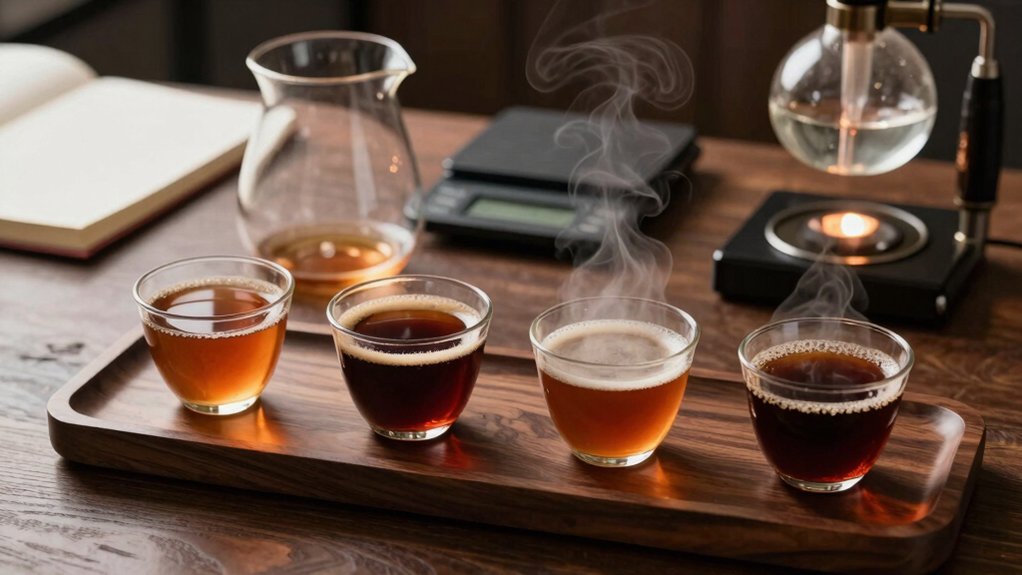
Curious about which single‑origin beans deserve a spot in your daily ritual? Start with Peru Atahualpa from the Pichanaqui region; its hand‑pulled process yields bright citrus and honey flavor notes that linger. Ethiopian Yirgacheffe, a classic single‑estate offering, delivers a smooth, balanced cup with chocolate, floral, and lemon nuances—perfect for a morning boost. Tanzanian Peaberry thrives in darker roasts, giving you caramel, stone‑fruit, and chocolate depth that feels indulgent. Mexico Soconusco, grown near the Tacana Volcano, shines in a light roast with cocoa richness and a lime‑like brightness. For consistency, explore decaf options from each origin; they preserve the same flavor notes while letting you enjoy the ritual any time of day. This tasting guide highlights regional character without sacrificing quality.
Micro‑Lot vs. Estate vs. Co‑Op: Which Fits Your Palate?
Which coffee category aligns with your taste preferences? If you crave bright, pinpoint terroir notes, a micro‑lot single‑origin will deliver sharp, place‑specific flavors. An estate coffee offers a uniform, clean flavor profile that reflects a single farm’s consistent environment. A co‑op blends variability with collaborative quality control, giving you a balanced cup at a friendlier price.
| Attribute | Micro‑Lot | Estate | Co‑Op |
|---|---|---|---|
| Terroir focus | Intense, specific | Consistent, broad | Moderate |
| Flavor profile | Sharp, nuanced | Uniform, clean | Balanced |
| Price | Higher | Higher | Lower |
| Availability | Limited | Limited | Wider |
Choose the one that matches how you want your palate to experience single‑origin coffee.
Identify Seasonal Freshness and Harvest Timing
You’ll notice that each coffee’s peak flavor aligns with its harvest window, so checking the season tells you when the beans are freshest. When you buy a roast‑to‑order batch, you’re catching those seasonal flavor peaks before they start to fade.
Because availability shifts with each harvest, you’ll need to act quickly or expect the next lot to appear only after the producer’s new season begins.
Harvest Window Awareness
When does a coffee truly hit its peak? You’ll notice that a Single‑Origin’s harvest window dictates its freshness, and the origin country’s climate sets the calendar. A fresh lot arrives just weeks after picking, delivering peak flavor before aging dulls brightness. Track the Ethiopian October‑December window or the regional Colombian months, and you’ll know when to buy. Roasters release beans near their optimum, so availability spikes and then fades. If you miss that window, the next season’s lot won’t appear until the following harvest, making repeat purchases time‑sensitive. By aligning your purchase with the harvest window, you capture the brightest acidity and fruitiest notes, ensuring each cup reflects the bean’s true peak.
Seasonal Flavor Peaks
Because coffee beans reach their brightest acidity and richest sweetness just after the harvest, recognizing the seasonal flavor peaks of single‑origin coffees is essential for timing your purchase. You’ll notice that a fresh roast from a specific origin region bursts with vivid citrus or berry notes only when the harvest timing aligns with peak ripeness. Micro‑lot releases often showcase these peaks, delivering a concise window of optimal taste before the next crop arrives.
By tracking the calendar of each region, you can anticipate when a Single‑Origin Coffee will hit its peak, allowing you to buy while the flavor is at its most vibrant.
This focus on seasonal freshness helps you enjoy the most nuanced, lively cup possible.
Timing‑Based Availability
Harvest calendars dictate when single‑origin beans hit their freshest window, so tracking those dates is key to snagging the best cup. You’ll notice that each harvest marks a narrow availability period; a micro‑lot may disappear after a few days, while larger releases linger for weeks or months. When a roaster announces a new single‑origin, note the harvest month and align your purchase with the peak freshness window—typically within two weeks of roasting. Seasonal promotions often limit availability, so act fast to capture the intended flavor profile. If you miss a batch, expect the next year’s harvest to differ slightly, as climate and processing variations shift the flavor subtly. Keep a calendar, set alerts, and treat each release as a time‑sensitive opportunity.
Set Up a Precise Cupping Session
How do you guarantee a cupping session captures every nuance of a coffee’s origin? Start by weighing 8–10 g of Single-Origin beans for each 150 mL of water, aiming for a 1:15–1:16 ratio. Grind just before brewing to a medium‑coarse texture for drippers or a medium grind for paper‑filtered methods, preserving aroma and flavor. Heat water to 195–205 °F (91–96 °C) and pre‑warm cups and grinder to avoid temperature shocks that mute acidity and delicate notes. Label each sample with a neutral code, then cup them in the same sequence. Use a consistent form to record aroma, flavor, acidity, body, and aftertaste, noting how processing—washed versus natural—shifts each origin’s profile.
Conduct Step‑by‑Step Tasting Protocol
After weighing and labeling each sample, rinse the cup, take a quick sniff of the whole beans, then grind them fresh to a medium‑fine consistency. You’ll use a consistent 1:16 brew ratio by weight, heating water to 195‑205 °F. Pour over the grounds, let the coffee bloom, then stir gently. Begin by inhaling the aroma and noting the first impression; this aroma analysis sets the stage for identifying origin notes. Sip slowly, letting the liquid coat your palate, then pause 10‑15 seconds. Record acidity, fruit or stone‑fruit hints, chocolate or nut tones, and finish. Repeat the exact protocol for each Single Origin Coffee, comparing clarity of origin notes while keeping grind size and brew ratio identical.
Match Origin Traits to Brewing Methods
By aligning each origin’s natural acidity and body with the right brewing method, you can let the coffee’s terroir shine. Choose grind size and water temperature that respect the single‑origin’s processing method and flavor profile. Light‑acid Ethiopian Yirgacheffe thrives with a fine grind, 195‑205 °F water, and a pour‑over at 1:16. Tanzanian peaberry tolerates a medium grind, 200 °F, and espresso at 1:15. Washed beans like Kenyan AA prefer a cleaner cup, while natural Brazilian Cerrado benefits from a coarser grind and longer brew.
| Origin | Ideal Brewing Method |
|---|---|
| Ethiopian Yirgacheffe | Pour‑over / Drip |
| Tanzanian Peaberry | Espresso |
| Colombian Anserma (washed) | Aeropress (short) |
| Brazil Cerrado (natural) | French Press |
Match these traits, adjust grind size, water temperature, and brew ratio, and the terroir will express itself fully.
Answer FAQs on Strength, Roast, and Storage
Ever wondered why a single‑origin cup can feel weak or bold? Your perception of strength isn’t baked into the bean; it hinges on roast level and brew ratio. Light‑to‑medium roasts let the terroir shine, delivering bright acidity and a nuanced flavor profile, while darker roasts mute those origin notes and add body.
Freshness matters—single‑origin beans peak within weeks of roast, then decline. Store whole beans in an airtight, opaque container away from light and heat, and grind only before brewing to lock in aroma. Use roasted beans within 2‑4 weeks; ground coffee loses its scent in days. By controlling roast level, grind timing, and storage, you’ll consistently enjoy the intended flavor profile.
Frequently Asked Questions
How Does Altitude Affect Caffeine Content in Single‑Origin Beans?
You’ll find that higher‑altitude beans usually contain slightly more caffeine because cooler temperatures slow plant metabolism, prompting the coffee plant to produce more caffeine as a natural pesticide.
Can Single‑Origin Coffee Be Decaffeinated Without Losing Characteristic Flavors?
Yes, you can decaffeinate single‑origin beans and retain much of their signature taste, especially using the Swiss‑water or CO₂ processes, which preserve nuanced aromatics while removing caffeine.
What Is the Environmental Impact of Transporting Micro‑Lot Coffee Globally?
You’ll find that shipping micro‑lot coffee worldwide creates a sizable carbon footprint—air freight and long‑distance trucking emit greenhouse gases, while packaging waste and fuel consumption add further environmental strain.
Do Single‑Origin Coffees Retain Their Flavor Profile After a Year of Storage?
You’ll notice that single‑origin coffees usually lose some brightness and nuanced aromatics after a year, but the core flavor profile can stay recognizable if you store them airtight, cool, and dark.
How Do Water Mineral Levels Influence the Taste of Different Origins?
You’ll notice that higher mineral content, especially calcium and magnesium, brightens acidity and enhances body, while soft water lets subtle origin notes shine; low‑mineral water can mute complexity, making flavors seem flat.
In Summary
Now you’ve got the basics—single‑origin coffee’s unique flavors, how terroir shapes each bean, and the right brewing methods to highlight those notes. Pick a region, note the process, and use a precise cupping routine to discover what you love. Keep beans fresh, store them right, and experiment confidently. Your palate will thank you, and every cup will feel like a mini‑adventure.


