
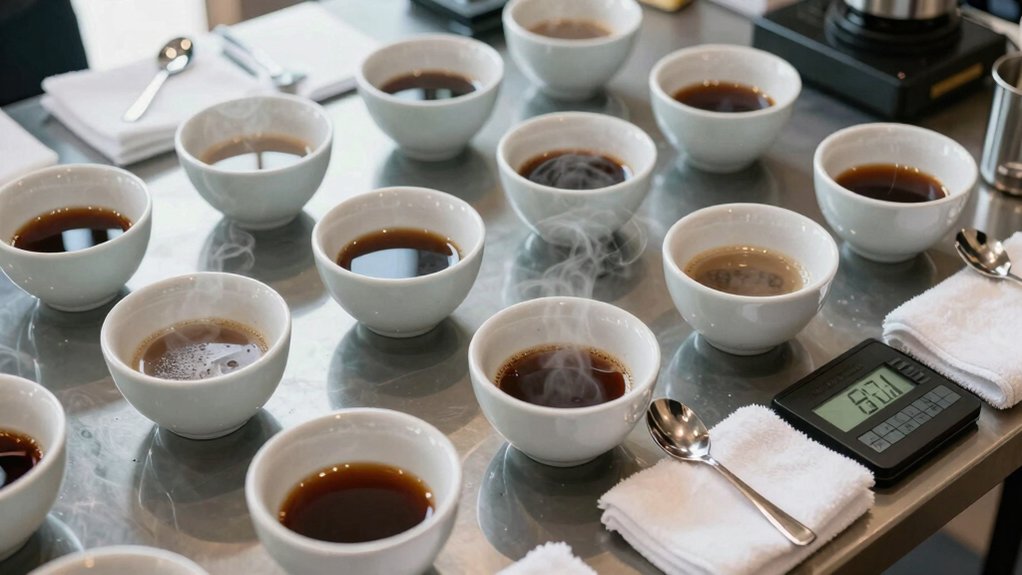
Start with a 1:17 water‑to‑coffee ratio—about 180 g of 200 °F water for every 10 g of grounds—and keep your cup size, grind, and four‑minute brew time consistent. Measure both coffee and water on a scale, reserve ~50 g for the bloom, then pour steadily in a circular motion. Break the crust at four minutes, stir, skim, and slurp loudly to aerate before tasting aroma, sweetness, body, and acidity. Adjust the ratio in small steps for grind size or roast level, and you’ll discover deeper nuances as you continue.
Define Coffee Cupping and Why Water Ratios Matter
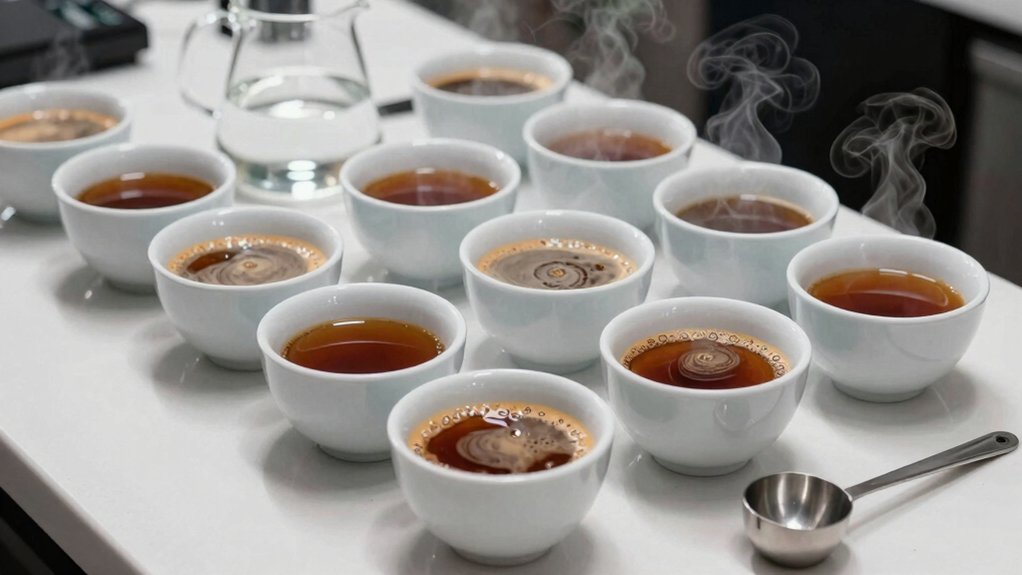
Why does coffee cupping matter? You use it to compare aroma/flavor assessment across beans, ensuring consistent quality and informed buying decisions. In a cupping protocol you grind about 20 g of coffee, place it in 150–300 ml cups, and pour water at 200–205 °F. The coffee-to-water ratio, typically 1:17 to 1:18, standardizes extraction so each sample yields comparable intensity. You break the crust after four minutes, slurp to aerate, and taste as the brew cools, noting body, sweetness, and acidity. This side‑by‑side tasting lets you pinpoint origin, processing method, and roast profile. By adhering to the ratio and protocol, you eliminate variability and focus on true sensory differences, making your evaluations reliable and repeatable water ratios.
Choose the Optimal Coffee Cupping Water Ratio for Consistent Extraction
Where do you start when you need a reliable cupping ratio? Begin with a coffee ratios benchmark of 1 : 17 (about 180 g water to 9 g coffee) and adjust within the 16:1–20:1 water-to-coffee guide range. Use a scale for both grounds and hot water; volume estimations cause drift. Pick a fixed cup size—150–300 ml—and keep grounds per cup consistent, usually 8–16 g. If you roast dark, a slightly higher ratio (e.g., 1 : 18) can mellow bitterness; lighter roasts may benefit from a tighter 1 : 16. Keep water temperature between 90–95 °C and maintain the same brew time across samples. By locking the ratio and only tweaking grind size, temperature, and time, you ensure extraction stays uniform for every cupping session. The accuracy of measurements benefits from using a refractometer-based approach to monitor extraction metrics alongside your ratios TDS measurements.
Calculate Exact Coffee and Water Weights Using the 1:17 Standard
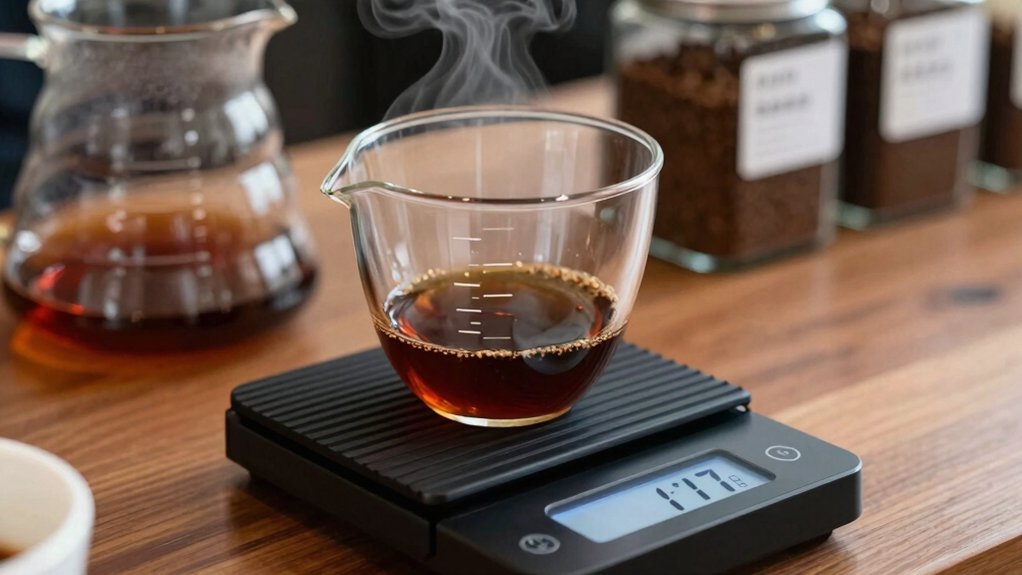
Need to know exactly how much coffee and water to use for a 1:17 cupping ratio? The coffee-to-water ratio is simple: 1 g coffee per 17 g water. Start by deciding your total water weight, then perform the grams‑to‑water conversion. Divide the water amount by 17 to get the coffee weight, and adjust for bloom if you’re using a vessel’s capacity.
- Measure water – weigh your target water (e.g., 260 g).
- Subtract bloom – reserve ~50 g for bloom; usable water = 210 g.
- Convert – coffee = usable water ÷ 17 (210 ÷ 17 ≈ 12.4 g).
- Scoop estimate – if you lack a scale, use ~7 g per tablespoon; 12 g ≈ 1 ½ Tbsp.
Follow these steps, and you’ll hit the 1:17 standard every time.
Heat Water to 200 °F and Measure the Correct Cupping Volume
Heat the water to a steady 200 °F so the aroma extracts evenly and the cup stays consistent. Measure out roughly 180 g of water per bowl to hit the 1:18 coffee‑to‑water ratio you’re aiming for. This precise temperature and volume give you a clean base for breaking the crust and tasting later. Squeeze-release and twist-release release mechanisms can aid quick use in preparing multiple cups during tastings.
Ideal Water Temperature
Ever wondered why a precise 200 °F (93 °C) water temperature matters for cupping? It unlocks aroma, ensures even extraction, and respects the 1:18 ratio you rely on. When you heat water to exactly 200 °F, the coffee oils bloom uniformly, and the 4‑minute steep yields a clean, repeatable cup. Consistency in water temperature also lets you compare beans without hidden variables skewing the results. This precision aligns with best practices in optimizing extraction and is supported by temperature-control standards used in cupping protocols temperature control.
Accurate Volume Measurement
Maintaining the 200 °F water temperature sets the stage, but the next step is measuring the exact volume for each cupping bowl. You should aim for a consistent water ratio—about 180 g of water per vessel when you follow a 1:18 proportion. Use a calibrated beaker or a digital scale to pour between 150 ml and 300 ml, ensuring every cupping cup holds the same amount.
When you switch to a 1:17 ratio, weigh 9–10 g of coffee and fill the bowl with roughly 180–190 g of water. This uniform volume lets you break the crust at four minutes, skim the grounds, and compare aroma and flavor without volume‑induced bias.
Consistency in water and ratio is the backbone of reliable cupping.
Brew the Coffee, Set a Timer, and Break the Crust at Four Minutes
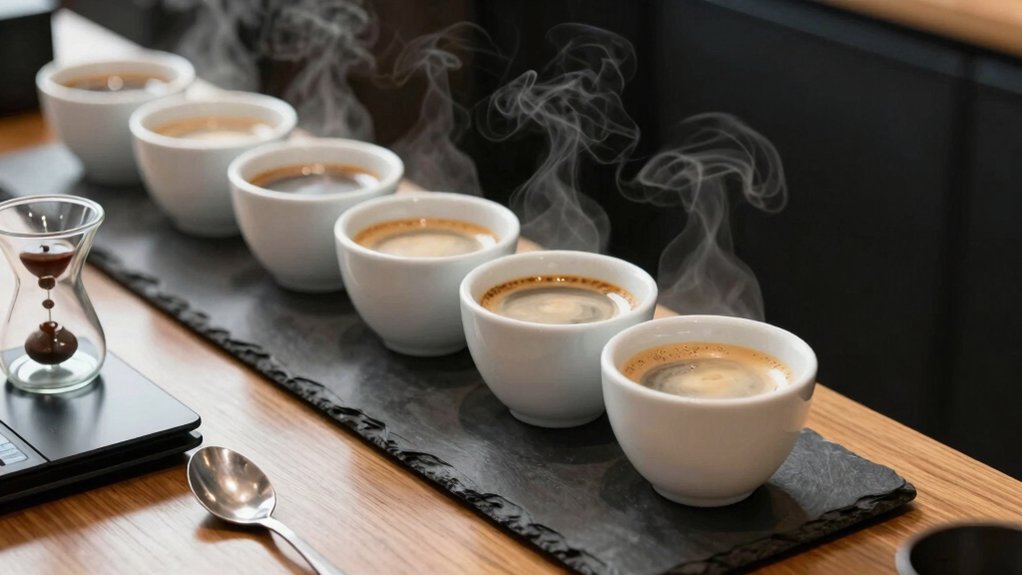
You pour the hot water in a steady, circular motion until the cup is nearly full, then start a four‑minute timer. At the exact four‑minute mark you break the crust with a cupping spoon, scraping the surface to release aroma. This timing lets you capture the coffee’s full flavor before you stir and continue the cupping process. Ensuring temperature control during the pour helps maintain consistent extraction and aroma calibration feature.
The Pouring Technique
How do you ensure a consistent cupping extraction? You start with a 1:18 coffee‑to‑water ratio, using about 180 g of water per bowl, and heat it to roughly 200 °F (93 °C). The pouring technique matters: pour a steady, circular stream to fully wet the grounds, avoiding splatter. Set a timer for four minutes as soon as you finish pouring, then let the crust form. Additionally, using a consistent filter choice can help maintain a uniform extraction and a cleaner cup, especially when comparing cupping notes across samples AeroPress filters.
- Heat water to 200 °F.
- Measure 180 g water for each bowl.
- Pour slowly in a circular motion, keeping the flow even.
- Start the timer the moment the last drop lands.
Crust Breaking Timing
Ever wondered when to break the crust for optimal extraction? You start the four‑minute brew with a 1:17 coffee‑to‑water ratio, letting the surface form a thick crust. As soon as the timer hits four minutes, you perform crust breaking timing: plunge a cupping spoon through the crust, then dump it into a spare bowl for disposal. Immediately stir the foamy top to blend aromas and promote even extraction, then skim any floaty grounds. Keep this four‑minute window consistent across all cups so you can compare aroma and flavor reliably. Between samples, rinse spoons and reset your palate to avoid cross‑taste contamination. Mastering this timing sharpens your cupping precision and highlights subtle differences between brews. Filtration system can influence how cleanly oils are preserved during extraction, which matters for cupping comparisons and consistency.
Cool, Slurp Loudly, and Evaluate Flavor Notes
Why wait for the perfect sip? Cool the cup for a minute, then slurp loudly with a cupping spoon. The loud draw aerates the brew, spreading aroma, sweetness, and acidity across your palate. Keep the water ratios steady so the temperature drop reveals subtle flavor notes without masking them. Follow these steps to maximize your evaluation:
Cool the cup, slurp loudly, and let aerated aromas reveal subtle flavors as the brew cools.
- Break the crust at four minutes by stirring gently; this releases wet aroma for an accurate read.
- Skim the surface with two spoons, discarding floating grounds and foam to keep the top clean.
- Rinse the spoon between samples and sip water to reset your taste buds.
- Sip between 8‑10 minutes after pouring, noting how flavor notes evolve as the coffee cools.
Adjust the Ratio for Grind Size and Roast Level
Do you know that tweaking grind size and roast level can shift the ideal water‑to‑coffee ratio? When you go finer, push the ratio toward 18–20:1 to avoid bitterness; when you go coarser, drop it to about 16:1 for a fuller body. Darker roast level often taste stronger, so you may back off coffee or add a splash more water. Start with your baseline, then adjust incrementally, tasting for balanced sweetness, acidity, and body.
| Grind Size | Suggested Ratio |
|---|---|
| Fine | 18–20:1 |
| Medium | 17:1 |
| Coarse | 16:1 |
Troubleshoot Common Coffee Cupping Water‑Ratio Problems
When you’ve fine‑tuned grind size and roast level, the next step is to spot why the water‑to‑coffee ratio isn’t delivering the expected cup. Small measurement errors, inconsistent grind, temperature shifts, and uneven extraction can all throw off your cupping results. Check each variable before blaming the ratio.
Check grind, temperature, and measurement before blaming the water‑to‑coffee ratio.
- Verify scale calibration; a 1‑gram slip changes a 17:1 water ratio dramatically.
- Ensure grind consistency; a coarse patch extracts slower, making the brew taste weak.
- Keep water at 200 °F; cooler water reduces solubility, mimicking an over‑diluted ratio.
- Use identical cup volumes and 18–20 g coffee per bowl to compare samples fairly.
Frequently Asked Questions
What Is the Best Ratio for Cupping Coffee?
You’ll get the most reliable results using a 1 : 17 coffee‑to‑water ratio—about 18 g coffee per 300 ml water—scaled to your sample size, measured with a scale, and brewed for four minutes before tasting.
What Is the 15-15-15 Rule for Coffee?
You use 15 g coffee, add 15 g (≈15 ml) water, and let it steep for 15 seconds before breaking the crust, letting you assess aroma quickly and consistently.
What Is the Golden Ratio for Cupping Coffee?
You’ll find the cupping golden ratio is roughly 17 : 1 water‑to‑coffee, often rounded to 17 : 1 for ease, though the precise mathematical ratio is about 17.42 : 1.
What Is the Perfect Coffee to Water Ratio?
You’ll hit the sweet spot at about 1 gram coffee to 17 grams water (≈1:17). That ratio balances flavor and extraction, works across methods, and keeps your cupping consistent and repeatable.
In Summary
Mastering coffee cupping water ratios lets you taste every nuance of a bean with precision. By sticking to the 1:17 rule, heating water to 200 °F, and timing the brew, you’ll extract consistent flavors every time. Adjust the ratio for grind size or roast level, and troubleshoot any off‑notes quickly. With these steps, you’ll confidently evaluate coffees, compare batches, and hone your palate like a pro.


