
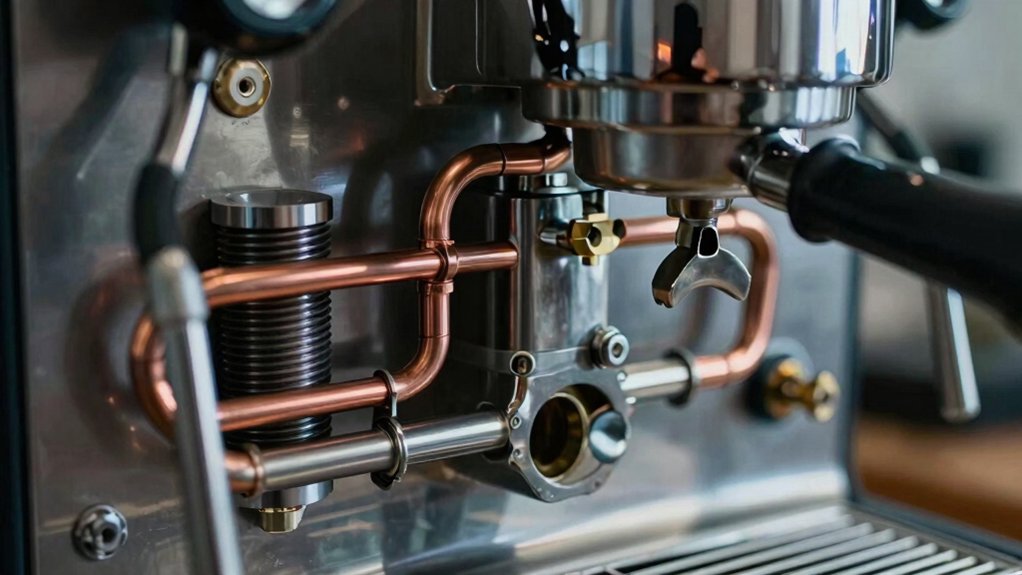
You’ll notice a thermoblock heats up fast, stays compact and budget‑friendly, but it can drift temperature between shots and has more welds that may leak or scale. A thermocoil, on the other hand, uses a single heated tube, giving you tighter, more uniform temperature control, lower leak risk and easier descaling, though it’s a bit bulkier and slower to reach full heat. If you want deeper insight into which system fits your kitchen and when a boiler might be worth considering, keep going.
Thermoblock vs Thermocoil: Operation and Budget Appeal
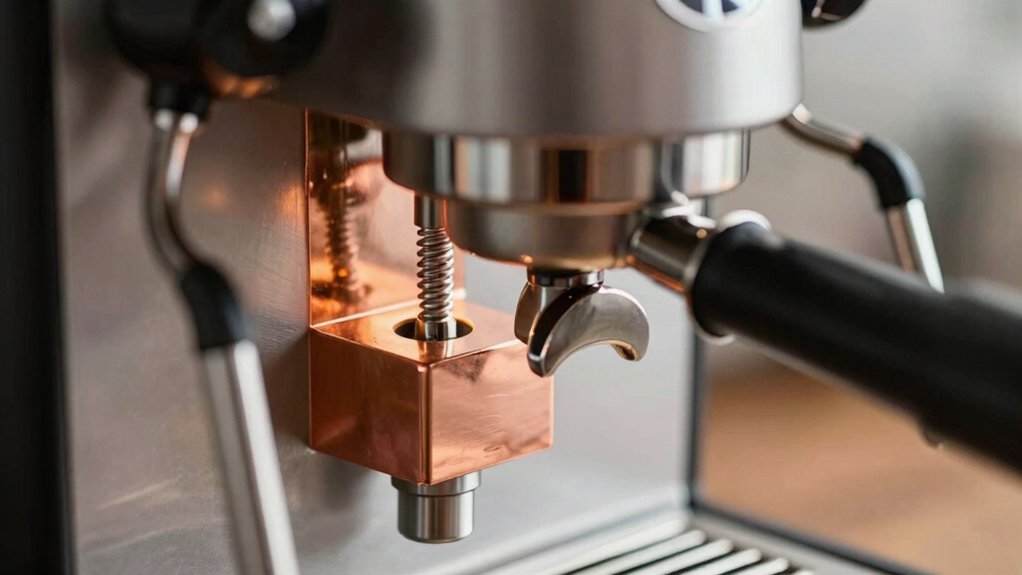
A thermoblock uses on‑demand heating, sending water through a small metal block where the heating element spikes temperature instantly. You’ll notice a quick brew, but shot‑to‑shot temperature consistency can drift, and durability varies, raising long‑term cost. A thermobolock design can also impact maintenance and part replacement over time on‑demand heating and the rest of the system.
Thermocoil vs Thermoblock: Operation and Performance Edge
A thermocoil heats water by pushing it through a continuously heated metal tube, delivering rapid, uniform temperature rise and minimal leak points. You’ll notice the coil’s single‑piece path keeps temperature stability tight, so each shot hits the target brewing temperature without the wobble that sometimes hits a thermoblock. The heating system also doubles as a heat exchanger, letting you separate steam from brew cleanly while still offering water on demand and rapid heat‑up.
| Feature | Thermocoil |
|---|---|
| Consistency | High – uniform heat transfer |
| Leak risk | Low – single tube |
| Speed | Fast – rapid heat‑up |
You appreciate the thermocoil’s edge in performance, while the thermoblock remains a budget‑friendly, compact alternative. Industrial-grade designs in coffee equipment often prioritize a stable heat source to maintain shot consistency.
Thermoblock vs Thermocoil: Temperature Stability vs. Speed
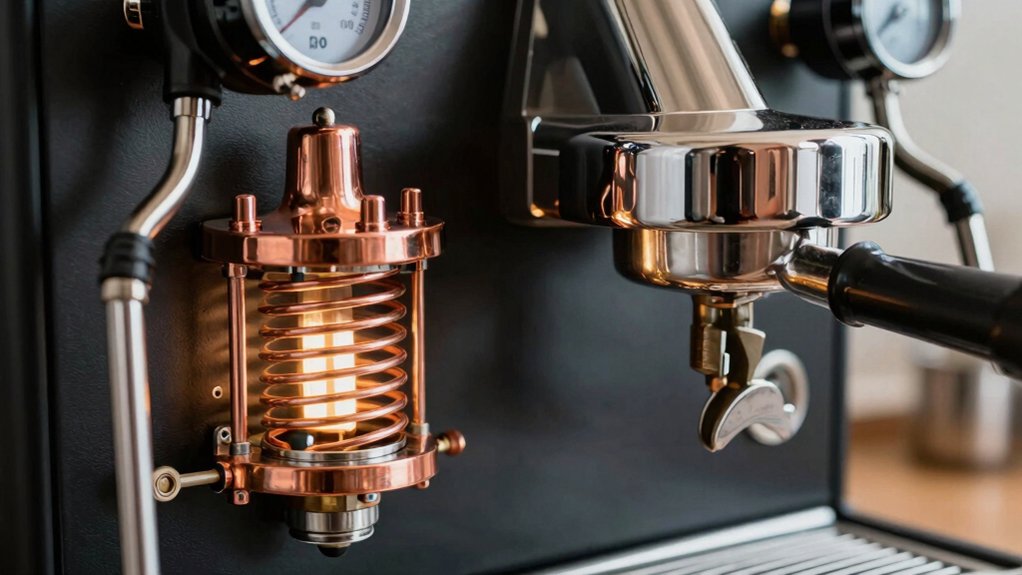
While the thermocoil’s continuous tube and water circulation keep the brewing temperature steady, reducing drift across multiple shots, the thermoblock still wins on sheer speed. In terms of durability and surface wear, the 10,000+ times sanded surface of some trays mirrors the reliability you’d want in high-use machines like espresso systems, reinforcing the idea that faster heat-up can coexist with long-lasting performance in the right design long-lasting performance.
Thermoblock vs Thermocoil: Durability, Leak Risk, and Scaling
You’ll notice that thermoblocks have more welded joints, so they present more leak points than the single‑pipe thermocoils. Additionally, the bead-level inspection of components, such as consistent hole sizing and proper alignment in related designs, highlights how a tiny discrepancy can influence reliability over time component consistency.
Leak Points
Where do leaks most likely appear? In a thermoblock you’ll find many welded joints and narrow multi‑chamber channels, each creating a potential leak point along the water path. The block‑based design forces water through tight passages, so any crack or seam can let moisture escape, raising the leak risk. Regular descaling supports integrity across both systems, similar to how durable construction and proper fit matter in reliable pod storage drawers for long‑term use. Material quality helps ensure fewer wear points and smoother maintenance for any water‑path design.
Scale Accumulation Rate
How quickly does scale build up in your machine, and why does it matter? In a thermoblock, narrow channels and welded joints trap mineral deposits fast, so scale buildup accelerates and forces frequent descaling. A thermocoil’s single continuous tube circulates water more evenly, slowing accumulation and easing maintenance. The difference impacts durability, leakage risk, and overall heating system performance, directly affecting your espresso machine’s longevity. Descaling benefits can be more straightforward with thermocoils because flushing is often possible without full disassembly, while thermoblocks may require more extensive internal access.
Longevity Expectations
What determines how long your espresso machine will stay reliable? You’ll find that a thermoblock’s welded joints create more leak points, so its durability can swing wildly between brands. A thermocoil, by contrast, uses a single continuous tube, cutting leak risk and boosting longevity. Both systems wrestle with scaling, but the smoother interior of a thermocoil handles deposits better, reducing the frequency of descaling and water‑treatment interventions. Regular maintenance keeps any espresso machine humming, yet thermocoils generally demand fewer repairs and less component replacement over time. If you prioritize durability and want to minimize leaks and scaling hassles, the thermocoil typically offers superior longevity. Maintenance routines and careful cleaning can further extend performance across both systems.
Thermoblock vs Thermocoil: Choosing the Best System for Your Kitchen
You’ll want to weigh how steady each system keeps your brew temperature, because that directly affects flavor consistency. Consider the long‑term durability and how much upkeep you’re willing to do—thermocoils usually need less frequent maintenance, while thermoblocks can be more prone to scaling.
Finally, match the machine’s size and price to your kitchen space and budget, keeping in mind that a compact thermoblock may save room but a thermocoil often offers greater reliability over years.
Temperature Consistency
Ever wonder why some espresso shots taste consistently balanced while others drift in flavor? You’ll notice that thermocoil’s closed‑tube circulation gives smoother temperature stability than a thermoblock’s on‑demand channels. The tubular design promotes even heat transfer and steadier water heating, so shot‑to‑shot variation drops dramatically. Adding PID control can tighten the curve for both, but the inherent heating element design of thermocoils still edges ahead for home espresso machines that crave reliable espresso brewing.
- Thermocoil reduces temperature spikes via uniform water flow
- Thermoblock’s narrow channels cause quicker heat loss between shots
- PID control smooths fluctuations for either system
- Consistent heat transfer improves flavor balance shot‑by‑shot
- Home espresso machines benefit from thermocoil’s lower leak risk and stable brewing temperatures
Longevity and Maintenance
Most espresso enthusiasts quickly discover that thermocoils tend to outlast thermoblocks because their single, continuous copper tube eliminates the many welds and narrow channels that create leak‑prone weak spots. When you compare longevity, the thermocoil’s simple water‑path reduces failure points, giving the heating system higher reliability over years of use.
Both systems suffer scaling, but a thermocoil’s tubular design makes descaling easier and more effective, especially if you pair it with good water treatment. Regular descaling and filtered water are essential maintenance steps for any espresso machine; they keep scaling at bay and preserve performance.
While a high‑quality thermoblock can last with diligent care, the thermocoil generally offers superior durability and less frequent repairs.
Thermoblock vs Thermocoil: Upgrade Timing and When to Consider a Boiler
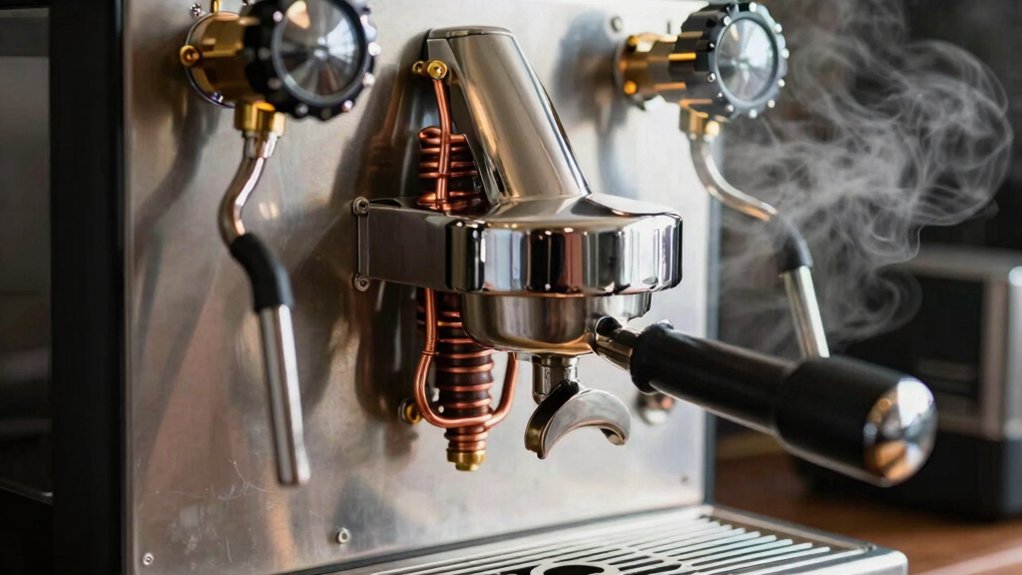
When should you move from a thermoblock to a thermocoil, and when does a boiler become the logical next step? If you love quick heat‑up and a compact espresso machine, a thermocoil upgrade gives you tighter temperature control and can brew and steam simultaneously. You’ll notice less shot‑to‑shot variability, making the thermocoil a solid bridge before tackling a boiler. A boiler shines when you demand ultimate temperature stability, high‑volume brewing, and robust steam for latte art.
- Thermoblock: fast, on‑demand heat, but temperature swings.
- Thermocoil: closed‑tube circulation, faster and more consistent.
- Upgrade timing: switch when speed and reliability matter more than ultimate stability.
- Boiler: best for long‑term stability, heavy steam use, and professional‑grade home espresso.
- Decision cue: assess brew and steam needs versus space and budget.
Frequently Asked Questions
What Is the Difference Between Thermocoil and Thermoblock?
You’ll find thermocoils heat water through a single continuous coil, giving uniform temperature and durability, while thermoblocks push water through a small, multi‑channel block, heating faster but risking uneven temps and scale buildup.
What Are the Benefits of Using a Thermocoil?
You’ll enjoy faster, more uniform heating, steadier temperature control, fewer leaks, and longer durability. Thermocoil reduces scaling risk, improves extraction consistency, and now offers affordable, reliable espresso performance.
What Is the Difference Between Thermoblock and Heat Exchanger Espresso Machines?
You’ll find thermoblocks heat water on‑the‑fly in a compact block, giving fast start‑up but temperature swings, while heat exchangers circulate water through a boiler, offering steadier temps and simultaneous brew‑and‑steam capability.
What Is the Best Material for an Espresso Boiler?
You’ll find copper‑clad steel or pure copper boiler the best material; it gives rapid heat response and even temperature distribution, while still handling pressure and resisting corrosion better than most alternatives.
In Summary
You’ve seen how thermoblocks deliver quick heat and lower cost, while thermocoils give steadier temperatures and longer life. If speed and budget matter most, the thermoblock’s your pick. If you crave consistency and durability, go with the thermocoil. Consider your usage volume, maintenance willingness, and space constraints—then choose the system that best fits your kitchen’s needs.


