
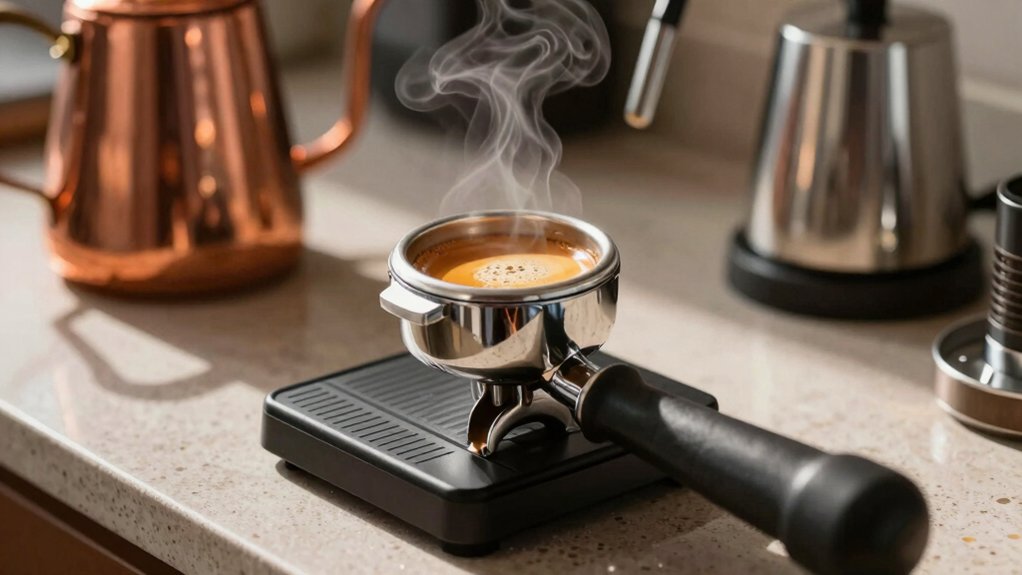
You’ll get a smoother, sweeter espresso when you pre‑infuse because the low‑pressure soak (1–3 bars for a few seconds) saturates the puck, stops channeling, and lets grounds swell evenly. This creates consistent flow, lets finer grinds extract without harshness, and releases early aromatics that boost perceived sweetness. Light roasts benefit from longer, gentler pre‑infusion, while dark roasts need a shorter burst. Keep reading to discover the exact pressure and timing tweaks for each roast.
What Pre‑Infusion Is and Why It Matters for Espresso
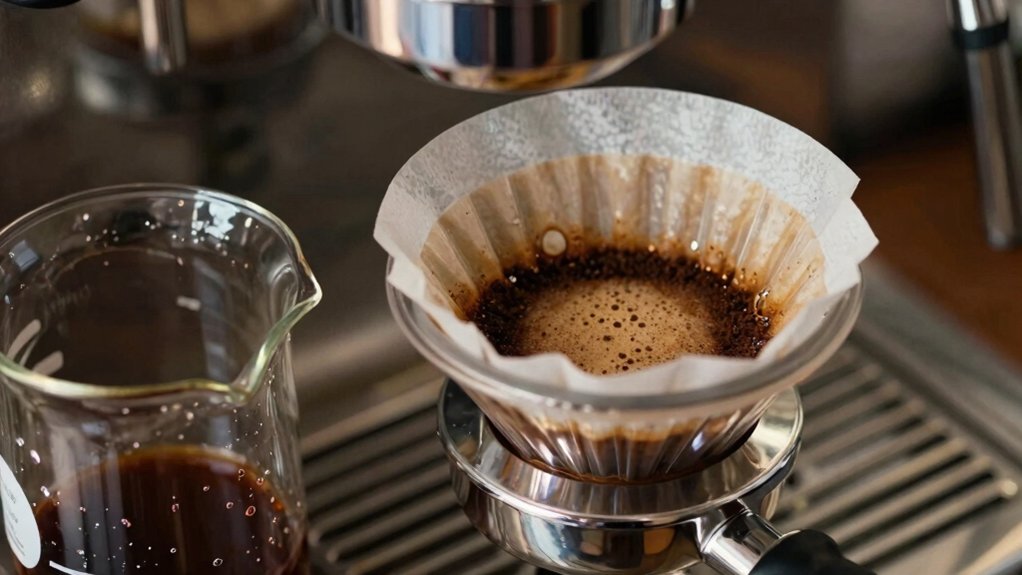
How does pre‑infusion work, and why should you care? You start by feeding water at low pressure—about 1–3 bars—into the coffee puck for a few seconds. This gentle surge saturates the grounds, achieving even wetting before the pump hits full pressure. The low‑pressure stage lets each particle absorb water uniformly, preventing dry spots that would cause channeling later. As the grounds swell and settle, trapped CO₂ escapes, which stabilizes the brew. The result is extraction consistency: you hit your target ratio with balanced acidity and reduced bitterness. By giving the puck a calm pre‑infusion, you set the stage for a smoother, more predictable espresso shot. This approach aligns with how precise control and sealed, stable environments—concepts highlighted in modern device design—support reliable performance. extraction consistency
How Pre‑Infusion Prevents Channeling and Guarantees Even Bed Saturation
After the low‑pressure soak, the coffee puck is fully saturated, which stops water from hunting the path of least resistance when the pump ramps up. You’ll notice that pre‑infusion creates a uniform swell, letting grounds settle and CO₂ escape, so the subsequent low‑pressure extraction proceeds without channeling. This even bed saturation guarantees consistent flow, higher yields, and smoother flavor. The presence of a stable, pre‑conditioned puck reduces turbulence during ramp‑up and helps maintain steady extraction temperatures across the bed Even Bed Saturation and minimizes deviation caused by uneven particle densities.
Why Early Aromatics Make Your Espresso Taste Sweeter
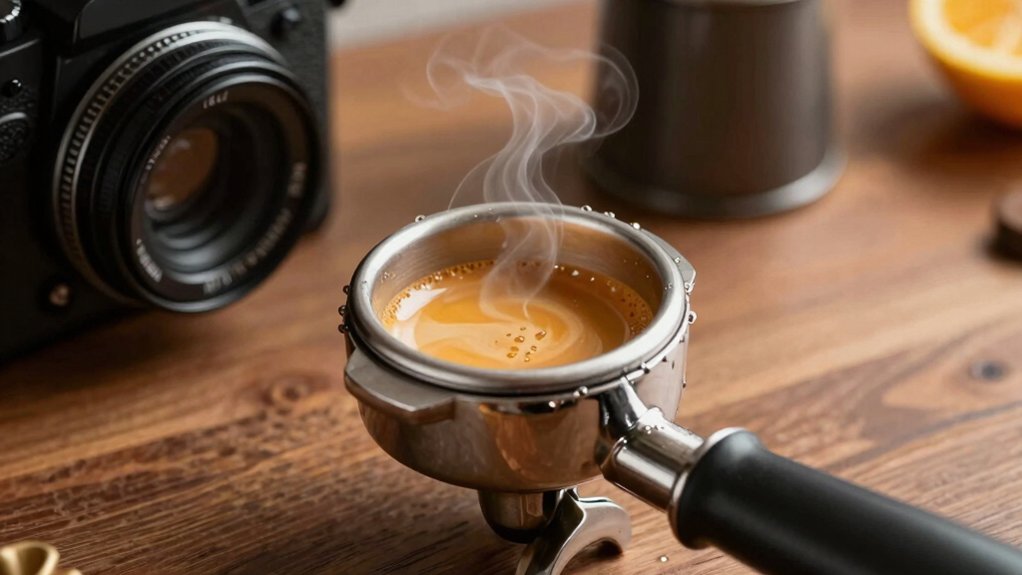
Ever wonder why the first sips of your espresso feel so sweet? During the initial pre‑infusion, low‑pressure water gently wets the puck, letting aromatics dissolve before the pump ramps up. Those volatile, fragrant compounds carry natural sweetness, so they dominate the early extraction. By keeping pressure at 1–3 bar for a few seconds, you let the delicate sugars and floral notes escape while bitter, high‑molecular compounds stay locked. This uniform wetting also prevents channeling, ensuring every grain contributes to the aroma‑driven sweetness. As a result, the first bursts of flavor taste smoother, brighter, and genuinely sweeter, setting the stage for a balanced cup that keeps you reaching for another sip. This approach aligns with using a controlled pre‑infusion step to optimize extraction, similar to how some refractometer‑guided techniques emphasize consistent data tracking for repeatable results data tracking.
How Pre‑Infusion Enables Finer Grinds Without Over‑Extraction
Wondering why you can grind finer without turning your espresso bitter? Pre‑infusion saturates the puck at 1–3 bars, giving the water time to wet every particle before you hit full pressure. That even wetting stops water from racing through the path of least resistance, so channeling drops dramatically.
Because the grounds are already moistened, you can use a finer grind and still maintain a balanced extraction; the brew expands uniformly, pulling out sweetness and complexity while delaying harsh bitterness.
Longer low‑pressure bursts raise extraction yield without over‑extracting the delicate notes. In practice, a controlled pre‑infusion lets you push the grind size down, achieve stable shot consistency, and keep the flavor profile bright and clean. Pre‑infusion benefits and consistency can also help maximize your grinder’s potential by reducing variability across shots.
Roast‑Specific Pre‑Infusion Pressure & Time Settings
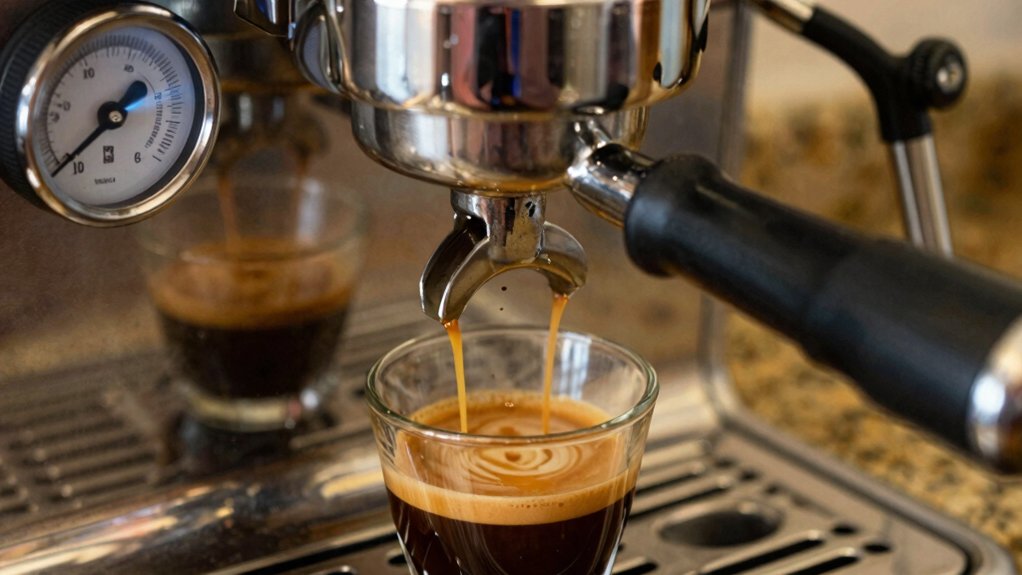
What pressure and how long should you pre‑infuse a light versus a dark roast? You’ll find that light roasts thrive on a gentle 1–3 bar pre‑infusion lasting 8–15 seconds, while dark roasts need a brisk 1–3 bar burst of 4–7 seconds to keep extraction yield in check. Align the timing with saturation timing—roughly three times the filter‑cover time—then ramp to full 9–10 bar extraction. Adjust based on taste, crema, and EY/TDS feedback; longer pre‑infusion adds body, shorter preserves acidity. The guidance aligns with the emphasis on quiet, versatile grinding tools that support precise prep and consistent results in varied kitchen environments, including those that value a balance of efficiency and control. sound-dampening and the emphasis on consistent grind size can help support repeatable extraction outcomes across roasts.
Frequently Asked Questions
What Is the Best Pre-Infusion for Espresso?
You should start with a 2‑3 second low‑pressure pre‑infusion at 1–2 bars, then ramp to full pressure for 25‑30 seconds; adjust duration and pressure based on roast, grind, and taste.
What Is the 15-15-15 Coffee Rule?
You follow a 15‑second low‑pressure pre‑infusion, then 15 seconds of full‑pressure extraction, aiming for a total shot around 30 seconds, which balances flow, saturation, and flavor.
Should Extraction Time Include Pre-Infusion?
Yes, you should count pre‑infusion in the total extraction time, because it contributes to overall flow, pressure balance, and flavor development, ensuring accurate yield calculations and repeatable shots.
How to Get the Perfect Espresso Extraction?
You’ll perfect espresso by dialing in grind size, dose, and tamp pressure, then apply a short 8‑15‑second low‑pressure pre‑infusion before ramping to 9 bars, monitoring extraction time and adjusting for balanced sweetness and low bitterness.
In Summary
By mastering pre‑infusion, you’ll keep the coffee bed evenly saturated, avoid channeling, and coax out richer aromatics that make your espresso taste sweeter. You can push finer grinds without over‑extracting, and fine‑tune pressure and timing for each roast. The result? Consistently balanced, vibrant shots that showcase the full potential of your beans. Enjoy a smoother, more nuanced espresso every time.


