

When you calibrate a burr grinder you lock the gap between the burrs, so each bean is cut to the same depth every time. This creates a uniform particle‑size distribution, which directly controls how much surface area contacts water and how evenly extraction occurs. Even a 0.01 mm shift can swing the grind from fine to coarse, changing pressure, channeling, and flavor. A tight, parallel gap also reduces fines and over‑extraction, keeping your espresso stable. Keep going and you’ll discover the step‑by‑step methods to master it.
How Burr Grinder Calibration Controls Particle Size Distribution
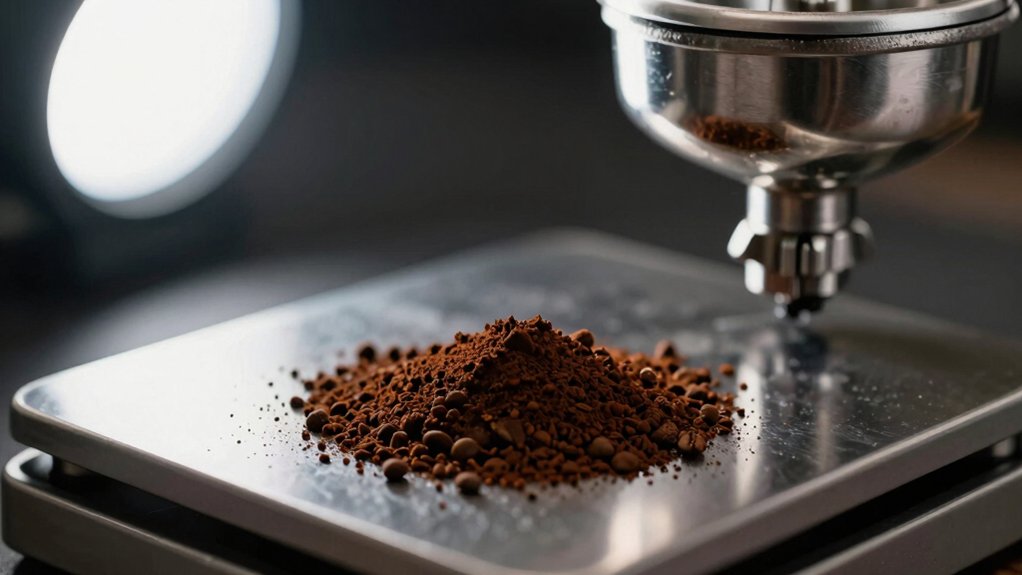
How does burr grinder calibration shape the particle size distribution? You tighten the gap between stationary and rotating burrs, achieving true burr alignment. By using feeler gauges and a torque wrench, you set the gap precisely, so each tooth cuts at the same depth. This calibration narrows the PSD, eliminating fines from crushing and boulders from under‑cutting, and yields a uniform grind. You must consider burr geometry—flat or conical—because it changes how misalignment widens the PSD. Regularly recalibrate after bean changes, humidity shifts, or method tweaks, and you’ll keep grind consistency high. The result is a tighter particle size distribution that translates into stable extraction and repeatable cup quality. Feeler gauges help ensure the gap remains consistent over time.
Why Small Burr Gap Shifts Cause Big Flavor Swings?
You’ll notice that even a micrometer‑wide gap change amplifies extraction, because it instantly alters how much surface area each particle presents, which can also influence consistency across multiple brews coffee scoop design.
Gap Amplifies Extraction
Ever notice how a tiny tweak in your grinder’s burr gap can swing your espresso from silky sweet to harshly bitter? When you tighten burr gaps, contact pressure spikes, shredding beans into finer particles. That shift squeezes the particle size distribution toward micros, increasing the proportion of fines versus boulders. Those fines boost surface area, accelerating extraction and often causing over‑extraction, while boulders create dead zones that channel water unevenly. Conversely, a wider gap yields coarser grounds, slowing extraction and risking sourness. Precise grind calibration keeps the grind size uniform, preserving extraction consistency and preventing channeling. By monitoring burr gaps, you control how much of the coffee dissolves, letting you fine‑tune espresso extraction without guessing. Universal descaler can complement grind adjustments by ensuring mineral buildup doesn’t affect grinder performance or temperature stability over time.
Particle Uniformity Shifts
Why do a 0.01 mm change in burr gap swing espresso from bright to bitter? You’ll see the grind size distribution stretch, and the particle size distribution (PSD) shifts just enough to tip extraction balance. A tiny burr gap tweak changes the slicing‑to‑crushing ratio, creating more fines or coarser chunks. That widens the PSD, raising channeling risk and breaking extraction consistency. Larger burrs magnify the effect because their surface area magnifies mis‑alignment, so even a slight burr alignment error throws off uniform grind. Calibration drift lets the gap wander day‑to‑day, causing the PSD to drift and flavor to swing. Keep the burr gap tight and aligned, and you’ll lock in a stable PSD, lower channeling risk, and repeatable extraction. Universal/not specified compatibility
Flavor Profile Instability
How can a millimeter‑scale tweak in burr gap swing your espresso from bright to bitter? A tiny shift in burr alignment changes grind size consistency, tweaking the particle size distribution (PSD). When the PSD slope steepens, the fines vs fines‑free ratio spikes, prompting channeling and wrecking extraction stability. You’ll notice a sudden swing from sour to bitter because even 1‑2 µm gap variations alter the brew’s timing by 15‑30 seconds. Larger burrs amplify this effect, so burr gap calibration on 64 mm units feels like a lever. Grind Precision contributes to overall measurement integrity, aligning with the idea that 0.1 g precision in scales complements tight grind consistency for repeatable results.
Why Burr Shape Matters for Consistent Extraction
What makes a grinder’s burr shape so critical to extraction consistency? You’ll notice that flat burrs slice beans with a precise, uniform edge, delivering tight grind consistency and a narrow particle size distribution. Yet their higher RPM creates more heat generation, which can shift flavor. Conical burrs run cooler and often produce a bimodal distribution, boosting crema and body while still supporting extraction uniformity. The geometry also dictates how well beans are guided through the gap, reducing channeling when burr calibration matches the shape.
- Flat burrs → uniform grind, higher heat
- Conical burrs → cooler operation, bimodal particles
- Proper burr calibration → stable particle size distribution
- Geometry‑aligned channels → minimized channeling, consistent extraction
ATC-enabled systems in refractometer data tracking can help verify how precise grind uniformity translates to stable extraction parameters across brews.
Flat‑Burr Grinder Calibration: Step‑by‑Step
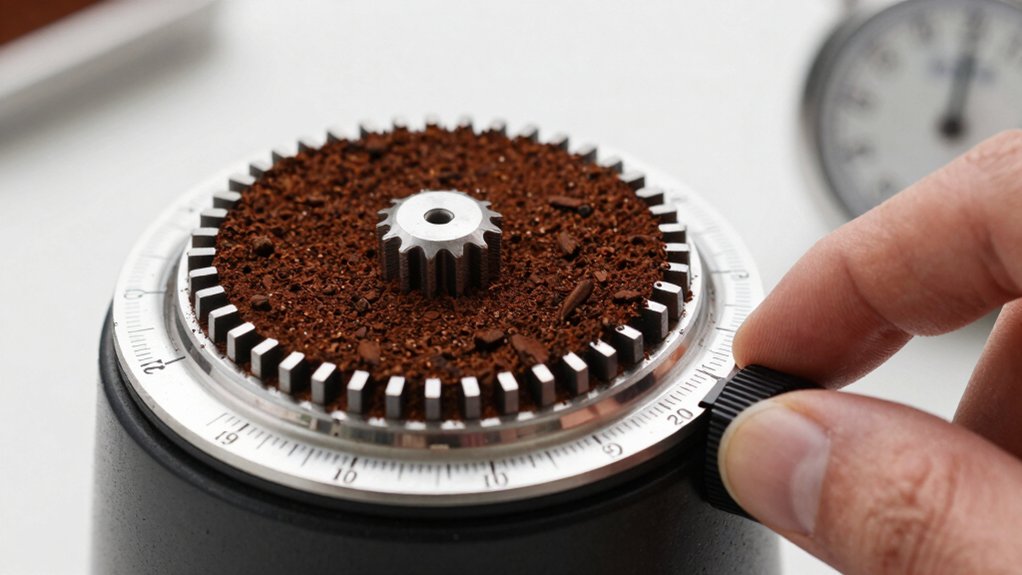
Flat‑burr grinders demand exact parallelism between the two grinding surfaces, so even a tiny misalignment can create uneven contact, generate excess fines, and jeopardize extraction uniformity.
First, remove the hopper and brush out grounds, then inspect the burr teeth for wear. Using a feeler gauge, check clearance at three points around the burrs; record the numbers. If gaps differ, insert the appropriate shims or tighten the adjustment screw with a torque wrench, keeping the torque consistent. Re‑measure until all points read the same value—this confirms burr alignment and parallelism.
Next, re‑assemble, rotate the burrs by hand to feel uniform contact, and run a marker test to spot any uneven wear. Finally, grind a small batch, measure grind size, and verify that the calibration steps have restored consistency.
Common Burr Grinder Calibration Mistakes
Ever notice a perfect grind turning into a batch of uneven particles after a quick tweak? You probably made a common calibration mistake. Skip the feeler gauge, and you’ll guess the burr gap, leading to misalignment and erratic grind size. Over‑tighten with a torque wrench, and the burrs press too close, producing fines and choking consistency. Ignoring regular cleaning lets coffee oils cling to the burrs, shifting the gap unnoticed. Finally, failing to document each adjustment erases the reference point you need for repeatable results.
- Guess the gap instead of measuring.
- Over‑tighten the burrs.
- Skip cleaning between calibrations.
- Forget documentation.
Conical‑Burr Grinder Calibration: Step‑by‑Step
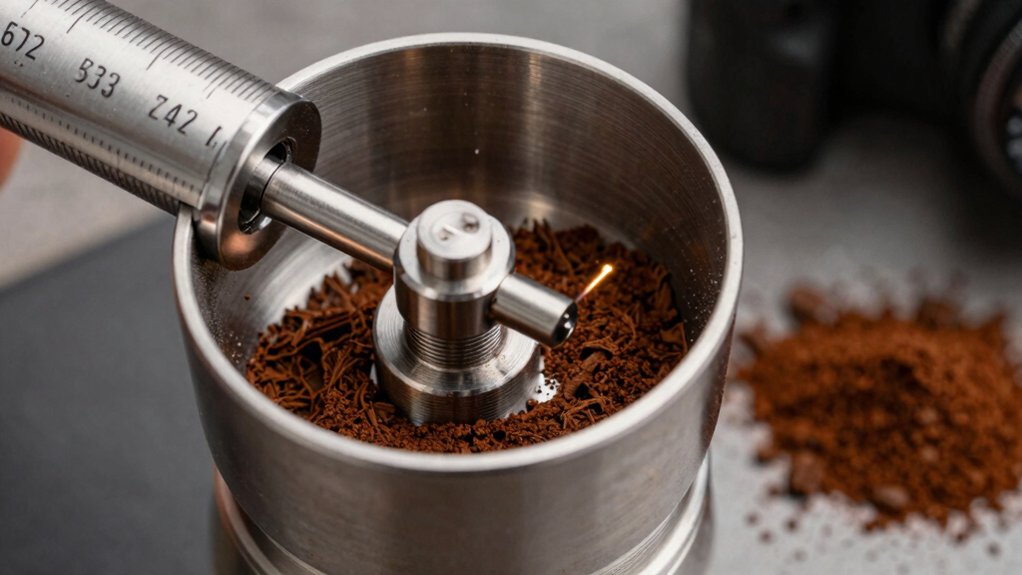
After skipping the feeler gauge and ending up with uneven particles, you’ll want to focus on the precise steps that keep a conical‑burr grinder delivering a uniform grind.
First, remove beans and brush both conical burrs clean; any residue skews particle distribution.
Next, check alignment by tightening the housing until the burrs sit parallel within a millimeter tolerance.
Insert the feeler gauge and set the gap, then rotate the grinder a few seconds to gauge heat transfer—conical burrs run cooler, preserving aromatic compounds.
Adjust grind size in one‑ or two‑click increments, noting the change in espresso extraction quality.
Brew a small batch, record particle distribution, and repeat until consistency meets your target.
Document each gap size, brew result, and method for future reference. precision target
Integrating Static Reduction Into Burr Grinder Calibration
Why does static electricity matter when you calibrate a burr grinder? Static clings to coffee particles, skewing particle distribution and causing channeling that ruins extraction uniformity. By adding static reduction to burr grinder calibration, you protect grind size consistency and keep parallel burrs truly parallel. Use ionizing brushes or anti‑static mats while you adjust feeler gauges and torque wrenches; the result is a cleaner, more repeatable dose.
Static clings to coffee particles, skewing distribution and causing channeling that ruins extraction uniformity.
- Ground the grinder housing before measuring gaps.
- Apply an anti‑static spray to burr surfaces.
- Verify burr alignment with feeler gauges after each static‑reduction step.
- Re‑tighten bolts with a torque wrench to maintain parallelism.
These steps lock in consistent particle distribution, minimizing fines and over‑extraction.
Re‑Calibration Frequency for Peak Performance
How often should you recalibrate your burr grinder to keep peak performance? Aim for a recalibration frequency of every 2 to 4 weeks, or sooner when you switch bean types, notice humidity shifts, or increase usage. Regular calibration counters burr wear, preserves parallelism, and stabilizes grind size, keeping the PSD (particle size distribution) tight. In high‑volume settings or with frequent bean changes, tighten the schedule to maintain consistency and avoid flavor drift. Record torque settings and burr gap measurements each time; this traceability helps you spot wear before it distorts the grind. Skipping a recalibration can cause noticeable grind size drift, leading to over‑ or under‑extraction and flavor instability. Stay disciplined, and your coffee will stay on point.
Best Practices for Maintaining Calibration Accuracy
When you keep burr grinder calibration spot, you safeguard uniform grind size and consistent extraction. Start each routine maintenance session by inspecting burr wear; replace or clean any uneven edges before measuring. Use feeler gauges at multiple points to verify parallelism, adjusting the burr alignment until the gap stays consistent across the entire surface. Record each adjustment and stick to your calibration interval, typically every 2–4 weeks, or after major cleaning or bean changes. Following these steps preserves grind consistency and protects flavor balance.
Maintain burr alignment with feeler gauges, log adjustments, and calibrate every 2–4 weeks for consistent grind and flavor.
- Check burr alignment with a calibrated feeler gauge.
- Measure gaps at four equidistant points for parallelism.
- Adjust until uniform grind size is achieved.
- Log the calibration interval and repeat as needed.
Frequently Asked Questions
What Is the 15-15-15 Rule for Coffee?
You follow the 15‑15‑15 rule by keeping grind size, brew time, and water temperature each within a 15‑unit window—like 15 g coffee, 15‑second extraction, and 195‑205 °F—to maintain balanced extraction.
How to Know if Burrs Are Misaligned?
You’ll spot misaligned burrs when the grind sounds uneven, the dose resistance spikes, and you notice a broader particle range with excessive fines. Use feeler gauges at several points to check parallelism.
What Happens to the Extraction Quality When You Increase the Grind Size During Calibration?
When you increase the grind size during calibration, you’ll speed up flow, shorten contact time, and risk under‑extraction, yielding a thinner body, more acidity, and reduced sweetness and aroma.
What Is the 80 20 Rule for Coffee?
You follow the 80/20 rule by focusing on the 20% of variables—grind size, dose, water temperature, and contact time—to control roughly 80% of your coffee’s flavor and consistency.
In Summary
By keeping your burrs precisely calibrated, you lock in a consistent particle size distribution, which translates directly into predictable extraction and flavor. Small adjustments can swing taste dramatically, so regular fine‑tuning—whether flat or conical—prevents drift and waste. Pair calibration with static reduction, stick to a re‑calibration schedule, and follow best‑practice maintenance to ensure every shot delivers the same, high‑quality profile you expect.


