

Grab a reliable sound‑level meter (or a calibrated phone app), place it about one meter from the grinder at head‑height, and measure ambient dB before you start. Load the grinder with a typical bean amount, run it, and record both the peak spike and the average level for a few seconds, repeating three to five times to get a mean and standard deviation. Keep distance, bean type, roast, and temperature constant, and log the device, grinder model, RPM, and loading condition for each trial—continue for and you’ll discover how to compare manual, rotary, and vibratory grinders side‑by‑side.
Select a Grinder‑Noise Measurement Tool
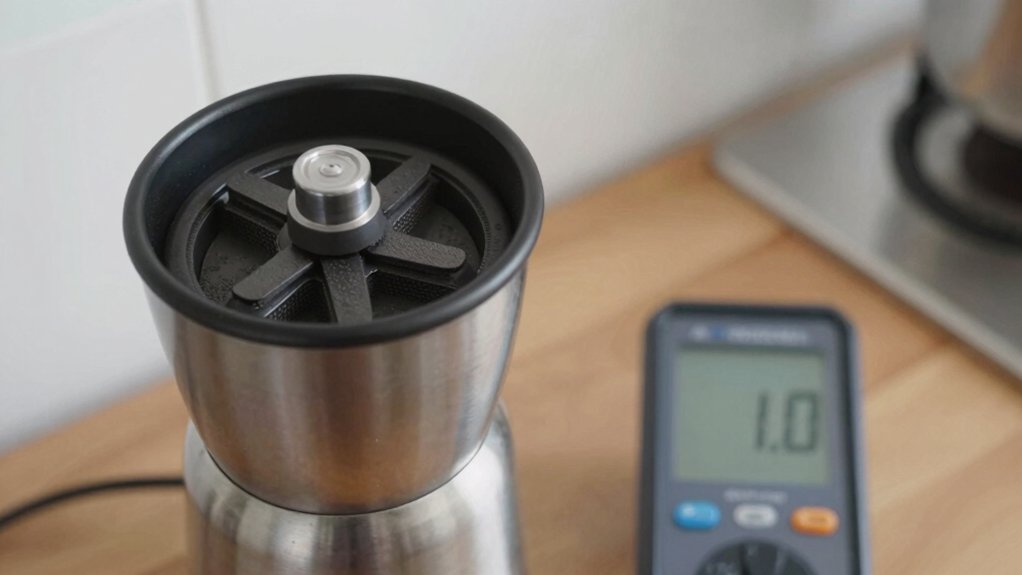
Ever wondered which tool gives you reliable, repeatable grinder‑noise data? You’ll want a device that captures decibel levels accurately at a fixed distance. Smartphone apps like Decibel X or Sound Meter are handy; they let you record peak and average dB from about one meter away, but their precision can drift with ambient noise. For tighter control, invest in a dedicated Sound Level Meter. It delivers real‑time decibel readings, lets you target specific frequency bands, and typically outperforms phone apps in consistency. Set the meter on a stable surface, point it at the grinder, and log both peak and average values. By using the same tool each session, you’ll generate comparable data and spot genuine differences between grinders. measurement accuracy helps ensure your comparisons reflect actual performance rather than variations in your setup.
Set Up a Consistent Grinder‑Noise Test Environment
Place the grinder about a meter from your microphone and keep that distance fixed for every test. Choose a quiet room so background noise stays low, letting you capture the grinder’s true sound. Run the grinder with beans loaded, record peak and average dB, and repeat the setup to ensure reliable, repeatable results. For accurate comparisons, conduct tests at the same temperature and use the same bean type and roast level each time, aligning with standardized testing practices noise consistency.
Fixed Distance Placement
How can you ensure your burr‑grinder noise readings are truly comparable? First, set a fixed distance of about one meter (three feet) between the grinder and your sound level meter or smartphone. Keep the device at head‑height so the measurement angle stays consistent and sound waves travel the same path each time. Use the same grinder model, bean roast, grind setting, and RPM for every test, and record both loaded and unloaded runs to capture realistic peak and average dB values. Repeat the measurement several times, then average the sound level results to smooth out minor environmental shifts. This disciplined setup eliminates distance‑related variance, letting you compare noise levels across different grinders or configurations with confidence. A standardized protocol measurement consistency helps ensure valid comparisons across tests.
Controlled Ambient Noise
Is your grinder noise getting lost in background chatter? Start by choosing a quiet room and measuring the ambient noise level before you power on the grinder. Record that baseline decibel level, then keep the grinder exactly one meter from the microphone, positioned at head‑height. Load the beans with the same roast and grind setting each trial, and capture real‑time peak and average decibel readings while grinding. Adjust every measurement by subtracting the baseline to isolate grinder‑generated noise. Keep the microphone orientation and height consistent, and repeat the test several times to verify reliability. This controlled ambient noise setup eliminates background variability, letting you compare grinder performance with precision 0.1 g and consistency across tests.
Record Peak and Average dB Readings Across Settings
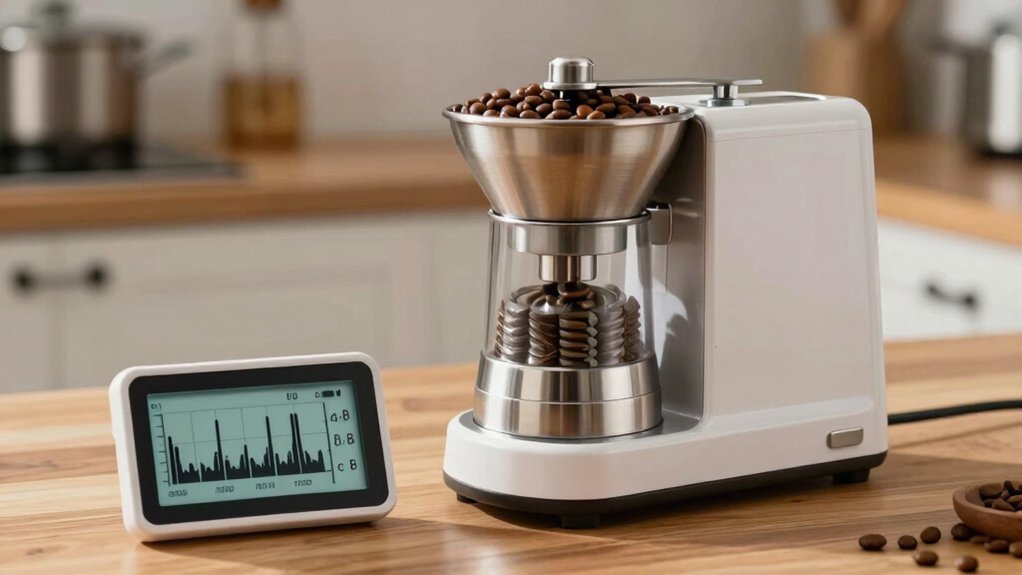
You’ll capture the loudest bursts and the typical hum by recording peak and average dB at each setting. In addition, use a calibrated microphone to ensure accuracy across sessions measurement consistency.
Peak dB Measurement
Ever wondered how to capture the loudest moments of your burr grinder? Place your decibel meter about one meter (three feet) away in a quiet room, then grind a typical load of beans. Record the Peak dB as soon as the grinder spikes, and note the average dB over the same interval. Do this for each RPM, grind setting, and bean roast level. Run three to five trials per configuration, then calculate the mean peak dB and its standard deviation. Document the environment, the meter model, and the app you used so others can reproduce your grinder. This systematic approach lets you pinpoint which combination produces the highest and lowest grinder noise, giving you reliable data for comparison. Long-handled designs can also help you reach into taller containers during measurements.
Average dB Measurement
By placing the meter about one meter from the grinder, you can capture both the peak and the average dB for each setting—RPM, gear, bean type, and roast. Record the average decibel level while the burr grinder runs continuously for a set interval, then compare it to the peak reading. Use the same distance and environment for every test so the grinder noise data stays comparable. Log unloaded and loaded conditions, noting any background sounds that might skew the average. This systematic approach reveals which combinations produce the quietest operation and which push the dB ceiling. Keep a log of RPM, gear, bean type, and roast for each average reading. Measure in a quiet room; note background noise levels. Use the same device (phone or dedicated meter) for consistency. Standardized testing protocol ensures comparisons remain valid across different setups and environments.
What Do Different dB Ranges Mean for Espresso and Everyday Use?
What does a grinder’s decibel rating actually mean for your espresso routine and daily life? You’ll hear a whisper‑quiet 30‑40 dB machine blend like a quiet room, perfect for early‑morning brews without disturbing neighbors. At 50‑60 dB the grinder matches normal conversation, so you can chat while grinding without raising the overall noise level. A 70‑80 dB range aligns with typical household appliances—acceptable for most kitchens but noticeable if you value a serene space. Anything above 90 dB can be harmful over time, so you’ll want to limit prolonged exposure. Remember, pitch and duration affect perception, so peak and average readings both matter when comparing noise levels.
| dB Range | Everyday Espresso Impact |
|---|---|
| 30‑40 | Whisper‑quiet, ideal for quiet mornings |
| 40‑50 | Slightly audible, still low‑key |
| 50‑60 | Conversational, fine for casual brewing |
| 70‑80 | Comparable to vacuums, noticeable but tolerable |
| 90+ | Potentially damaging, avoid long sessions |
Compare Manual, Rotary, and Vibratory Grinder Noise
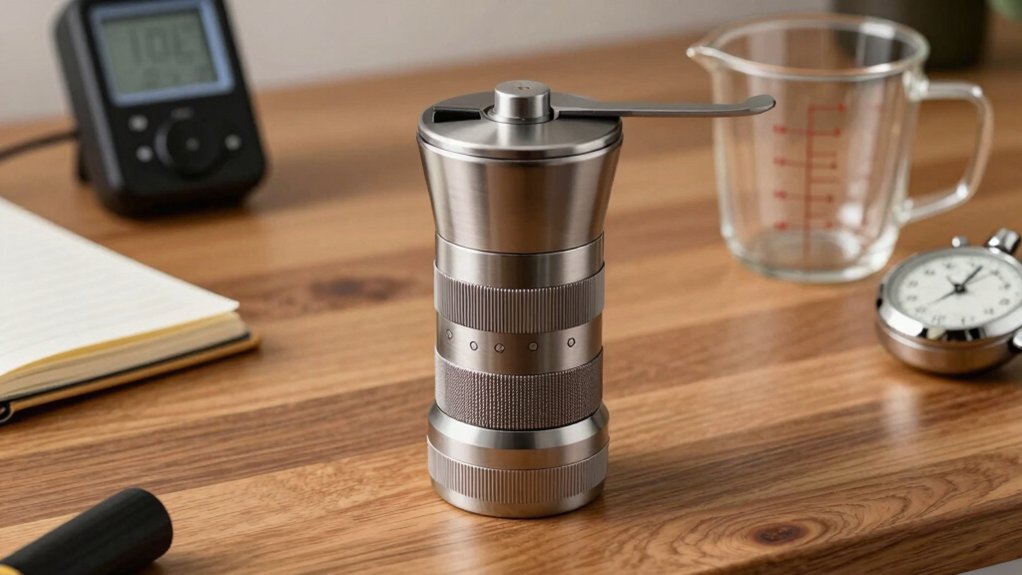
Understanding the decibel ranges from the previous section helps you gauge how loud a grinder can get, but the actual sound you hear depends heavily on the grinder’s design. Manual grinders are virtually silent because the burrs turn slowly, around 60 RPM, so you only hear the faint rustle of beans. Rotary electric grinders stay quiet when empty, yet once you load them they climb to 72–80 dB, with some DF64V/DF83V models near 85 dB, producing a steady hum. Vibratory grinders emit a higher‑pitched, rapid “click‑clack” that feels louder even if the measured dB matches other electrics, because the oscillating burrs create sharp tonal spikes.
- Load, roast level, and grind size shift perceived noise across all grinders.
- Measure at ~1 m distance, capture peak and average dB, repeat for consistency.
- Tonal quality, not just decibel value, influences how loud the grinder feels.
Create a Shareable Data Sheet of Peak and Average dB
Wondering how to turn raw noise measurements into a clear, shareable reference? Start by setting a 1‑meter measurement distance and recording ambient dB before you power on the grinder. Use the same device—phone app or dedicated meter—every time, noting its name and model. For each grinder, log model, RPM/setting, grind size, bean roast, and whether beans are loaded. Capture peak dB and average dB at defined intervals (0–2 s, 2–5 s, steady‑state) or as a continuous peak value. Build a table with columns: grinder, setup, device, distance, ambient dB, peak dB, average dB, and notes on tone or variance. This format lets you compare results side‑by‑side and share them effortlessly.
Publish Your Grinder‑Noise Results and Invite Feedback
Ever wondered how to turn your grinder‑noise measurements into a useful community resource? You can publish results with clear metadata—model, RPM, roast level, microphone distance, and decibel reading method (peak and average). Include a schematic showing the 1‑meter placement and note whether the grinder was empty or loaded. List the exact tool (smartphone app or sound‑level meter model) and any calibration for phone mic bias. Present data in a simple table or chart with error bars and background‑noise notes, then invite feedback by asking how your grinder-noise decibels compare to similar units or different roasts. Link the raw CSV for deeper analysis.
- Metadata checklist (model, RPM, roast, distance, method)
- Visual setup schematic and loading condition
- Tool details, calibration steps, and raw data link
Frequently Asked Questions
How Loud Is 70 dB Noise Level?
You’ll hear it like a vacuum cleaner or busy street—noticeable but not overwhelming. It’s the enough to be heard clearly at one meter, yet safe for short periods without causing immediate hearing damage.
What Is the Quietest Burr Coffee Grinder?
You’ll find the quietest burr coffee grinder in the Eureka Mignon series or the Fellow Ode Brew Grinder; both deliver around 79–85 dB, thanks to built‑in silence tech and superior insulation.
How to Know if Burrs Are Misaligned?
You’ll spot misaligned burrs when the grinder rattles, vibrates unevenly, or produces inconsistent particle sizes; check the gap by marking contact points, rotating, and ensuring both burrs engage symmetrically.
Is 40 dB Noisy?
No, 40 dB isn’t noisy; it’s about as quiet as a library whisper. You’ll hear it faintly, but it’s well below typical burr‑grinder levels, which usually sit between 60 and 90 dB.
In Summary
Now you’ve got a reliable way to measure grinder noise, you can compare models, pick the quietest for home or café use, and share clear data with the community. By tracking peak and average dB across settings, you’ll know which grinder fits your espresso standards and daily noise tolerance. Use the sheet you created to spark discussions, get feedback, and help others make quieter, better‑brewing choices.


