

You’ll boost flavor by pre‑heating the dripper, filter, and carafe, then use 195‑205 °F water and a 1:15‑1:16 coffee‑to‑water ratio. Choose a grind that matches your cone (fine for V60, medium‑coarse for Kalita Wave) and pour steadily in a circular motion, pausing for a 30‑45‑second bloom. Adjust temperature, grind, or brew time to fix sourness or bitterness, and record each brew’s weight and timing for repeatability. Keep your gear clean, and you’ll discover even more tricks ahead.
Why Manual Brewing Beats Auto‑Drip for Better Pour‑Over Flavor
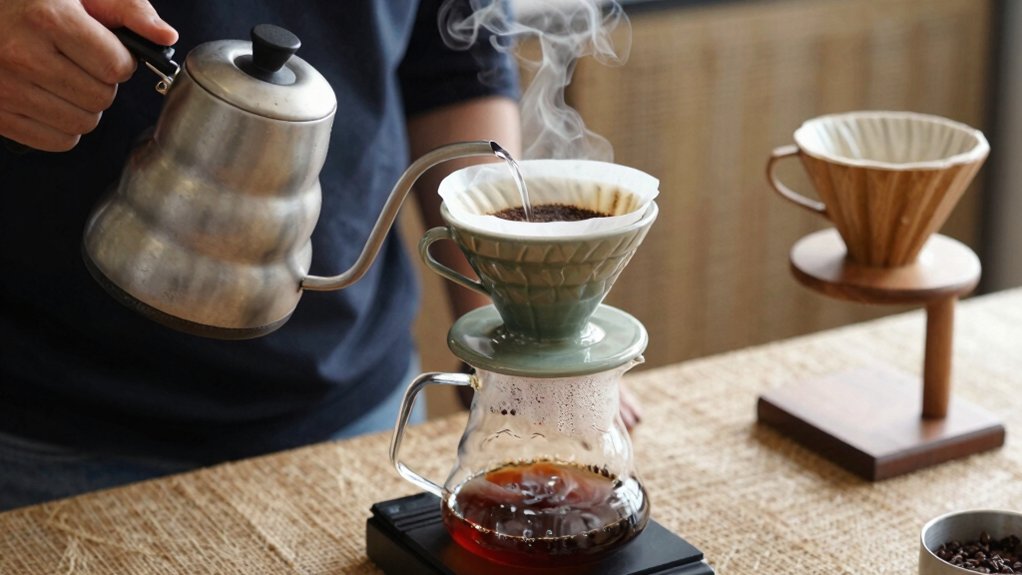
Manual for‑over gives you direct control over water flow, saturation, and contact time, letting you fine‑tune extraction for the nuanced flavors auto‑drip machines can’t match. You choose the grind size that fits your cone, finer for a V60, medium‑coarse for a Kalita Wave, and you set the water temperature between 195‑205°F. By heating your kettle and pre‑wetting the filter, you keep the brew stable and avoid sudden temperature drops. You monitor water quality, using filtered water and proper filtration to prevent mineral off‑flavors. Your pour technique—steady, circular, and timed—ensures even saturation and a consistent coffee‑to‑water ratio, usually 1:15. This precision yields a clean, balanced cup with bright acidity and sweet undertones that auto‑drip can’t replicate.
Selecting the Right Beans for a Perfect Pour‑Over Cup
What beans will give you the brightest, most balanced pour‑over? Choose origin‑specific beans that showcase clean acidity and distinct tasting notes, then pick a roast level from light to medium to preserve those qualities. Freshness matters: buy whole beans and grind just before brewing, because peak flavor fades after about a month. Match the grind size to your cone—finer for small devices, medium‑coarse for larger ones—to ensure even extraction. Use filtered water with balanced minerals; water quality prevents sourness and off‑flavors. Finally, respect the pour‑over ratio, typically 1:15 coffee‑to‑water, and keep your grind consistent for repeatable results. These steps let you craft a cup that highlights the bean’s character while delivering a smooth, balanced finish Real espresso coffee included.
Grinding to Perfection: Size Guides for Different Pour‑Over Cones
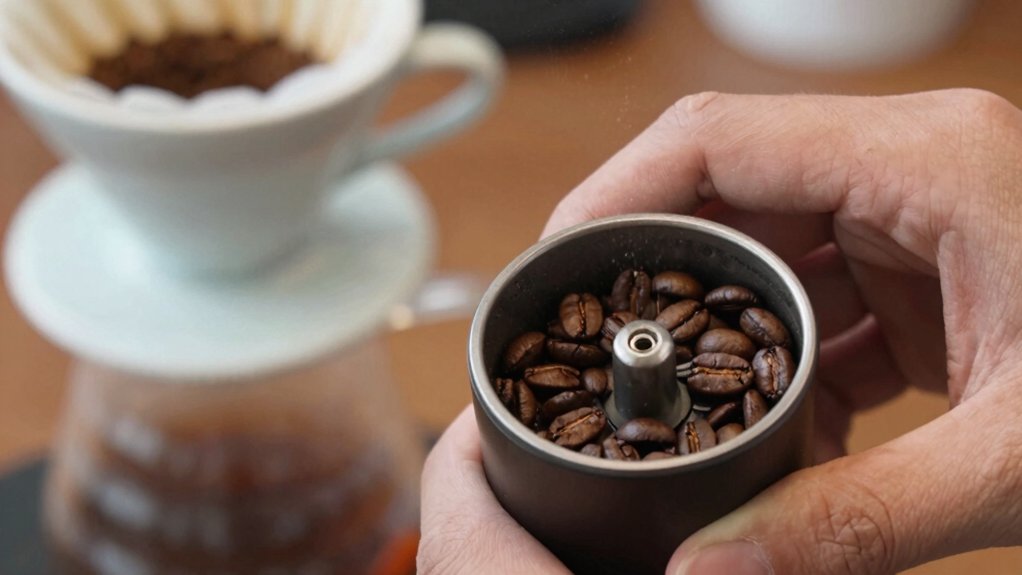
Why settle for a one‑size‑fits‑all grind when each pour‑over cone demands its own particle size? You’ll notice that a smaller cone like the V60 thrives on a finer grind, while a larger Chemex needs a medium‑coarse setting. Use a burr grinder to achieve grind consistency, because uniform particles give you even extraction and stable brew time. Start with the recommended notch for your cone, then tweak one level at a time, keeping a 1:15 coffee‑to‑water ratio. A finer grind boosts surface area, speeding extraction and highlighting sweetness and brightness. Conversely, a coarser grind slows flow, preventing over‑extraction. Monitor the 2–3‑minute brew window, adjust as needed, and you’ll lock in the perfect balance for each pour‑over cone. Grind consistency remains a key factor, especially when pairing AeroPress setups with fine or coarse filtration options to maintain a smooth, full‑bodied cup.
Mastering Water Temperature (195‑205 °F) for Consistent Extraction
You’ll notice that brewing between 195 °F and 205 °F extracts the coffee’s sweet and aromatic compounds while keeping bitterness in check. Using clean, filtered water and pre‑heating your gear helps you stay in that sweet‑spot and lets subtle temperature tweaks reveal each bean’s unique nuances. Guide Mode provides preset targets that can further optimize extraction profiles for different brewing techniques.
Optimal Brew Temperature
Ever wondered how a few degrees can make or break your cup? You control the temperature to stay within the brewing temperature range of 195‑205 °F, you’ll hit the sweet spot for extraction. Preheating your kettle, dripper, and carafe locks in heat, so the water doesn’t dip below the range mid‑pour. Consistency comes from measuring, not guessing, and from keeping the water steady from first drip to final sip. This control yields repeatable flavor and avoids sour or bitter extremes. Pour-over setup supports maintaining stable temps across the entire brew.
Water Quality Impact
Keeping the temperature in the 195‑205 °F window is only half the story; the water itself can make or break the extraction. Water quality determines how those degrees translate into flavor. High mineral content and hardness push extraction toward bitterness, while soft or filtered water keeps the brew bright and balanced. You’ll notice that even a slight shift in temperature control can amplify the effect of hard water, pulling excess acids and astringency. Conversely, low‑hardness water lets you stay within the sweet spot of extraction balance without over‑extracting. Choose filtered water or adjust hardness with a water softener, then monitor temperature closely. This combo ensures consistent, repeatable results across pour‑over, French press, or AeroPress. Water quality considerations can further refine how temperature translates to flavor.
The Bloom Step in Pour‑Over: Unlocking Aroma and Even Saturation
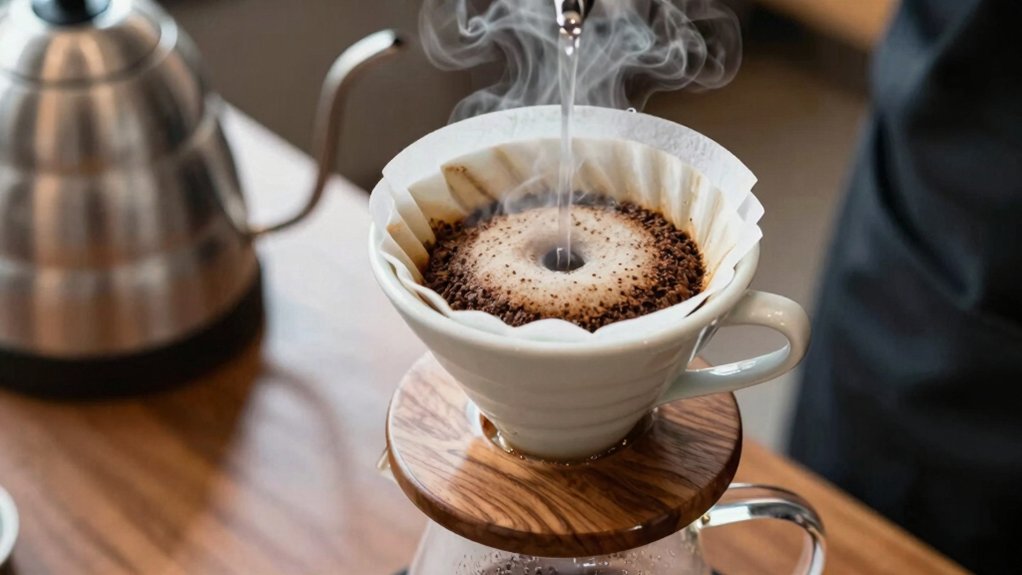
How does a bloom transform your pour‑over? You start with a gentle pour that saturates every coffee particle, triggering a bloom that releases CO2 and swells the grounds. By using water temperature between 195–205 °F (90–96 °C), you avoid scalding while encouraging a robust CO2 release. During the 30‑45‑second bloom, the grounds bubble, creating even saturation and expanding surface area for the next pours. This pre‑infusion unlock aroma, letting volatile compounds escape before extraction fully begins. As a result, the final cup tastes brighter and more balanced, with each sip reflecting the careful, uniform extraction you set up in that brief, purposeful bloom stage. In practice, you can align bloom timing with the chosen Chemex model (classic or Ottomatic) to optimize saturation and flavor clarity extract quality for consistently refined cups.
Pour‑Over Techniques: Circular, Pulse, and Spiral Methods
What difference does the way you pour make? In a pour‑over, your pour pattern controls flow, saturation, and extraction balance. Circular pouring spreads water evenly across the grounds, preventing channeling and promoting uniform grind size contact. Pulse pouring—short bursts followed by brief pauses—lets the bed settle between infusions, which steadies temperature and avoids over‑extraction. Spiral pouring combines the two: you start at the center, draw a gentle spiral outward, then pause, then repeat, keeping the brew steady while maintaining even extraction. When choosing between methods, consider how different dripper shapes and grind sizes interact with your technique extraction balance to optimize flavor.
Choose the method that matches your dripper’s shape and your grind size; a medium‑coarse grind for a Chemex benefits from a slower, steadier spiral, while a finer grind in a V60 can handle a quicker circular pour. Mastering these techniques lets you fine‑tune acidity, sweetness, and overall flavor harmony.
Choosing the Ideal Filter for Pour‑Over Coffee (Paper, Metal, Cloth)
Ever wondered which filter will give you the flavor you crave? When you pick pour-over filters, consider how paper vs metal filters and cloth filter notes shape your cup. Paper traps fines, delivering bright acidity, light body, and high flavor clarity—pair it with a finer grind size and a longer brew time.
Metal lets more fines through, boosting body and oils while adding a touch of sediment; a coarser grind and a slightly shorter pour keep extraction balanced.
Cloth filters sit in the middle, offering smooth mouthfeel and earthy undertones if you pre‑wet them and keep them clean. Adjust grind size and brew time to match your filter choice, and you’ll consistently hit the flavor clarity you’re after.
Finding Your Ideal 1:15 Vs 1:16 Pour‑Over Coffee‑To‑Water Ratio
Curious about whether a 1:15 or 1:16 coffee‑to‑water ratio will give you the perfect cup? Start by weighing 20 g of coffee and 300 g of water for a 1:15 pour‑over, then brew using your usual grind size. Taste the result; if it feels thin or under‑extracted, switch to a 1:16 ratio—20 g coffee to 320 g water—without changing grind or brew time. The subtle shift can brighten acidity or add sweetness while preserving body. Record each brew’s weight and timing to ensure consistency; a digital scale and timer become your best allies. By alternating between 1:15 and 1:16, you’ll discover which balance matches your palate, then lock in that ratio for future cups.
Adjusting Brew Time for Light or Full‑Body Pour‑Over Cups
You’ll notice that tweaking the grind size while keeping your 1:15‑1:16 ratio lets you fine‑tune extraction time, so a finer grind shortens the brew for a lighter cup and a coarser grind lengthens it for more body.
Maintaining a steady, controlled pour—whether you slow it down or speed it up—gives you direct control over how much flavor and mouthfeel develop. By pairing these adjustments with consistent agitation, you can shift smoothly between bright, airy pours and richer, fuller‑bodied results.
Grind Brew Ratio
How do you fine‑tune a pour‑over to swing between a bright, light‑bodied cup and a richer, full‑bodied brew? You adjust grind size and brew ratio together, then tweak brew time to control extraction and contact time. A finer grind with a lower brew ratio yields a light cup; a coarser grind with a higher ratio gives body. Keep pour‑over timing consistent, and watch the flow: shorter pours prevent over‑extraction with fine grinds, while longer pours let coarser grounds draw out oils.
| Profile | Grind Size | Brew Ratio (g : ml) |
|---|---|---|
| Light | Fine | 1 : 16 |
| Medium | Medium‑fine | 1 : 15 |
| Full | Coarse | 1 : 14 |
| Extra | Very coarse | 1 : 13 |
Use these combos to dial in the exact body you crave.
Grind Size Impact
After setting your grind‑to‑ratio combo, the next lever is grind size itself, which directly shapes brew time and body. A finer grind boosts surface area, quickening the extraction rate and giving a light‑roast pour‑over a brighter, sweeter sip. Coarser particles slow extraction, ideal for darker roasts that need a fuller body without bitterness. Adjust the grind to match your desired brew length and roast level, and you’ll control how much flavor the water pulls.
- Fine grind → short brew, high extraction, bright body.
- Medium‑fine → balanced brew, medium extraction.
- Medium‑coarse → longer brew, lower extraction, smooth body.
- Coarse → slowest extraction, deep body, minimal bitterness.
Pour Consistency Control
Ever wondered how a steady pour can turn a light, bright cup into a full‑bodied masterpiece? You can shape body by tweaking pour consistency and contact time.
For a light cup, keep the pour rate moderate, ensuring even saturation of a medium grind size. This shortens total contact time, preserving clarity and delicate notes while maintaining extraction balance.
For a full‑bodied cup, slow the initial pour, let the water linger longer, and use a finer grind size. The extended contact time extracts deeper sweetness and body.
Track the bloom and final drip to gauge total contact time, then adjust pour rate accordingly. Consistent pour, uniform saturation, and controlled contact time deliver repeatable, balanced results.
Cleaning Your Pour‑Over Gear for Consistent Flavor
When you rinse the pour‑over cone, filter, and carafe with warm, soapy water after each brew, you prevent oil buildup that can introduce off‑flavors. Regular cleaning of your pour‑over gear is essential for flavor consistency, so make it a habit to use filtered water for rinses and dry every component thoroughly. A quick routine keeps equipment maintenance simple and your coffee tasting clean.
- Wash the cone, filter holder, and carafe in warm, soapy water.
- Rinse paper filters under filtered water before each brew.
- Descale the kettle and grinder monthly or every 60–90 days.
- Air‑dry all parts completely before storing to avoid mold.
These steps eliminate oil buildup, prevent mineral deposits, and ensure each cup delivers the intended flavor profile.
Fixing Sour or Bitter Pour‑Over Coffee Quickly?
If your pour‑over tastes sour, raise the water temperature a few degrees and try a finer grind, then extend the brew by 15–30 seconds.
When bitterness shows up, lower the temperature slightly, coarsen the grind, and shorten the extraction time.
Adjusting these three variables lets you balance flavor on the fly.
Adjust Water Temperature
Why does your pour‑over sometimes taste sour or bitter? Because temperature drives extraction, and a slight shift can tip the sour/bitter balance. Aim for the 195–205 °F (90–96 °C) brewing range. Use filtered water, preheat your dripper and kettle, and watch the thermometer.
- Check the kettle – verify it’s hitting 195–205 °F before you pour.
- Preheat equipment – rinse the dripper and carafe with hot water to keep temperature stable.
- Adjust on the fly – if the brew tastes sour, raise the water a few degrees; if it’s bitter, let it cool a touch.
- Mind water quality – soft, filtered water maintains consistent extraction and prevents off‑flavors.
Modify Grind Size
Temperature sets the stage, but the grind decides whether that stage delivers a bright, sour sip or a heavy, bitter one. When your pour‑over tastes sour, shift the grind a notch finer; the extra surface area boosts extraction, pulling more sugars and smoothing acidity. If bitterness dominates, coarsen the grind to slow extraction and keep the brew time in check. Pair each adjustment with the usual water temperature range (195–205°F) to preserve balance. Small, precise changes let you correct flavor problems without overhauling the whole recipe.
| Goal | Recommended Grind |
|---|---|
| Reduce sourness | Slightly finer (medium‑fine) |
| Cut bitterness | Slightly coarser (medium‑coarse) |
| General balance | Medium‑fine for most pour‑over |
| Espresso‑style intensity | Espresso‑grade fineness |
Alter Brew Time
Timing is the lever that instantly reshapes a pour‑over’s flavor profile, so tweaking it can cure sourness or bitterness without overhauling the whole brew.
When your cup tastes sharp, lengthen the brew time by 15–30 seconds and coarsen the grind a notch to boost contact time and balance extraction.
If it’s harsh, cut the brew time or grind finer to reduce over‑extraction.
Keep water temperature steady at 195–205 °F to avoid reintroducing off‑flavors.
Aim for a consistent brew‑time window of 2:30–3:30 minutes and adjust grind size before time for precise control.
- Measure current brew time.
- Adjust grind size (coarser for sour, finer for bitter).
- Modify contact time by 15–30 seconds.
- Re‑check water temperature and repeat.
Brewing Multiple Pour‑Over Cups Without Losing Flavor
Ever wondered how to keep each pour‑over cup tasting just as vibrant as the first? You’ll need a steady grind size, precise water temperature, and preheat gear to lock in flavor when you brew multiple cups. Start by heating the kettle to 195‑205°F, then preheat your dripper, filter, and carafe. Use a grind that matches your cone—medium‑coarse for a Chemex, finer for a V60—to avoid over‑ or under‑extraction. Keep the coffee‑to‑water ratio at 1:15, pour in a controlled circular motion, and pause briefly between circles. Rinse the filter each round and maintain the same brew time for every cup, ensuring consistency and brilliance in each pour‑over.
| Step | Action |
|---|---|
| 1 | Preheat dripper, filter, carafe |
| 2 | Set grind size to match cone |
| 3 | Heat water to 195‑205°F |
| 4 | Pour circularly, pause, repeat for each cup |
Frequently Asked Questions
Can I Use a French Press for the Bloom Step?
Yes, you can use a French press for the bloom. Just add your grounds, pour hot water, stir briefly, wait 30‑45 seconds, then continue steeping before pressing. This preserves aroma and flavor.
How Does Altitude Affect Pour‑Over Extraction?
Higher altitude means lower atmospheric pressure, so water boils at a lower temperature. That reduces extraction efficiency, so you’ll need a finer grind, longer brew time, or hotter water to achieve the same flavor balance.
Should I Pre‑Wet the Filter Before Brewing?
Yes, you should pre‑wet the filter; it removes papery taste, stabilizes temperature, and prevents the grounds from sticking, ensuring a cleaner extraction and more consistent flavor in your brew.
Do Different Water Mineral Contents Change Flavor Profiles?
Yes, you’ll notice distinct flavor shifts as mineral levels vary. Higher calcium and magnesium amplify body and sweetness, while low mineral water yields brighter acidity and cleaner notes, letting subtle nuances shine.
Is It Okay to Reuse Coffee Grounds for a Second Brew?
You can reuse grounds once, but expect weaker flavor and more bitterness; the second extraction pulls out remaining compounds, so the brew will be thinner and less aromatic than the first.
In Summary
By mastering each step—choosing fresh beans, grinding the right size, heating water to 195‑205 °F, blooming, timing, and keeping your gear clean—you’ll consistently pull a pour‑over that’s bright, balanced, and full‑bodied. When a cup turns sour or bitter, a quick tweak to temperature or brew time fixes it. And with a little practice, you can brew multiple cups in a row without sacrificing flavor. Enjoy the ritual and the superior taste it delivers.


