

You can fix the three most common manual‑brew problems by tweaking your pour, grind, and temperature. First, watch your pour: a slow, center‑to‑edge spiral with a 30‑45 second bloom prevents uneven saturation and chaotic blooms. Next, if the coffee tastes bitter, coarsen the grind or shorten the brew time to avoid over‑extraction. Finally, for flat or harsh flavors, lower the water to 195‑200 °F and reduce contact time. Keep these tweaks in mind and you’ll discover even richer, balanced cups.
How to Diagnose Common Manual‑Brew Issues
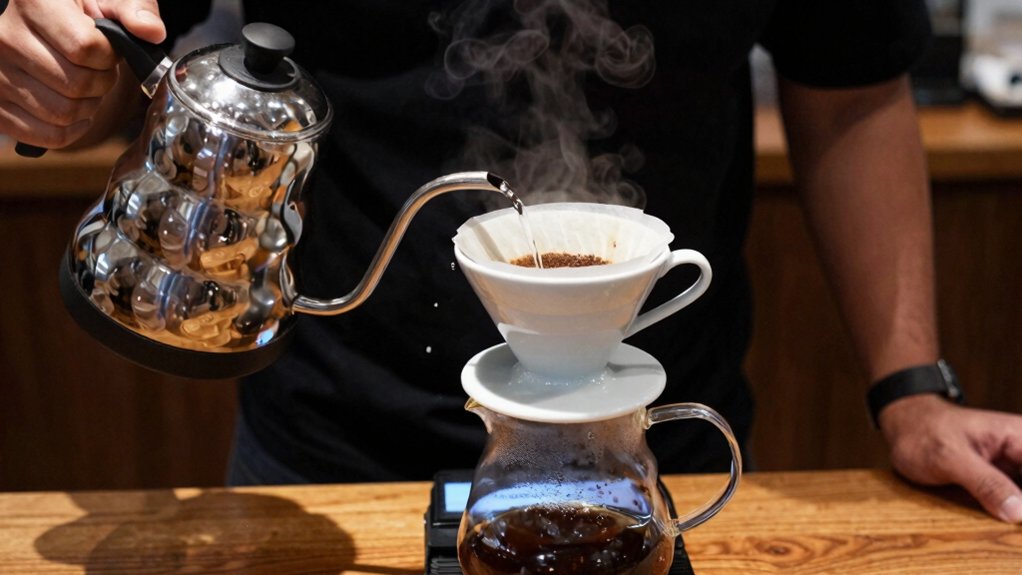
How can you spot a manual‑brew problem before it ruins your cup? You watch the pouring technique and pour speed. A fast, erratic pour creates water pools, uneven saturation, and a chaotic bloom. Aim for a slow, center‑to‑edge spiral, letting the coffee bloom for 30–45 seconds with 2–3 × coffee weight. If the draw‑down speed drags, check grind size; too fine slows flow, too coarse speeds it.
Notice brew time—long draws suggest over‑extraction, short draws under‑extraction. Adjust water temperature accordingly: hotter water speeds extraction, cooler slows it.
Troubleshooting means changing one variable per brew, testing 2–3 trials with specialty Arabica to pinpoint the cause and restore balanced extraction. Bean Profiles and the app‑driven customization features from modern espresso machines can help align grind, dose, and extraction settings for repeatable results.
Fix Bitter Extraction – Use a Coarser Grind or Shorter Brew Time
Ever notice that lingering bitterness? That bitter extraction usually means the water’s staying too long with the grounds. In manual brewing, start by adjusting grind size. A coarser grind speeds the flow rate, cuts contact time, and eases extraction control. If the cup still feels sharp, shorten the brew time—less time for late‑extracting compounds to leach out. Change only one variable at a time so you can gauge its effect. Keep the bed evenly saturated and use a clean, warm water temperature to avoid concentrating bitterness. By tweaking grind size or brew time, you’ll balance flavor, reduce over‑extraction, and enjoy a smoother cup. Also ensure your technique accounts for proper water temperature and even saturation to maximize consistency and extraction control. extraction control
Fix Over‑Extraction – Lower Water Temperature and Reduce Contact Time
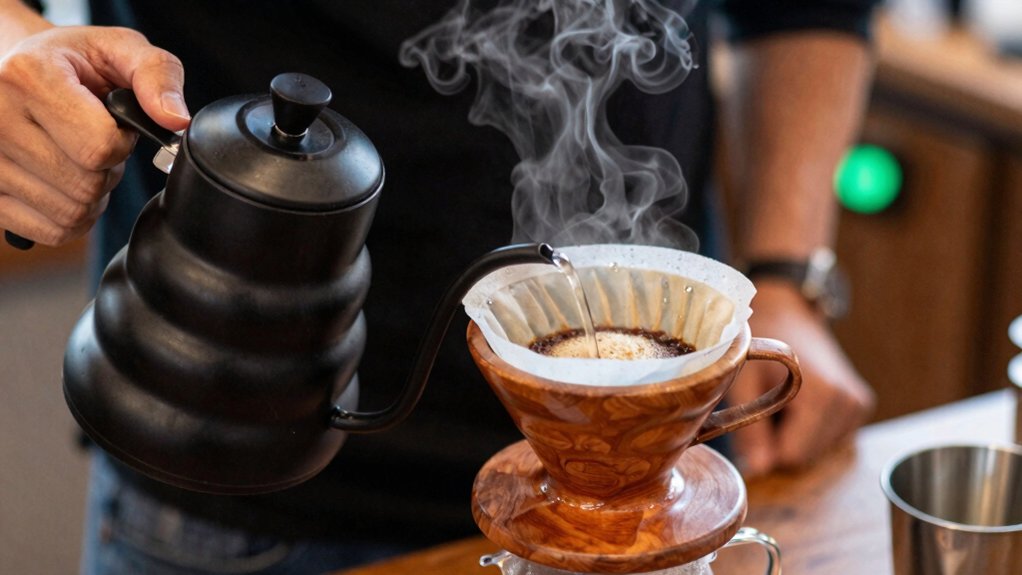
Why settle for a cup that tastes flat or overly bitter? Over‑extraction pulls too many solubles, leaving your coffee harsh and hollow. Lower the water temperature to 195‑200°F and cut the contact time to keep the brew bright. Adjust one variable at a time—temperature, grind size, or pour cadence—so you can hear the change.
- Cool the water: aim for 195‑200°F coffee temperature, not boiling.
- Coarse the grind: a larger grind size slows solubles extraction and shortens brew time.
- Speed the pour: a faster pour cadence reduces contact time and prevents over‑extraction.
If you still taste bitterness, try brewing fallbacks like a shorter immersion method or a lighter brew method to fine‑tune the balance.
In addition, consider selecting a poster or wall art that cues you toward mindful brewing practices to reinforce consistent technique and better flavor outcomes Ready-to-hang framing options.
Frequently Asked Questions
What Are Some Common Coffee Brewing Mistakes in the Manual Brewing Process?
You over‑pour, under‑bloom, pour unevenly, touch the filter walls, pause too long, use wrong grind, ignore water temperature, and neglect consistent rhythm, all causing channeling, sour or muddy flavors.
What Is the 15-15-15 Coffee Rule?
You evaluate a cup 15 minutes after brewing, then sip for 15 seconds, noting aroma, sweetness, acidity, and body, and finally assess the aftertaste for another 15 seconds to gauge balance and clarity.
What Is the 80 20 Rule for Coffee?
You get 80% of flavor from water quality, grind size consistency, and freshness, while the remaining 20% comes from precise timing, ratios, and technique tweaks. Focus on the first three for biggest impact.
What Coffee Is Good for Gastritis?
You should pick a low‑acid, medium‑roast Arabica, brew it with a paper filter, use a moderate grind, and keep water around 195‑200 °F; sip it with food, avoiding very hot servings.
In Summary
By spotting the signs early and tweaking grind size, temperature, and brew time, you’ll keep your manual brew from turning bitter or over‑extracted. Small adjustments make a big difference, letting you enjoy balanced, flavorful coffee every cup. Keep experimenting, trust your senses, and you’ll master the craft in no time.


